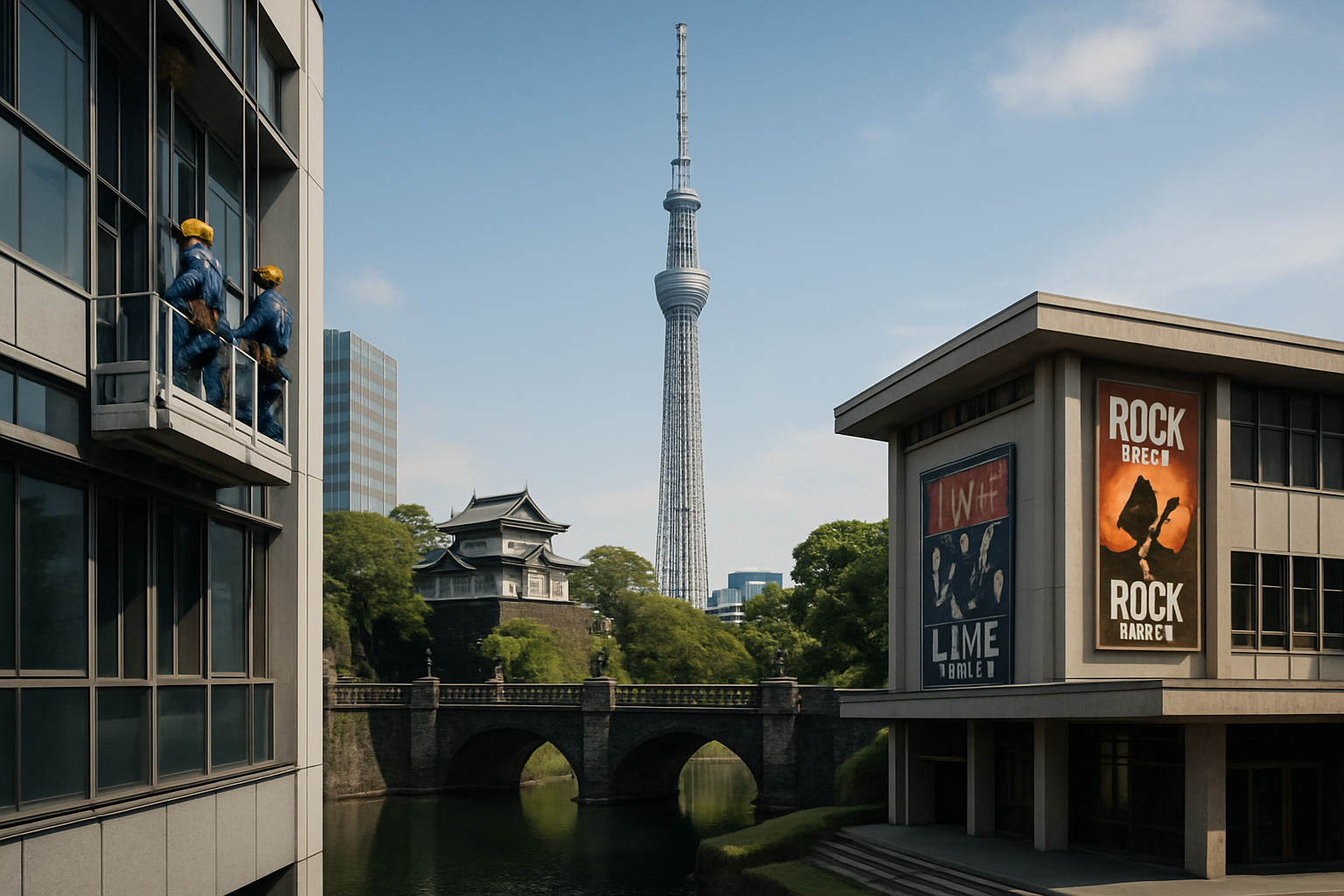
Japan confronted a mix of cultural loss, imperial reflection, and technical challenges on February 23, 2026, as the nation mourned the death of legendary rock drummer Shinya, celebrated Emperor Naruhito's 66th birthday, and dealt with a significant safety incident at Tokyo's iconic Skytree tower.
The confluence of events underscores Japan's complex relationship with tradition, modernization, and the ongoing challenges of maintaining both cultural heritage and technological excellence in an increasingly volatile world.
Luna Sea's Musical Legacy Cut Short
The Japanese music community suffered a significant loss with the death of Shinya, the 56-year-old drummer for the influential rock band Luna Sea. The musician, who went by the single name professionally, succumbed after years of battling illness, according to the band's official website announcement on Monday.
Luna Sea emerged during Japan's visual kei movement in the 1990s, becoming one of the country's most successful rock bands and helping to establish Japan's alternative music scene on the international stage. The band's influence extended far beyond music, contributing to Japan's cultural soft power during a period of rapid globalization.
"His rhythmic foundation allowed Luna Sea to explore musical territories that defined a generation of Japanese rock music."
— Music Industry Observer
Shinya's passing represents more than the loss of a talented musician—it marks the end of an era for Japan's rock scene that emerged during the country's economic bubble period and continued to influence younger generations of artists. The timing coincides with Japan's broader cultural introspection following recent political victories and ongoing demographic challenges.
Imperial Message of Resilience
Against this backdrop of cultural loss, Emperor Naruhito marked his 66th birthday on Monday with a message emphasizing the importance of supporting disaster-affected communities. The Emperor's remarks took on particular resonance following Japan's worst winter storm crisis in decades, which claimed over 46 lives and demonstrated the nation's vulnerability to extreme weather events.
The Emperor's birthday address touched on past disasters that have shaped Japan, from the 2011 tsunami to recent climate-related challenges. His emphasis on "standing by people in disaster-hit areas" reflects Japan's ongoing struggle with natural disasters in an era of climate volatility.
This message comes as Prime Minister Sanae Takaichi's administration, empowered by a historic electoral mandate in February 2026, faces the dual challenge of maintaining Japan's technological leadership while addressing the human costs of natural disasters and demographic decline.
Tokyo Skytree Safety Incident
The challenges facing Japan's technological infrastructure became starkly apparent when twenty people were trapped in a Tokyo Skytree elevator for six hours, forcing the closure of one of the country's most recognizable landmarks. The incident at the 634-meter tower, which opened in 2012 as a symbol of Japan's engineering prowess, prompted immediate safety inspections and raised questions about maintenance protocols.
Officials have not yet determined the cause of the elevator malfunction, but the incident highlights the ongoing maintenance challenges facing Japan's aging infrastructure. The Skytree, designed as both a broadcasting tower and tourist attraction, represents Japan's blend of traditional aesthetics with cutting-edge technology.
The tower remained closed Monday for comprehensive safety inspections, affecting thousands of planned visitors and raising concerns about the reliability of Japan's technological infrastructure as the nation positions itself as a leader in innovation and safety standards.
Broader Context of Japanese Transformation
These February 23 events occur within the context of Japan's remarkable political and social transformation. Prime Minister Takaichi's Liberal Democratic Party achieved an unprecedented supermajority in February 2026 elections, providing the first female Prime Minister with a historic mandate for conservative agenda implementation.
The political victory came during Japan's worst winter storm in decades, demonstrating the nation's democratic resilience under extreme conditions while also highlighting vulnerabilities in infrastructure and emergency preparedness systems.
Japan's cultural sector continues to grapple with preserving traditional values while embracing global influences. The country's entertainment industry has seen significant international expansion, with Japanese content gaining global recognition, yet the loss of figures like Shinya represents irreplaceable elements of cultural heritage.
Technological Challenges and Innovation
The Skytree incident reflects broader questions about Japan's technological infrastructure as the country faces demographic pressures and the need for continuous modernization. With 30% of Japan's population over 65 and birth rates at historic lows, maintaining complex technological systems while training the next generation of engineers presents ongoing challenges.
Japan has responded to these pressures with initiatives including comprehensive workplace reforms, international partnerships, and investments in automation and AI technologies. The country recently implemented successful anti-overwork campaigns, with Japanese workers now working fewer hours than their American, Canadian, and Italian counterparts.
However, incidents like the Skytree elevator malfunction remind policymakers that technological advancement must be accompanied by rigorous maintenance protocols and safety oversight, particularly as infrastructure ages and the workforce changes.
Cultural Preservation in a Changing Nation
Shinya's death serves as a reminder of Japan's ongoing cultural evolution. The visual kei movement that Luna Sea helped define represented a uniquely Japanese fusion of Western rock music with traditional Japanese aesthetics and performance styles. This cultural synthesis became a model for Japan's broader approach to globalization—embracing international influences while maintaining distinctive national characteristics.
The Emperor's birthday message reinforced themes of continuity and mutual support that remain central to Japanese society despite rapid technological and social changes. His emphasis on disaster resilience reflects both historical experience and contemporary challenges as Japan faces increasing climate volatility.
These cultural touchstones become particularly significant as Japan asserts greater international leadership under Takaichi's administration, with planned summits and enhanced regional security cooperation requiring both technological capability and cultural confidence.
Looking Forward
The events of February 23 encapsulate Japan's current position at the intersection of tradition and modernity, success and vulnerability. The nation's political stability, demonstrated through successful elections during extreme weather conditions, provides a foundation for addressing ongoing challenges in infrastructure maintenance, cultural preservation, and technological advancement.
As investigations continue into the Skytree incident and the music industry mourns Shinya's passing, Japan must balance honoring its cultural heritage with meeting the practical demands of maintaining a modern, technologically advanced society in an increasingly uncertain world.
The Emperor's call for solidarity in facing disasters, whether natural or technical, reflects the collective spirit that has enabled Japan to navigate previous crises while adapting to changing global circumstances. This resilience will be essential as the nation continues its evolution under new political leadership while preserving the cultural elements that define Japanese identity.