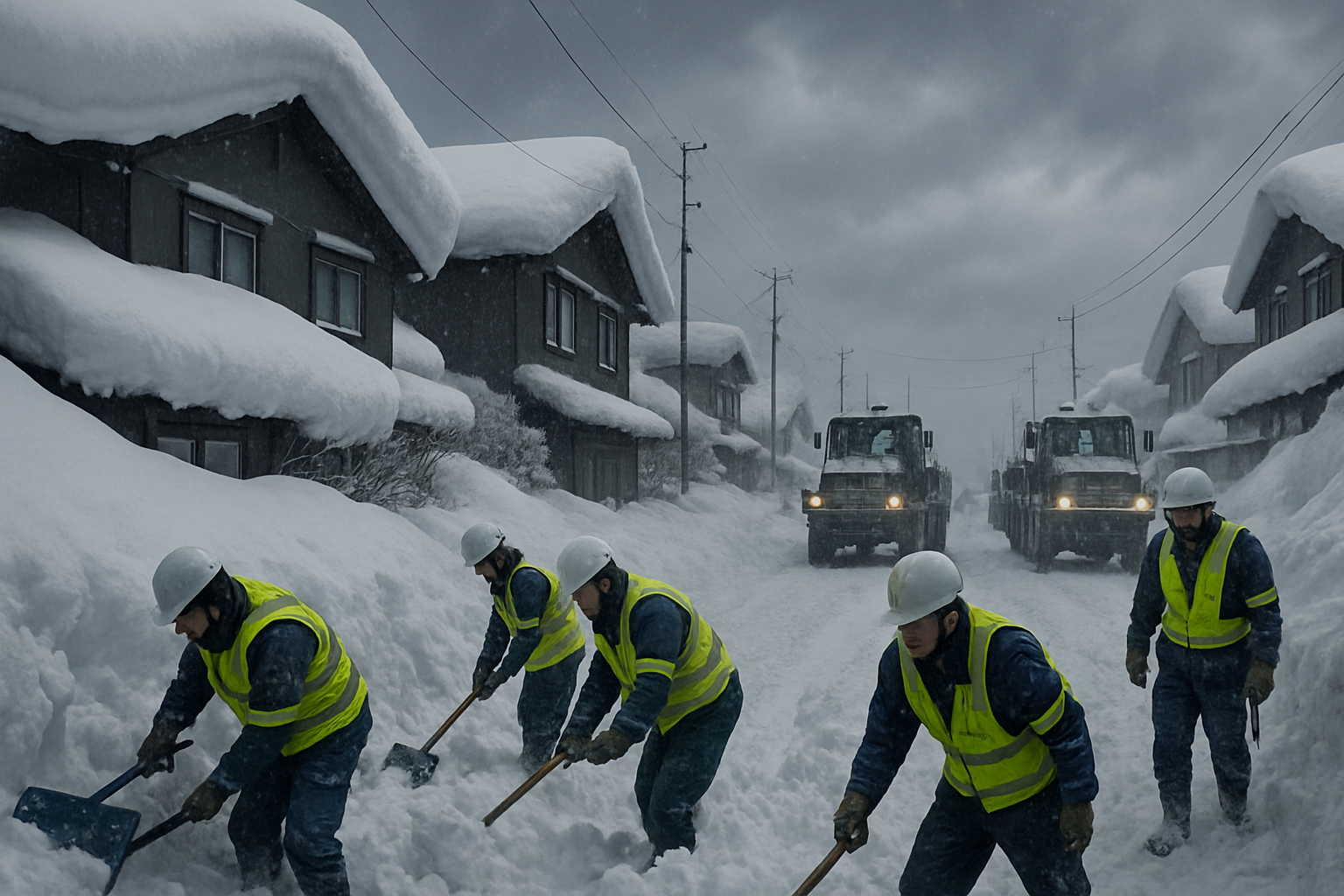
Japan's devastating winter weather crisis has claimed at least 35 lives as sustained heavy snowfall since late January continues to bury northern communities under dangerous snow drifts, with authorities now warning of avalanche risks and deploying military forces to assist trapped residents.
The death toll, which has risen by five from the 30 fatalities reported just days earlier, represents one of Japan's deadliest winter weather emergencies in recent decades. Most casualties have occurred as residents attempted to clear snow from their properties, with falls during snow removal operations accounting for the majority of deaths and hundreds of additional injuries.
Northern Communities Buried Under Record Snowfall
The city of Aomori in northern Japan has been particularly hard hit, with snow drifts reaching approximately 2 meters in depth—levels that have left many residents unable to leave their homes. This accumulation represents the highest snowfall recorded in the region since 1945, breaking weather records that have stood for over eight decades.
The extreme conditions have created a humanitarian crisis across Japan's northern prefectures, with emergency services struggling to respond to calls for assistance. Roads remain blocked despite round-the-clock snow removal operations, and power outages continue to affect thousands of households in the most severely impacted areas.
Military Deployment and Emergency Response
Japanese authorities have escalated their response to the crisis by deploying Self-Defense Forces to assist with emergency operations. The military intervention comes as civilian snow removal capabilities have been overwhelmed by the sheer volume of snowfall and the dangerous conditions it has created.
Prime Minister Sanae Takaichi has convened multiple emergency cabinet meetings to coordinate the government's response, ordering ministers to prioritize the protection of lives and prevent further casualties. The government's crisis management protocols have been activated at the highest levels as the situation continues to deteriorate.
Avalanche Warnings Add New Threat
Japan's meteorological agency has issued avalanche warnings for affected regions, adding a new dimension of danger to an already critical situation. The warnings come as reports indicate that sudden warming following the extreme snowfall has increased the risk of snow slides and structural collapses from accumulated snow weight.
Slovak news sources report that authorities have specifically warned residents about the dangers of falling snow from rooftops and the increased likelihood of avalanches in mountainous areas. The combination of record snow accumulation and rapid temperature changes has created particularly unstable conditions.
Geographic Distribution of Casualties
Previous reports from early February showed that Niigata Prefecture recorded the highest number of casualties with 12 deaths, followed by Akita Prefecture with 6 deaths and Aomori Prefecture with 4 deaths. However, the updated death toll of 35 suggests that fatalities have continued to mount across multiple northern prefectures as the crisis has persisted.
Among the tragic cases documented was that of 91-year-old Kina Jin, who was found buried under a 3-meter snow drift in Ajigasawa, Aomori Prefecture. Her death, likely caused by a roof avalanche while she was clearing snow with an aluminum shovel, highlights the particular vulnerability of elderly residents during the crisis.
Infrastructure and Transportation Disruption
The severe weather has caused widespread disruption to Japan's normally reliable transportation networks. Roads across northern regions remain impassable despite the deployment of over 1,000 snow plows in affected areas. In Sapporo alone, emergency crews are working to clear approximately 3,800 kilometers of roads.
The transportation crisis has complicated emergency response efforts and left many communities isolated. Power outages continue to affect thousands of residents, while heating systems strain under the extreme conditions, creating additional safety concerns for vulnerable populations.
Community Response and Volunteer Efforts
Local communities have mobilized volunteer efforts to assist elderly residents and others unable to clear snow from their properties safely. These grassroots initiatives have become crucial as formal emergency services struggle to reach all affected areas promptly.
The crisis has particularly highlighted the vulnerability of Japan's aging population, with elderly residents facing disproportionate risks from both the physical demands of snow removal and the isolation caused by blocked roads and communication disruptions.
Historical Context and Climate Implications
The current crisis represents the most severe winter weather emergency Japan has faced since comparable records began being kept in 1945. The sustained nature of the snowfall, beginning in late January and continuing into February, has overwhelmed infrastructure designed to handle typical winter conditions in the region.
Weather experts have noted that this event is part of a broader pattern of extreme winter weather affecting the Northern Hemisphere, raising questions about changing climate patterns and the adequacy of existing emergency preparedness systems.
Ongoing Emergency Measures
Japanese authorities maintain emergency warnings across affected regions, with additional snowfall expected in the coming days. The government continues to coordinate rescue operations while working to restore essential services to isolated communities.
The timing of the crisis has added complexity to emergency response efforts, as Japan simultaneously prepares for what officials describe as the first midwinter election in 36 years, creating additional logistical challenges for authorities already stretched by the weather emergency.
As the death toll continues to rise and dangerous conditions persist, Japan's winter weather crisis stands as a stark reminder of nature's power to overwhelm even well-prepared emergency systems, while highlighting the critical importance of community solidarity in times of extreme adversity.