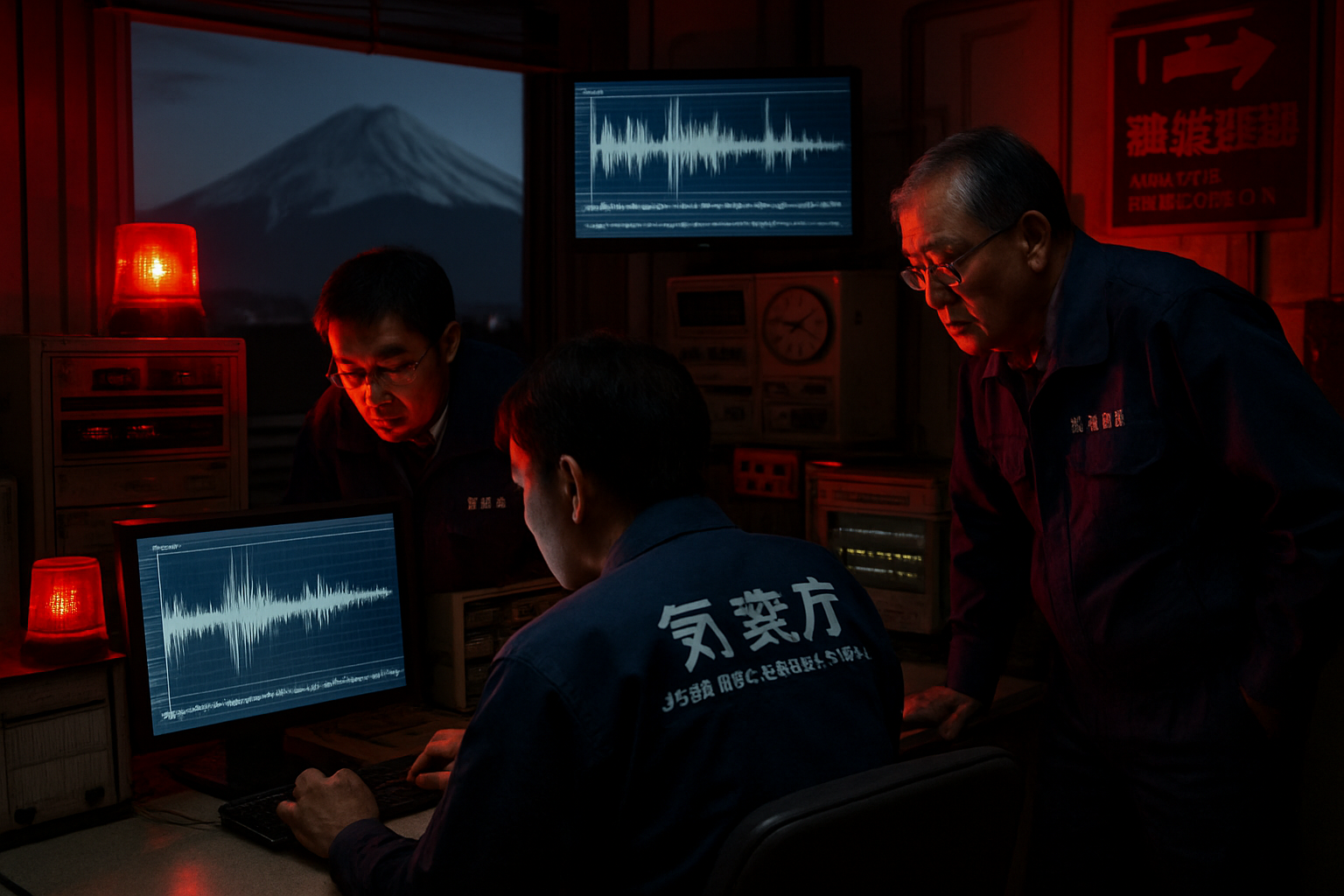
Japan's Meteorological Agency issued an unprecedented warning Monday of a significantly elevated risk of major earthquakes following a powerful 7.7-magnitude tremor that struck off the northeastern coast, sending shockwaves through buildings in Tokyo and prompting urgent evacuation alerts for Hong Kong tour groups.
The earthquake struck at 16:53 local time (07:53 GMT) in Pacific Ocean waters off Iwate Prefecture, marking one of the most significant seismic events in the region since the devastating 2011 Great East Japan Earthquake. The Japan Meteorological Agency (JMA) issued an extraordinary statement declaring that "the probability of another major earthquake occurring is relatively higher than in normal times."
Unprecedented Official Warning System
The mega-quake warning represents a critical evolution in Japan's disaster preparedness protocols, developed over the 15 years since the magnitude 9.0 earthquake and tsunami that killed over 15,000 people and triggered the Fukushima nuclear crisis. According to the JMA's enhanced monitoring systems, the risk assessment for earthquakes of magnitude 8.0 or higher has been elevated across the northern Pacific coastal regions.
"This is not just another routine seismic event," explained Chief Cabinet Secretary officials during an emergency press conference. "The depth, location, and magnitude pattern of this earthquake triggers our enhanced risk protocols that have been refined since 2011."
The tremor registered at a depth of approximately 19-20 kilometers beneath the ocean floor, close enough to the surface to generate significant ground shaking across a wide area. Buildings swayed noticeably in Tokyo, located hundreds of kilometers from the epicenter, demonstrating the earthquake's substantial regional impact.
International Tourist Safety Response
The seismic event immediately triggered comprehensive safety protocols for international visitors, with Hong Kong-based tour operators implementing emergency response measures across affected regions. Steve Huen Kwok-chuen, executive director of EGL Tours, confirmed the company currently had approximately 40 tour groups in Japan, including three in the northeastern regions and four in Hokkaido areas covered by the elevated alert status.
"All our customers are safe and accounted for," Huen reported to Hong Kong media outlets. "We immediately activated our emergency protocols and established contact with all group leaders to assess situations and implement necessary precautionary measures."
Hong Kong's Immigration Department issued statements confirming close monitoring of the situation, reflecting the significant number of Hong Kong residents who travel to Japan annually. The coordinated response demonstrates the sophisticated international cooperation frameworks developed for managing seismic emergencies in the Pacific region.
Historical Context and Geological Significance
Monday's 7.7-magnitude earthquake occurred in the same general region as the catastrophic March 11, 2011 disaster, though at a significantly smaller magnitude. The 2011 event remains the most powerful earthquake ever recorded in Japan and the fourth most powerful worldwide since modern record-keeping began.
The current seismic activity takes place against the backdrop of Japan's position along the Pacific Ring of Fire, where the Pacific Plate meets the North American Plate. This tectonically active zone has produced numerous significant earthquakes throughout Japanese history, with the Sanriku coast region particularly known for its tsunami generation potential due to its geological structure.
Japan has invested billions of yen in reconstruction, advanced warning systems, enhanced building codes, and comprehensive disaster preparedness since the 2011 tragedy. The swift response to Monday's earthquake, including immediate mega-quake warnings and coordinated international communication, demonstrates the effectiveness of these improved systems.
Enhanced Monitoring and Preparedness Systems
The JMA's rapid warning dissemination represents a significant advancement in earthquake early warning technology. Modern seismic monitoring networks detected the earthquake within seconds, automatically triggering alerts across affected regions and enabling coordinated government task force activation.
Prime Minister Sanae Takaichi, who assumed office following historic electoral victories earlier in 2026, immediately established an emergency task force and urged coastal residents to maintain evacuation readiness. The swift governmental response reflects lessons learned from past disasters and demonstrates Japan's enhanced institutional preparedness for seismic emergencies.
The earthquake measurement of "upper 5" on Japan's 0-7 seismic intensity scale was strong enough to cause noticeable building movement across northern and eastern Japan, validating the extensive monitoring network's sensitivity and accuracy.
Regional and Global Implications
The elevated earthquake warning comes during a period of heightened geological activity across the Pacific Ring of Fire. Recent months have witnessed significant seismic events in Indonesia, Afghanistan, and various other tectonically active regions, raising questions about potential interconnected geological processes.
International Pacific tsunami monitoring systems were activated as part of the coordinated response, demonstrating the enhanced post-2004 cooperation frameworks that enable rapid threat assessment and warning dissemination across Pacific Rim nations. Australia confirmed monitoring of its approximately 115,000 nationals in Japan, while other Pacific nations activated regional tsunami warning networks.
The lack of major casualties or infrastructure damage from Monday's earthquake, despite its significant magnitude, validates Japan's massive investment in earthquake-resistant infrastructure and community preparedness programs developed since 2011.
Ongoing Monitoring and Public Safety
Japanese authorities maintain heightened alert status for potential aftershocks and additional seismic activity. Coastal communities have been advised to remain vigilant and prepared for immediate evacuation if necessary, with emergency shelters and evacuation routes reviewed and confirmed operational.
The enhanced risk period typically extends for several days to weeks following a major earthquake, during which the probability of additional significant seismic events remains elevated. Japan's sophisticated monitoring systems continue 24-hour surveillance of seismic activity patterns to provide maximum advance warning for any developing threats.
Scientific experts emphasize that while the mega-quake warning indicates elevated risk, it does not predict specific timing or location of potential future earthquakes. The warning system is designed to enhance preparedness rather than create panic, reflecting Japan's mature approach to living with seismic risk.
Broader Context of Japanese Disaster Preparedness
The coordinated response to Monday's earthquake occurs within the broader context of Japan's transformation into a global leader in disaster preparedness and response. The country's experience managing multiple types of natural disasters, from earthquakes to typhoons to volcanic eruptions, has created sophisticated institutional frameworks for emergency management.
The success of Japan's democratic institutions in maintaining effective governance during natural disasters was recently demonstrated during winter elections conducted amid severe weather conditions earlier in 2026. This institutional resilience extends to disaster response capabilities, ensuring continuity of government services and emergency coordination even during major seismic events.
Monday's earthquake response reinforces Japan's position as a crucial partner in regional disaster preparedness networks and international cooperation frameworks designed to protect Pacific Rim populations from seismic and tsunami threats.