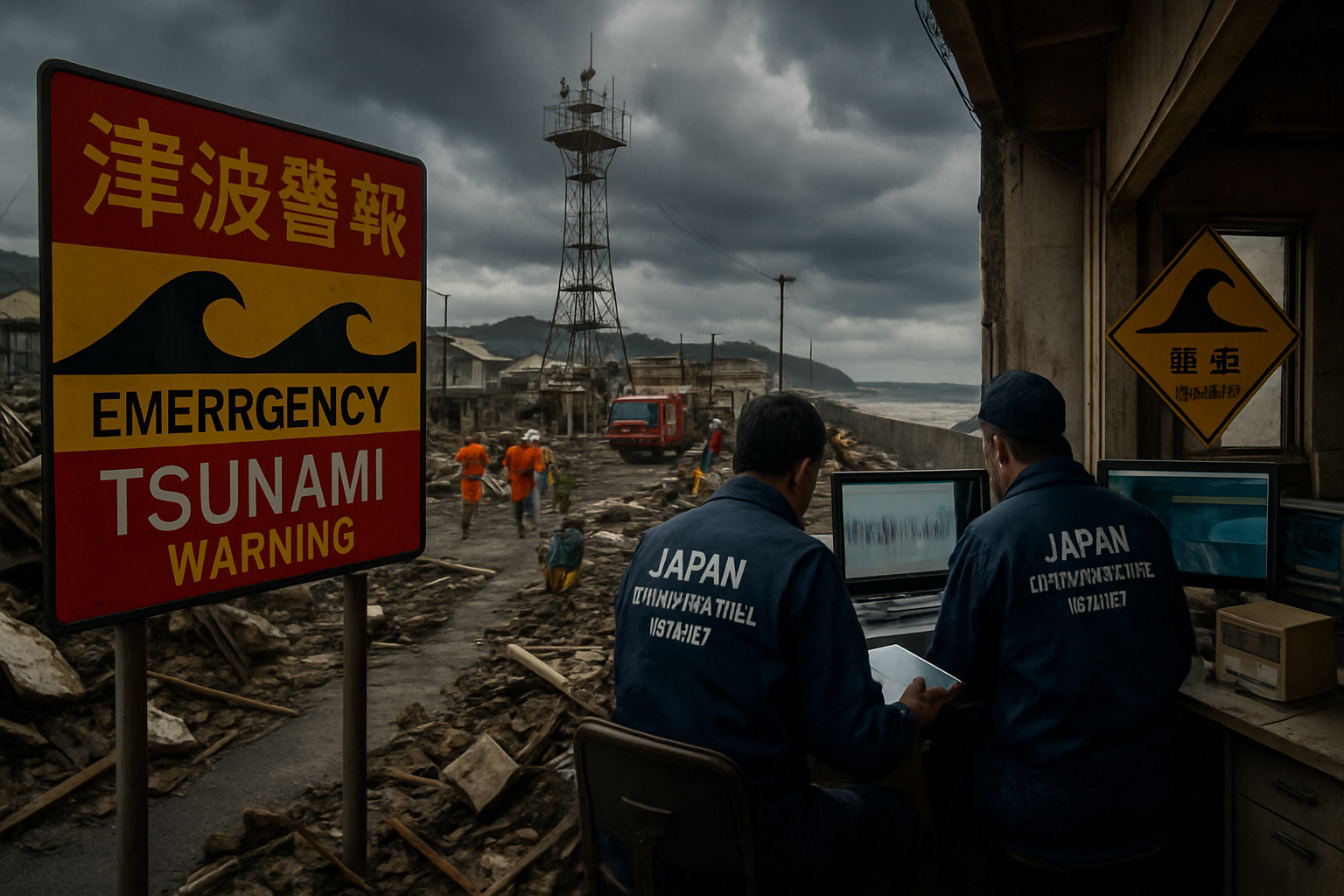
A powerful magnitude 7.4-7.5 earthquake struck off the northeastern coast of Japan on Monday afternoon, triggering tsunami warnings and sending waves up to 80 centimeters high crashing into the country's northern shores. The Japan Meteorological Agency (JMA) immediately issued evacuation orders for coastal areas as seismic activity was felt as far away as Tokyo.
The earthquake occurred at 4:53 PM local time (5:53 PM AEST) in the Pacific Ocean, approximately 10 kilometers below the sea surface off the Sanriku coast in northern Japan. The tremor registered between magnitude 7.4 and 7.5 on different seismic scales, with the epicenter located about 120 kilometers from Ternate in the Iwate Prefecture region.
Japanese Prime Minister Sanae Takaichi addressed the nation urgently, establishing an emergency task force and calling for immediate evacuations from affected coastal areas. "We have set up an emergency task force and urge citizens in the affected areas to evacuate to safety immediately," Takaichi stated during an emergency press conference at her official residence.
Tsunami Waves Strike Multiple Prefectures
The first tsunami waves began hitting Japan's northeastern coast within hours of the earthquake. The JMA confirmed that an 80-centimeter tsunami wave struck a port in Kuji, Iwate Prefecture, at 5:34 PM local time. Earlier waves of 70 centimeters were observed at 5:32 PM at the same location, with subsequent monitoring showing waves affecting multiple coastal areas.
Tsunami warnings were issued for Hokkaido, Aomori, and Iwate prefectures, with authorities warning that waves up to three meters in height could potentially reach these areas. The Japan Meteorological Agency emphasized that "tsunami waves are expected to hit repeatedly" and urged residents to remain in safe locations until warnings are officially lifted.
"Evacuate immediately from coastal regions and riverside areas to a safer place such as high ground or an evacuation building. Damage due to tsunami waves is expected."
— Japan Meteorological Agency Warning
Seismic Impact Reaches Tokyo
The earthquake's intensity was significant enough to shake large buildings hundreds of kilometers away in Tokyo, demonstrating the substantial power of this seismic event. The quake measured an "upper 5" on Japan's seismic intensity scale, which runs from 0 to 7, indicating strong enough shaking to make movement difficult for people in affected areas.
According to multiple international reports, the tremor was felt across vast areas of northern and eastern Japan, with buildings swaying noticeably even in the capital region. This widespread impact underscores the earthquake's magnitude and the extensive reach of its seismic waves.
International Response and Monitoring
The earthquake prompted immediate international attention and response coordination. Australia confirmed that 115,000 nationals were monitoring the situation, while various Pacific nations activated their tsunami monitoring systems as part of the regional early warning network established following the devastating 2004 Indian Ocean tsunami.
The Pacific Tsunami Warning Center and various national meteorological agencies across the Asia-Pacific region closely monitored the situation, demonstrating the enhanced international cooperation in disaster preparedness that has developed over the past two decades.
Historical Context and Preparedness
This earthquake occurs against the backdrop of Japan's extensive experience with seismic activity and tsunami preparedness. The nation has invested billions in reconstruction and advanced tsunami warning systems following the March 11, 2011 Tohoku earthquake and tsunami that devastated northeastern Japan and triggered the Fukushima nuclear crisis.
The 2011 disaster, which registered magnitude 9.0, remains one of the most powerful earthquakes ever recorded and killed over 15,000 people. Since then, Japan has implemented comprehensive disaster preparedness measures, including enhanced building codes, improved early warning systems, and extensive public education programs.
Recent commemorations marking the 15th anniversary of the 2011 disaster in March 2026 highlighted both the progress made in reconstruction and the ongoing challenges faced by affected communities. Prime Minister Takaichi has consistently emphasized the importance of preserving disaster preparedness knowledge for future generations.
Emergency Response Capabilities
Japan's response to Monday's earthquake demonstrated the effectiveness of disaster preparedness systems developed since 2011. The Japan Meteorological Agency's rapid assessment and warning dissemination, combined with established evacuation protocols, allowed for swift protective action across the affected region.
The emergency task force established by Prime Minister Takaichi coordinated response efforts across multiple government agencies, ensuring efficient resource deployment and public communication. This coordinated approach reflects lessons learned from previous disasters and Japan's commitment to comprehensive crisis management.
Local authorities in the affected prefectures activated pre-established evacuation procedures, with residents moving to designated higher ground and evacuation centers. The systematic response highlighted Japan's extensive disaster education programs and community preparedness initiatives.
Regional Geological Significance
Monday's earthquake occurred in the seismically active Pacific Ring of Fire region, where the Pacific plate meets the North American plate. This geological setting makes Japan particularly susceptible to earthquakes and tsunamis, requiring constant vigilance and preparedness measures.
The earthquake's depth of 10 kilometers places it relatively shallow, which can increase the intensity of ground shaking and tsunami generation. The location off the Sanriku coast is historically significant for tsunami activity, making the rapid warning response particularly crucial for coastal communities.
Current Status and Recovery Efforts
As of the latest reports, authorities continue monitoring the situation closely while assessing any damage from the earthquake and tsunami waves. Initial reports suggest no major casualties or infrastructure damage, though comprehensive assessments are ongoing.
The Japan Meteorological Agency maintains its warning systems active, emphasizing that aftershocks and additional tsunami activity remain possible. Coastal communities are being advised to remain vigilant and prepared for potential evacuation orders.
This earthquake serves as a reminder of Japan's ongoing vulnerability to natural disasters and the importance of maintaining robust preparedness systems. The swift response and effective warning dissemination demonstrate how lessons from past tragedies can save lives when new threats emerge.
Recovery and assessment efforts will continue in the coming days, with authorities working to ensure all affected areas receive necessary support while maintaining readiness for potential additional seismic activity in this geologically volatile region.