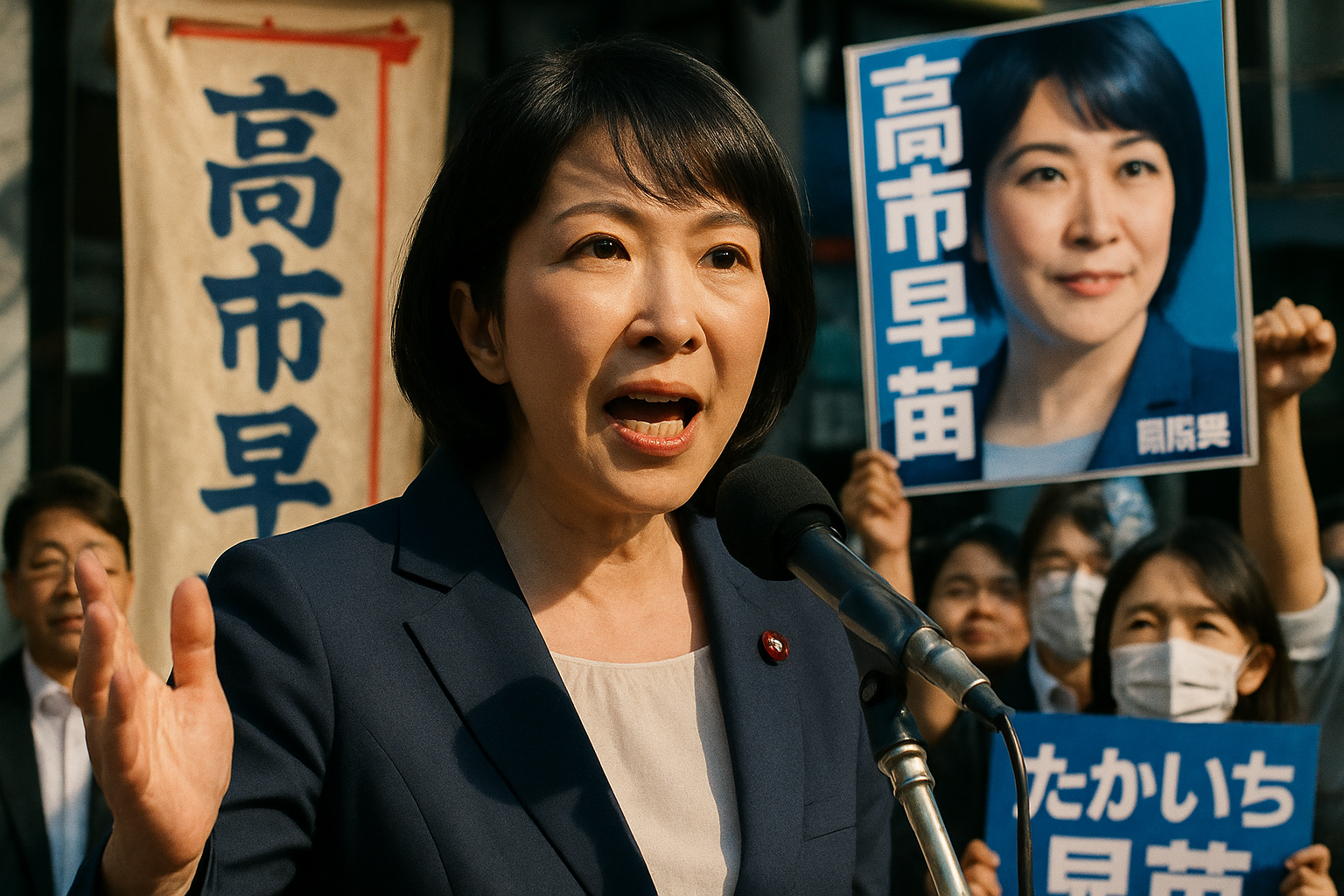
Japan's first female Prime Minister Sanae Takaichi is leveraging her popularity to secure victory in Sunday's snap parliamentary election, as the nation confronts an unprecedented wave of AI-generated fake news, inflation concerns, and deepening political divisions on critical social issues.
The snap election represents a pivotal moment for Japanese democracy, with Takaichi's Liberal Democratic Party (LDP) seeking to maintain its parliamentary majority while navigating complex domestic and international pressures. Recent polling indicates that 54% of Japanese voters cite inflation as their primary concern, with soaring food bills posing the greatest risk to Takaichi's electoral prospects.
AI-Generated Disinformation Threatens Electoral Integrity
Japan's 2026 election campaign has witnessed generative artificial intelligence take fake news to unprecedented levels, fundamentally altering the information landscape. Political operatives and malicious actors are deploying sophisticated AI tools to create convincing but fabricated content designed to manipulate public opinion.
Among the documented cases of AI manipulation are fabricated logos for new political parties that feature controversial imagery, candidates purportedly campaigning in freezing weather wearing inappropriate attire, and elderly citizens making inflammatory public statements - all artificially generated. The technology's advancement has made it possible to create believable political content "in seconds," according to digital security experts monitoring the campaign.
Social media platforms and digital literacy organizations are scrambling to counter the adverse impact of disinformation, particularly as young, social media-savvy voters emerge as a key demographic for political parties. Digital platforms are implementing enhanced fact-checking mechanisms and providing educational resources to help citizens identify AI-generated content.
Takaichi's Strategic Political Position
Prime Minister Takaichi, who made history as Japan's first female prime minister, is pushing a right-wing agenda focused on boosting the country's economy while maintaining strong security partnerships, particularly with the United States. Her administration has received an unprecedented endorsement from U.S. President Donald Trump, who broke diplomatic tradition by offering "total endorsement" of Takaichi ahead of Sunday's election.
Trump's support signals strengthened U.S.-Japan ties and complicates China's regional objectives, particularly following Takaichi's controversial November 2025 remarks on Taiwan that prompted China to convene rare meetings with Southeast Asian ambassadors to rally opposition against Japan. However, this effort gained little regional traction, with ASEAN nations preferring multilateral approaches that balance economic ties with China against security partnerships with Japan and the United States.
The Prime Minister's popularity strategy involves mobilizing her substantial personal approval ratings to overcome policy concerns and electoral challenges. Her administration is counting on voter loyalty to her leadership style and international stature to secure parliamentary support for her economic and security initiatives.
Economic Pressures Dominate Campaign Discourse
Japanese households are finding it increasingly difficult to make ends meet as wages fail to keep pace with rising prices, creating a central campaign issue that could determine electoral outcomes. The inflation crisis has transformed traditional political dynamics, forcing parties to address immediate economic concerns rather than longer-term policy visions.
Consumer price increases have particularly affected essential goods, with food costs rising dramatically across urban and rural constituencies. This economic pressure comes at a time when Japan is also dealing with severe winter weather conditions that have disrupted supply chains and increased heating costs for households already struggling with inflation.
The opposition parties are capitalizing on these economic difficulties, arguing that the LDP's policies have failed to protect ordinary citizens from price increases while benefiting corporate interests and international partners.
Political Divisions on Social Issues
Japanese political parties remain deeply split on fundamental social policy questions, with the death penalty serving as a particularly divisive issue that reveals broader ideological fault lines. According to a recent human rights group survey, both the ruling Liberal Democratic Party and the main opposition Centrist Reform Alliance have avoided taking clear stances on abolishing capital punishment.
This strategic ambiguity reflects the complex political calculations required in a fragmented parliamentary system where coalition-building often requires compromising on contentious social issues. The death penalty debate highlights broader questions about Japan's approach to criminal justice, human rights, and international legal standards.
The reluctance of major parties to take definitive positions on such issues has created space for smaller parties to differentiate themselves through clear policy stances, potentially affecting the overall balance of power in the next parliament.
Youth Voters and Digital Engagement
Young, digitally-native voters are being given unprecedented opportunities to engage with the electoral process, including training in identifying fake news and disinformation. Educational initiatives are teaching teenagers and young adults to recognize AI-generated content and evaluate the credibility of online political information.
This demographic represents both an opportunity and a challenge for traditional political parties, as younger voters are more likely to consume political information through social media platforms that are particularly susceptible to manipulation and disinformation campaigns. Political parties are adapting their campaign strategies to reach these voters through digital channels while competing with false narratives generated by AI systems.
The success of these digital literacy efforts could have implications beyond the current election, potentially strengthening Japan's democratic resilience against future information warfare and manipulation attempts.
International Context and Regional Security
The election occurs within a broader context of great power competition in the Indo-Pacific region, with China's sustained military pressure on Taiwan serving as a backdrop to Japanese security policy debates. Chinese military aircraft activity increased 23% in 2025, with daily deployments around Taiwan representing the most sustained pressure campaign to date.
Japan's response to regional security challenges will be influenced by the composition of the next parliament and the mandate received by Takaichi's administration. The strengthening of the Quad partnership (Australia, India, Japan, United States) and coordination with European allies on Indo-Pacific security will depend partly on the electoral outcomes and public support for international engagement.
Regional countries are closely monitoring Japan's democratic processes, as the stability and effectiveness of Japanese governance affects broader Asian security cooperation and economic coordination efforts.
Electoral Implications and Future Governance
Sunday's election will determine not only the composition of Japan's parliament but also the country's approach to addressing multiple simultaneous challenges: economic recovery, technological disruption, social policy reform, and international security cooperation.
The success or failure of efforts to combat AI-generated disinformation during this campaign will establish important precedents for protecting democratic processes in an era of rapidly advancing artificial intelligence capabilities. Japan's experience could provide valuable lessons for other democracies facing similar challenges.
Prime Minister Takaichi's ability to maintain parliamentary support while addressing voter concerns about inflation and social issues will shape Japan's policy trajectory and its role in regional and global affairs. The election represents a critical test of democratic resilience in the face of technological disruption and economic uncertainty.
As Japanese voters prepare to cast their ballots on Sunday, they face choices that will influence not only their country's domestic policies but also its position in an increasingly complex and competitive international environment. The outcome will provide insights into how established democracies can adapt to new forms of information warfare while addressing traditional concerns about economic security and social welfare.