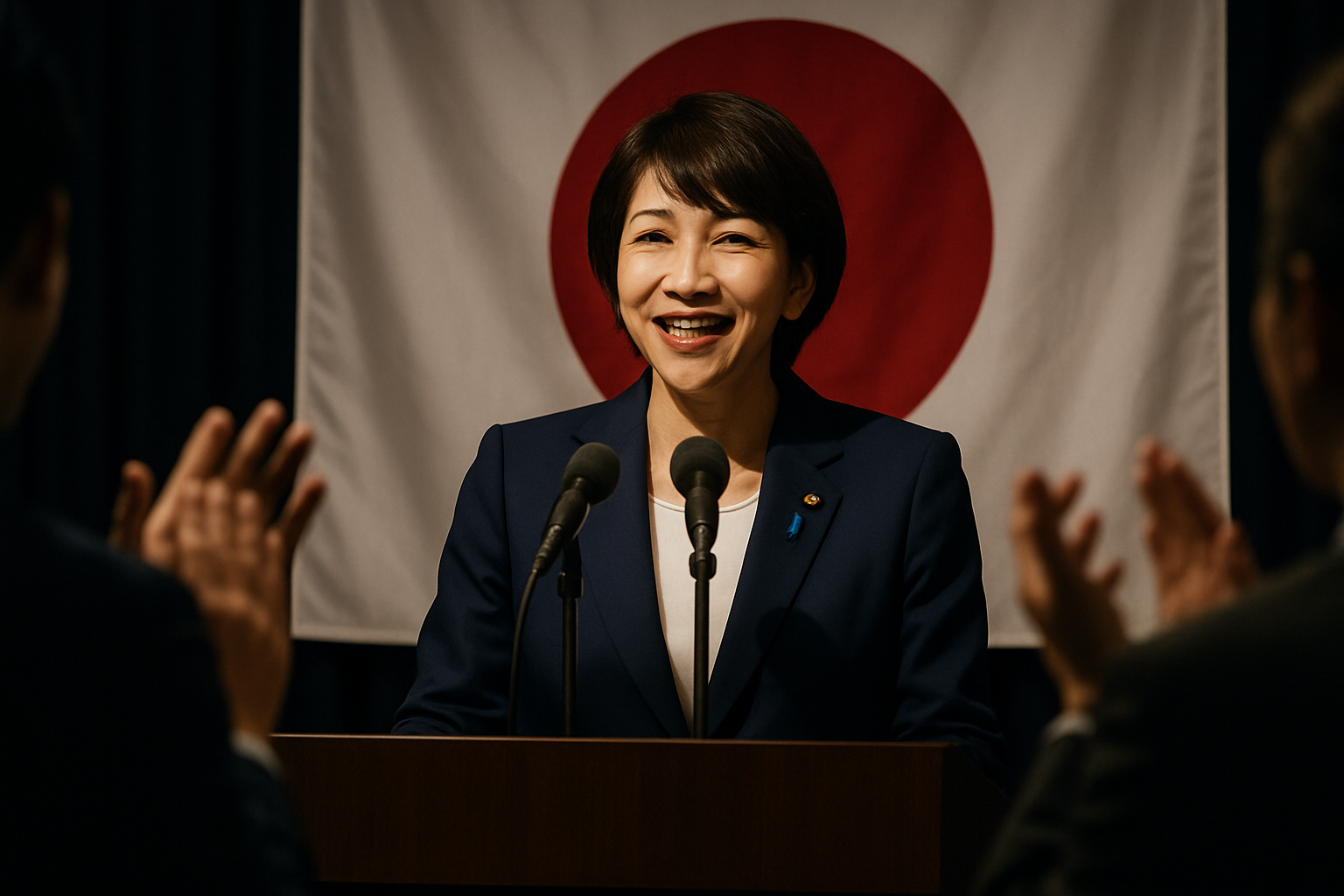
Japanese Prime Minister Sanae Takaichi's Liberal Democratic Party achieved a commanding victory in Sunday's snap parliamentary elections, securing over 300 of the 465 seats in the lower house and providing Japan's first female prime minister with a decisive mandate for her conservative agenda.
The election, conducted amid Japan's most severe winter storm in decades, saw Takaichi's governing coalition exceed all expectations, increasing their seat count from 233 to approximately 310 seats according to exit polls and early results from major Japanese networks including NHK.
The victory represents a significant political triumph for Takaichi, who became Japan's first female prime minister in October 2025 and called the snap election to consolidate her position amid economic pressures and international challenges.
Overwhelming Victory Despite Winter Crisis
The election took place during Japan's worst winter weather emergency in decades, with heavy snowfall blanketing central regions and the Sea of Japan coast experiencing record accumulations. Some areas recorded over two meters of snow depth, with Aomori reaching 1.8 meters - the highest since 1945.
Despite the challenging conditions, which have claimed 35 lives since late January, Japanese voters turned out to deliver what international media described as a "landslide victory" for Takaichi's conservative platform. The Self-Defense Forces were deployed for emergency operations throughout the affected regions.
"The Japanese people have spoken clearly," said a senior LDP official following the initial results. "Even in the face of natural disasters, they have endorsed Prime Minister Takaichi's vision for a more prosperous and safer Japan."
Opposition Suffers Major Losses
The election delivered crushing defeats to opposition parties, particularly the Centrist Reform Alliance, which was formed in January through a merger of the Constitutional Democratic Party and Komeyto. Exit polls suggest the alliance lost a significant number of seats compared to pre-election projections.
The results indicate Japanese voters have rejected the opposition's alternative vision, instead embracing Takaichi's promises of economic revitalization and strengthened national security. The LDP's coalition partner, Nippon Ishin (Japan Innovation Party), also performed strongly, contributing to the governing coalition's commanding two-thirds majority.
Political analysts noted that Takaichi's campaign effectively capitalized on her approval ratings and successfully framed the election as a choice between continuity and uncertainty during challenging times.
Economic Concerns Drive Voter Behavior
Pre-election polling consistently showed that inflation was the primary concern for 54% of Japanese voters, with household food spending reaching a 44-year high at ¥314,001 monthly average - representing a 4.6% nominal increase. The cost-of-living crisis became a central campaign issue.
Takaichi's economic message resonated with voters concerned about rising prices and stagnant wages. Her promises to restore economic growth while maintaining social stability appear to have convinced a majority of the electorate that her approach offered the best path forward.
Financial markets are expected to react positively to the decisive result, which provides policy certainty and strengthens Takaichi's mandate for economic reforms. Japanese stocks and the yen could benefit from the clear electoral outcome and reduced political uncertainty.
International Implications
The election result significantly strengthens Japan's position in regional and global affairs. Takaichi received unprecedented support from U.S. President Donald Trump during the campaign, who provided what observers called the first American presidential endorsement of an allied leader during an active election campaign.
Trump announced plans for a March 19 summit with Takaichi, signaling strengthened U.S.-Japan ties at a time of increased tensions with China. Chinese military aircraft activity around Taiwan increased 23% in 2025, making Japan's security partnerships increasingly important for regional stability.
The victory also provides Takaichi with enhanced credibility for her approach to regional security challenges, including her previous controversial statements regarding Taiwan. China's efforts to rally Southeast Asian nations against Japan following those remarks gained little traction, and this electoral success further consolidates Japan's diplomatic position.
Democratic Resilience Amid Challenges
The election faced significant challenges beyond the weather crisis. Japan experienced unprecedented AI-generated disinformation campaigns during the campaign, with fake political content created "in seconds" including fabricated party logos, candidate imagery, and false testimonials.
Digital platforms implemented enhanced fact-checking measures and educational initiatives to help voters identify AI manipulation, particularly targeting young voters. The successful conduct of the election despite these technological challenges demonstrates the resilience of Japan's democratic institutions.
The election also marked the first winter parliamentary election in 36 years, creating logistical challenges that election officials successfully overcame through extensive preparation and emergency protocols.
Looking Forward
With this decisive mandate, Takaichi is positioned to advance her conservative agenda with unprecedented authority. Her victory provides the political capital needed to implement significant policy changes, including potential constitutional reforms and enhanced defense capabilities.
The result also positions Japan as a stable democratic anchor in the Asia-Pacific region at a time of global democratic stress. Takaichi's success as the first female prime minister to achieve electoral victory in her own right sets an important precedent for democratic leadership in the region.
The new parliament will convene with the LDP holding its strongest position in years, giving Takaichi the legislative support needed to address Japan's challenges including economic recovery, demographic changes, and regional security concerns.
As Japan moves forward under Takaichi's strengthened leadership, the international community will be watching to see how she uses this mandate to advance Japan's interests while maintaining the democratic values that have defined the nation's post-war development.