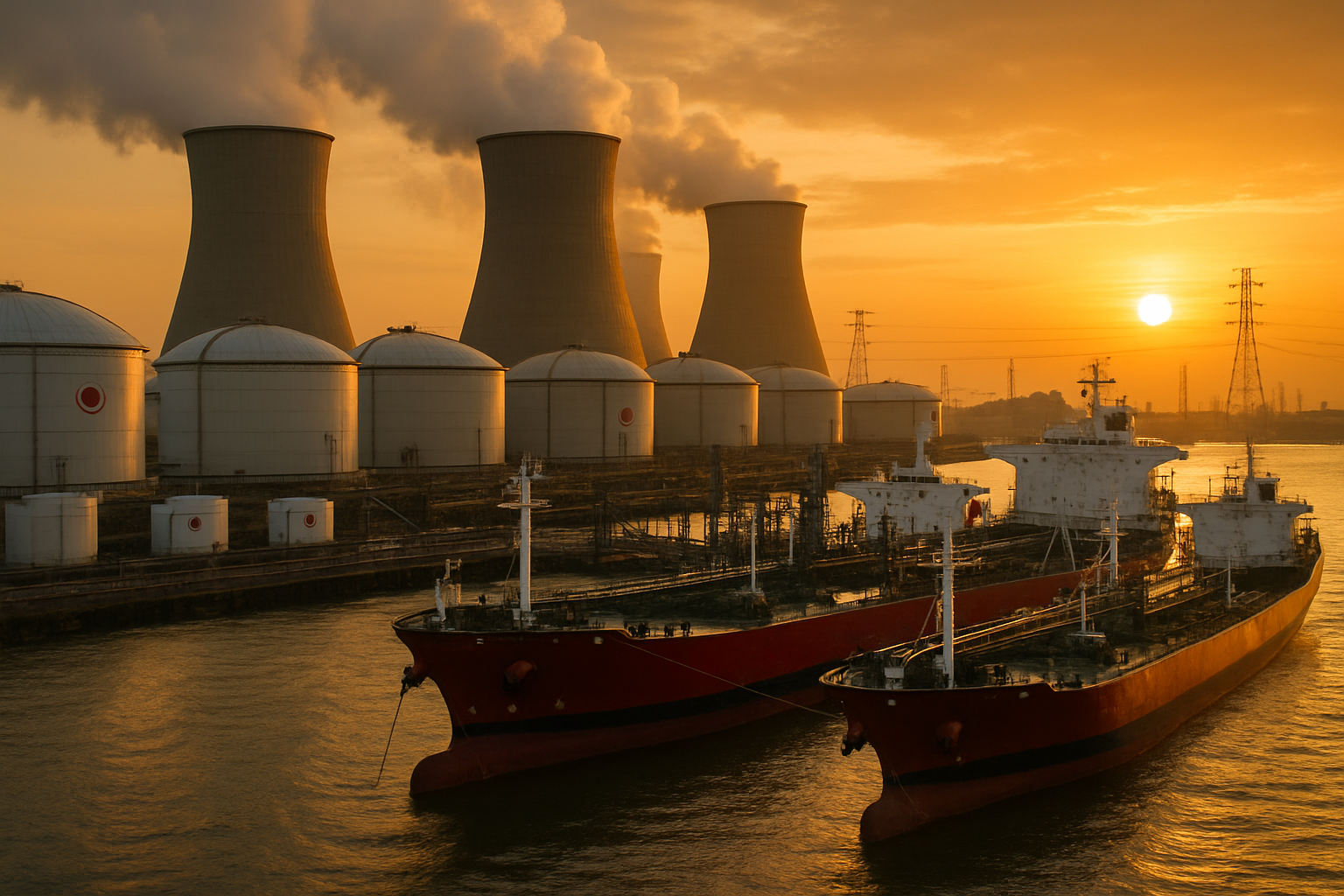
Japan confronts its most severe energy security crisis since the 2011 Fukushima disaster, as the ongoing Iran war threatens to cut off 95% of the nation's oil supplies while the Fukushima Daiichi nuclear plant completes its final scheduled discharge of treated radioactive water for fiscal year 2025.
The dual energy challenge presents an unprecedented test for Japan's resource security strategy, highlighting the country's extreme vulnerability to geopolitical disruptions in critical supply chains. With approximately 70% of Japan's oil imports transiting through the now-closed Strait of Hormuz, government officials are actively considering the deployment of national strategic petroleum reserves – a measure not taken since the 2011 triple disaster.
Middle East Crisis Threatens Japan's Energy Lifeline
The escalation of the Iran conflict has effectively closed the Strait of Hormuz, the narrow waterway through which 40% of global seaborne oil transits. For Japan, this represents an existential threat to energy security, as the nation relies on the Middle East for around 95% of its oil supplies, with roughly 70% flowing through this critical chokepoint.
The closure has already triggered unprecedented market volatility, with oil prices surging past $80 per barrel – a 10% increase from $73 – while natural gas prices have exploded by 24% in Europe and 78% in the United States. Major shipping companies including Maersk and MSC have suspended Persian Gulf operations, leaving over 150 oil and LNG tankers stranded in the region, representing billions of dollars in cargo value.
"The situation is unprecedented in its scope and duration. Unlike previous supply disruptions caused by weather or technical issues, this crisis depends on military operations resolution and diplomatic normalization, making recovery timelines highly uncertain."
— Energy Security Analyst
Japanese officials are now examining contingency measures not deployed since the Fukushima crisis. The country's strategic petroleum reserves, designed for exactly such geopolitical disruptions, could provide a temporary buffer, but experts warn that prolonged conflict could threaten depletion of these emergency stockpiles.
Fukushima Concludes Controversial Water Discharge
Adding complexity to Japan's energy landscape, the Fukushima Daiichi nuclear power plant has completed its final scheduled round of treated water discharge for fiscal year 2025. The operation, running until March 24, will result in the release of approximately 7,800 tons of treated water containing tritium into the Pacific Ocean.
This milestone marks a significant phase in the ongoing decommissioning process, which has been central to Japan's nuclear energy debate since the 2011 disaster. The water discharge program, while controversial among regional neighbors and fishing communities, represents progress in managing the facility's radioactive water accumulation.
The timing of this completion coincides with broader questions about Japan's energy mix and nuclear power's role in ensuring energy security. The current crisis has reignited discussions about energy diversification and the strategic importance of domestic nuclear capacity in reducing dependence on volatile fossil fuel imports.
Historical Context of Japan's Energy Vulnerability
Japan's current predicament echoes previous energy security crises but presents unique challenges given the geopolitical complexity of the Middle East situation. The nation's heavy reliance on energy imports has been a strategic concern since the 1970s oil crises, leading to the development of comprehensive strategic reserves and diversification efforts.
The 2011 Fukushima disaster fundamentally altered Japan's energy landscape, leading to the shutdown of all nuclear reactors and increased dependence on fossil fuel imports. While some nuclear facilities have since resumed operations, the sector's contribution remains well below pre-disaster levels, intensifying vulnerability to external supply disruptions.
The current Iran crisis represents the most severe test of Japan's energy security infrastructure since World War II. The simultaneous closure of the Strait of Hormuz and the completion of Fukushima's water discharge program symbolizes the complex balance Japan must strike between energy security, nuclear safety, and international relations.
Regional and Global Implications
Japan's energy crisis reflects broader vulnerabilities exposed by the Middle East conflict. The closure of the Strait of Hormuz affects not just oil transit but also liquefied natural gas exports, manufacturing supply chains, and shipping routes connecting Asia to Europe.
The crisis has already triggered massive international evacuations, with over 500,000 citizens being extracted from Middle East conflict zones in the largest coordinated evacuation since the Arab Spring of 2011. Aviation networks have been severely compromised, with over 18,000 flights cancelled worldwide as eight countries simultaneously closed their airspace.
For Japan, the economic implications extend beyond energy costs to affect manufacturing competitiveness, supply chain reliability, and long-term strategic planning. The nation's heavy industries, from steel production to automotive manufacturing, face potential production adjustments as energy costs spike and supply security becomes uncertain.
Strategic Response and Future Planning
Japanese policymakers are now confronting fundamental questions about energy security architecture that have implications extending decades beyond the current crisis. The government is considering immediate measures including strategic reserve deployment while simultaneously accelerating discussions about long-term supply diversification.
The crisis highlights the over-dependence on strategic chokepoints with limited alternatives. The 21-mile-wide Strait of Hormuz represents a single-point failure risk for modern logistics systems, exposing vulnerabilities that require fundamental restructuring of energy security approaches.
Alternative supply routes around the Arabian Peninsula would add significant time and cost penalties, while strategic petroleum reserves can only provide temporary buffers during sustained disruptions. This reality is driving renewed focus on domestic energy sources, including the potential role of nuclear power in reducing import dependence.
Nuclear Energy's Strategic Role
The completion of Fukushima's final water discharge for the fiscal year occurs against this backdrop of acute energy vulnerability. While the tritium-containing water release has been controversial, it represents progress in managing the disaster's legacy and potentially clearing pathways for broader nuclear energy discussions.
Japan's nuclear sector, once providing about 30% of electricity generation before 2011, now contributes a fraction of that amount. The current crisis underscores the strategic value of domestic energy sources that don't depend on volatile geopolitical regions or vulnerable transportation routes.
However, nuclear energy expansion faces significant challenges including public acceptance, regulatory approval processes, and technical safety considerations. The Fukushima water discharge completion marks progress in addressing these concerns while highlighting the ongoing complexity of nuclear energy management.
Economic and Social Impact
The immediate effects of the energy crisis are already visible across Japanese society. Energy-intensive industries face production cost increases, while consumers can expect higher electricity and fuel prices. The crisis affects everything from transportation costs to manufacturing competitiveness in global markets.
Regional disparities in energy market integration mean some areas face disproportionately higher impacts. The crisis demonstrates how quickly geopolitical conflicts can translate into domestic economic pressures, affecting household budgets and business planning across the archipelago.
The timing of the crisis, coinciding with post-pandemic economic recovery efforts, adds additional complexity to policy responses. Balancing immediate energy security needs with longer-term economic stability requires careful coordination across government agencies and private sector partners.
International Cooperation and Diplomatic Solutions
Japan's energy crisis is part of a broader international challenge requiring coordinated responses. The nation participates in global strategic petroleum reserve coordination and emergency sharing mechanisms designed to mitigate supply disruptions.
The crisis has prompted renewed international focus on energy security cooperation, supply chain diversification, and alternative energy development. Japan's experience with nuclear technology, despite the Fukushima challenges, positions it as a potential partner in international clean energy initiatives.
Diplomatic efforts to resolve the Middle East crisis remain critical for Japan's energy security. The nation's traditional role as a regional mediator and its relationships with both Western allies and Middle Eastern partners could prove valuable in seeking conflict resolution.
Long-Term Strategic Implications
The current crisis serves as a template-setting moment for 21st-century energy security planning. Success in managing the immediate challenges could provide frameworks for future crisis response, while failure might accelerate military solutions over diplomatic engagement globally.
For Japan, the crisis accelerates necessary conversations about energy independence, nuclear power's role, and renewable energy development. The completion of Fukushima's water discharge represents one step in addressing nuclear energy concerns, but broader strategic decisions about energy mix remain critical.
The interconnected nature of modern energy systems means that regional conflicts can have immediate global impacts. Japan's response to this crisis will influence international approaches to energy security, supply chain resilience, and crisis management for decades to come.
As the situation evolves, Japan faces decisions that will shape its energy landscape for generations. The simultaneous challenges of Middle East supply disruption and nuclear energy management represent a crucial test of the nation's ability to balance immediate security needs with long-term strategic objectives in an increasingly volatile global environment.