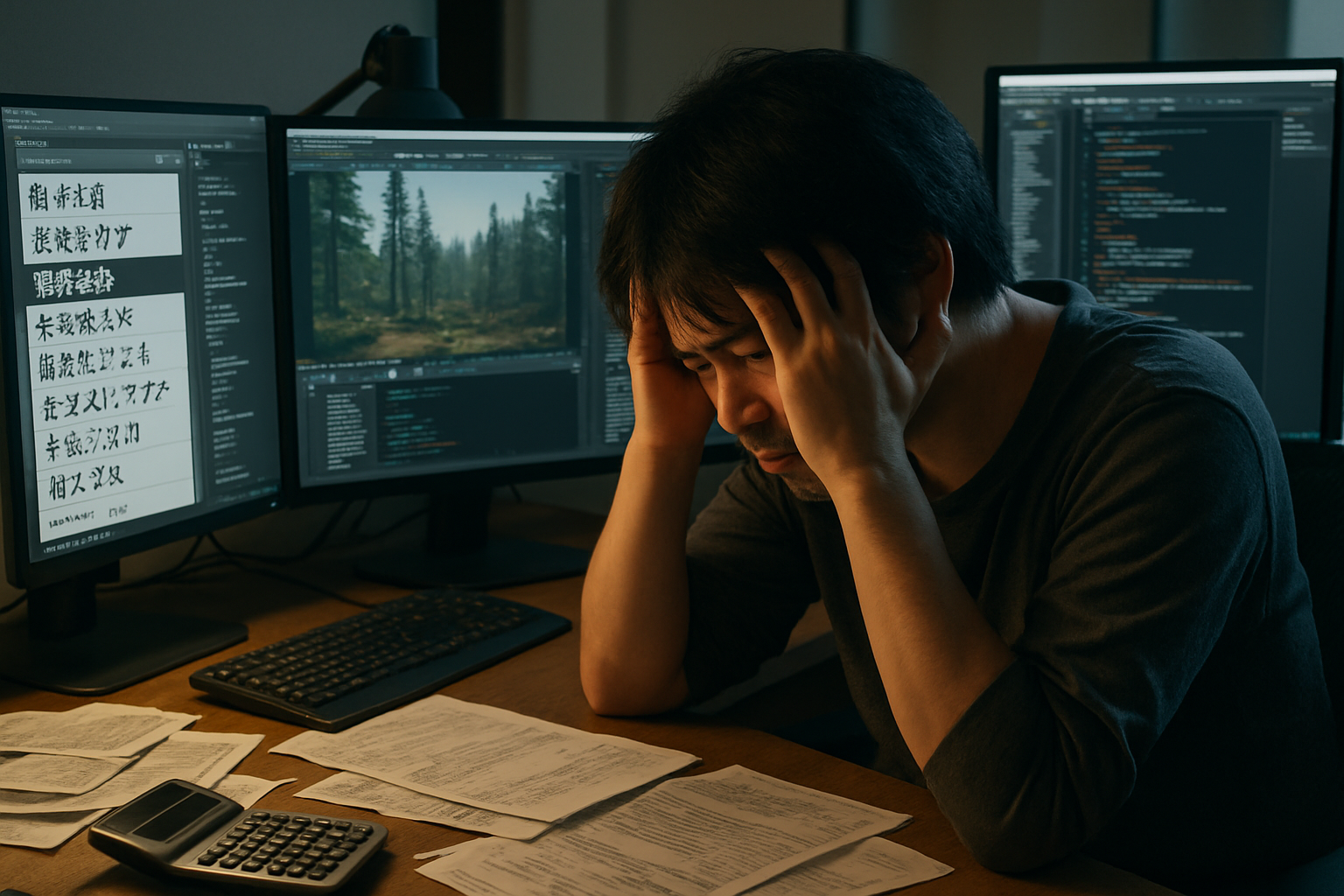
A staggering 5,200% price increase on fonts from Tokyo-based Fontworks has sent shockwaves through Japan's indie game development community, forcing developers to completely reconsider their typography strategies and development budgets.
The dramatic pricing restructure from Fontworks, which is owned by U.S.-based typography giant Monotype, represents one of the most severe cost increases ever imposed on Japan's creative industries. The new pricing model not only multiplies existing costs by more than 50 times but also introduces user caps that trigger additional fees, creating a compounding financial burden for small development studios.
The Scale of the Crisis
For Japan's thriving indie game development scene, fonts are not merely a design choice—they are essential tools that define the visual identity and user experience of games. Japanese games require complex typography solutions that can handle multiple character sets including hiragana, katakana, and kanji, making specialized font licenses particularly critical.
The price hike has transformed what was once a manageable business expense into a potentially company-ending cost. Small indie studios that previously paid modest licensing fees now face bills that could consume entire development budgets, forcing many to halt projects or seek emergency funding.
Impact on Development Studios
The timing of this price increase is particularly devastating for Japan's indie gaming sector, which has been experiencing unprecedented growth. Many studios operate on razor-thin margins, with font licensing previously representing less than 1% of total development costs. The new pricing structure threatens to make professional typography accessible only to major publishers with substantial budgets.
Independent developers are now scrambling to find alternatives, including open-source fonts, custom typography solutions, or licensing agreements with alternative providers. However, these options often come with their own challenges, including limited Japanese language support or significant development time investments to implement new typography systems mid-project.
The Monotype Connection
Fontworks' parent company, Monotype, is a multinational corporation that controls a significant portion of the global typography market. The company's aggressive pricing strategy appears to be part of a broader effort to maximize revenue from its extensive font portfolio, which includes some of the world's most widely-used typefaces.
This approach reflects a growing trend in the software industry where established companies are leveraging their market dominance to implement substantial price increases, often catching smaller users off-guard with limited notice or transition periods.
Industry Response and Alternatives
The Japanese game development community has begun organizing to address the crisis. Developer forums and industry groups are sharing information about alternative font providers and open-source solutions that can support Japanese text rendering. Some studios are even considering collaborative efforts to commission custom fonts that could be shared across multiple projects.
Several prominent Japanese game developers have publicly criticized the pricing change, arguing that it demonstrates a fundamental misunderstanding of how independent creators operate and the role that accessible tools play in fostering innovation in the gaming industry.
Broader Implications for Creative Industries
The Fontworks pricing crisis extends beyond gaming, affecting graphic designers, web developers, and other creative professionals throughout Japan. The incident highlights the vulnerability of creative industries to sudden cost increases from essential tool providers and raises questions about market concentration in creative software sectors.
Legal experts suggest that while the price increase may be within Fontworks' contractual rights, the magnitude and implementation could potentially face challenges under Japanese consumer protection laws, particularly if existing customers were not given adequate notice or transition periods.
Looking Forward
The crisis has accelerated discussions about the need for more diverse and accessible typography options for Japanese content creators. Some industry observers predict this could spur innovation in open-source font development and create opportunities for new companies to enter the Japanese typography market.
For now, indie game developers continue to adapt to the new reality, with many reevaluating their entire approach to visual design and budgeting. The long-term impact on Japan's creative industries will likely depend on how quickly alternative solutions emerge and whether market forces ultimately constrain such dramatic pricing increases.
The situation serves as a stark reminder of the interconnected nature of modern creative industries and how decisions by large corporations can have far-reaching consequences for independent creators and cultural expression.