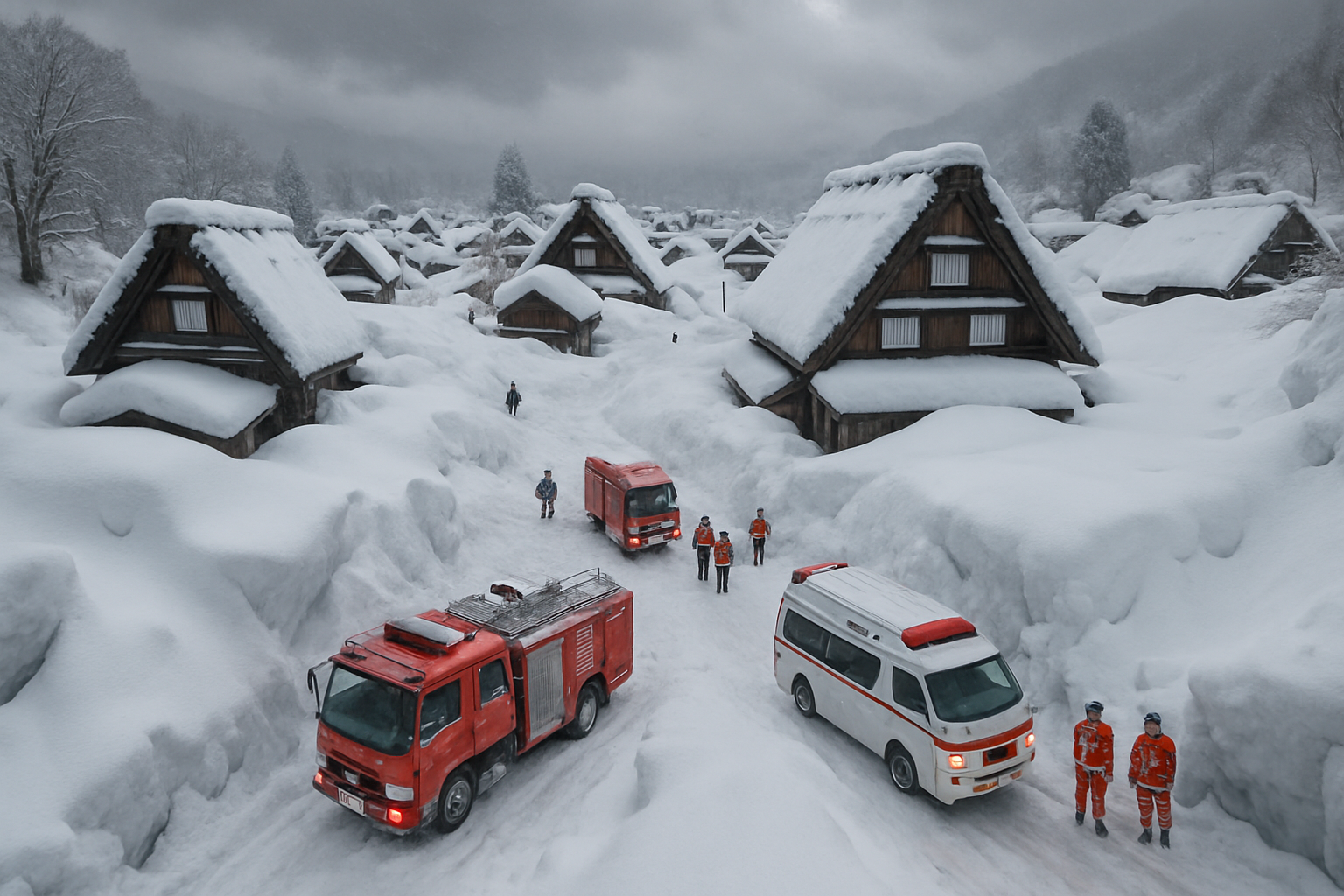
Japan's battle against one of the most devastating winter storms in recent history has intensified, with the death toll from nearly three weeks of heavy snowfall rising to 46 people, while 558 others have been injured, according to new data released by the Fire and Disaster Management Agency on Tuesday.
The crisis, which began in late January, has transformed Japan's northern regions into a frozen battleground where communities struggle against record-breaking snow accumulations that have buried entire towns under meters of white. The current death toll represents a significant escalation from the 35 fatalities reported just days earlier, underscoring the mounting human cost of what meteorologists are calling the most severe winter weather system to strike Japan in decades.
Unprecedented Snow Accumulation
The scale of snowfall has shattered historical records across multiple prefectures. Aomori city, one of the hardest-hit areas, recorded snow depths reaching 1.8 meters – the highest accumulation since 1945. Some regions along the Sea of Japan coast have experienced snow drifts exceeding 2 meters, creating conditions not seen in living memory for many residents.
The geographic distribution of casualties spans multiple northern prefectures, with Niigata previously reporting 12 deaths, Akita 6 deaths, and Aomori 4 deaths in earlier tallies. The victims range from elderly residents attempting to clear snow from their properties to younger individuals caught in the extreme conditions.
"The unprecedented nature of this snowfall has overwhelmed our traditional response systems. We are seeing conditions that haven't occurred since the post-war period."
— Local Emergency Response Official
Government Emergency Response
Prime Minister Sanae Takaichi has convened multiple emergency cabinet meetings since the crisis began, ordering ministers to prioritize protecting lives above all other considerations. The government has deployed Self-Defense Forces personnel to assist with emergency operations across the affected regions, marking one of the largest domestic military deployments for weather-related disasters in recent years.
In Sapporo alone, authorities have deployed over 1,000 snow plows to clear more than 3,800 kilometers of roadway. The massive logistical operation represents the largest coordinated snow removal effort in the city's modern history, yet officials acknowledge they are struggling to keep pace with the continuing snowfall.
Infrastructure Under Siege
The relentless snowfall has exposed critical vulnerabilities in Japan's infrastructure systems. Widespread power outages have affected hundreds of thousands of residents, with some areas experiencing rolling blackouts as utility companies work around the clock to restore service. Transportation networks have been severely disrupted, with rail services in the Tohoku and Hokuriku regions facing significant delays and cancellations.
The elderly population has proven particularly vulnerable to the extreme conditions. Many fatalities have occurred during snow removal operations, as older residents attempt to clear their properties and become trapped or injured in the process. Community volunteer efforts have mobilized to assist elderly residents, but the sheer scale of the crisis has stretched these informal support networks to their limits.
Historical Context and Climate Implications
The current crisis unfolds against a backdrop of broader climate volatility. Remarkably, January 2026 was recorded as the hottest month globally in recorded history – the 18th of the past 19 months to exceed 1.5°C above pre-industrial levels. This juxtaposition of global warming with regional extreme cold demonstrates the complex and often counterintuitive nature of climate change impacts.
The Northern Hemisphere has experienced a pattern of extreme weather events this winter, with over 140 deaths attributed to severe winter conditions since late January across multiple countries. Japan's crisis represents the deadliest single-nation impact from this broader meteorological pattern.
Economic and Social Impact
Beyond the immediate human tragedy, the snowfall crisis has inflicted substantial economic damage. Agricultural sectors have suffered billions in losses, with greenhouse operations and livestock facilities struggling under the weight of snow and power outages. The tourism industry, particularly ski resorts, faces a paradoxical situation where excessive snow has created dangerous rather than desirable conditions.
Educational systems have been severely disrupted, with hundreds of schools forced to close due to transportation difficulties and heating system failures. The timing of the crisis during Japan's midwinter election period – the first in 36 years to be held during winter – has added additional complexity to emergency response coordination.
Avalanche Warnings and Future Threats
Meteorologists have issued urgent avalanche warnings due to the combination of extreme snow accumulation and potential sudden temperature changes. The risk is particularly acute as weather patterns shift, potentially causing rapid snow melts that could trigger dangerous avalanche conditions in mountainous regions.
Forecasters warn that additional snowfall is expected in the coming days, prolonging the crisis and potentially adding to the casualty count. The Japan Meteorological Agency has maintained its highest-level warnings for several prefectures, advising residents to avoid unnecessary travel and to prepare for extended periods of isolation.
Community Resilience and Response
Despite the overwhelming challenges, Japanese communities have demonstrated remarkable resilience and solidarity. Neighbors have coordinated to check on elderly residents, businesses have opened their doors as warming centers, and volunteers have organized supply distribution networks to reach isolated areas.
The crisis has also highlighted the effectiveness of Japan's disaster preparedness systems, even as they are pushed to their absolute limits. Early warning systems, emergency shelters, and coordinated response protocols have undoubtedly prevented an even higher death toll, though officials acknowledge that the scale of this event has revealed areas where improvements are needed.
Looking Ahead
As Japan continues to battle against the ongoing snowfall, the focus remains on immediate life-saving operations and maintaining critical infrastructure. The government has indicated that recovery efforts will likely extend well beyond the end of the current weather system, with some communities potentially remaining isolated for weeks.
The crisis represents a sobering reminder of nature's power and the vulnerability of modern society to extreme weather events. As climate patterns become increasingly unpredictable, Japan's experience may serve as a crucial case study for other nations preparing for similar challenges in an era of climate volatility.
Emergency services continue to work around the clock, with rescue operations ongoing in the most affected areas. The full extent of the damage – both human and economic – will likely not be known for months, but the resilience and solidarity displayed by Japanese communities in the face of this unprecedented natural disaster offers hope for recovery and rebuilding in the challenging months ahead.