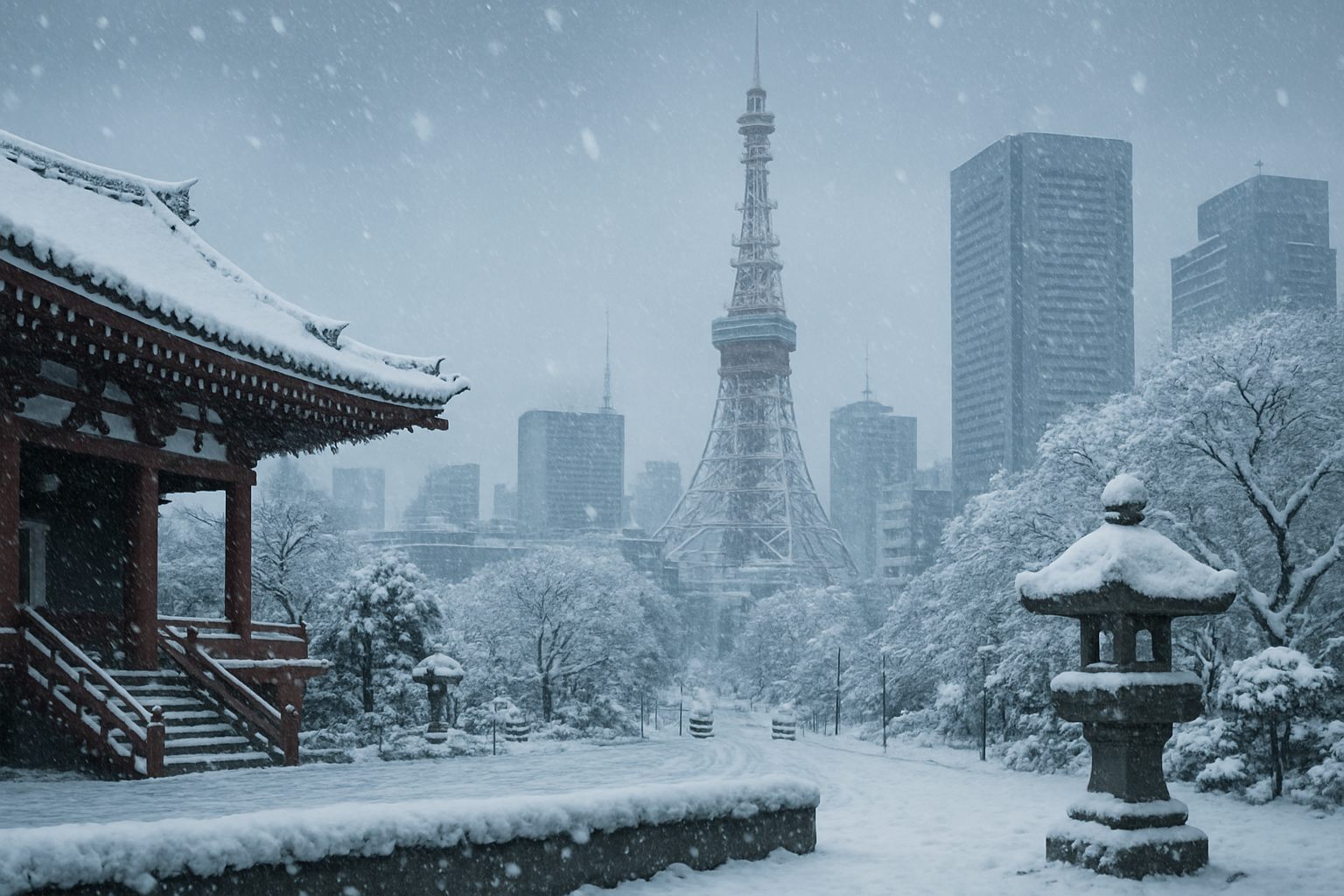
Heavy snowfall blanketed a wide swath of Japan along the Sea of Japan coast on Sunday, while the Kanto area including Tokyo also experienced significant snow accumulation in what marks another chapter in the country's ongoing severe winter weather crisis.
Central Tokyo recorded approximately 3 centimeters of snow in the early morning hours of Sunday, February 8, 2026, as a powerful storm system tightened its grip across the archipelago. The heaviest accumulations, however, were reported along Japan's Sea of Japan coast, where some regions have been battling record-breaking snowfall for weeks.
Latest Developments Amid Ongoing Crisis
The fresh snowfall comes as Japan continues to grapple with one of its most severe winter weather emergencies in decades. Since late January, the country has experienced unprecedented conditions that have claimed at least 35 lives and displaced thousands across multiple prefectures.
According to meteorological reports, the storm system responsible for Sunday's snowfall is part of a broader pattern of extreme weather that has been affecting the Northern Hemisphere since late January 2026. The Japan Meteorological Agency maintains winter storm warnings across affected regions, with particular concern for areas that have already received record accumulations.
Regional Impact and Historical Context
The Sea of Japan coast, which includes prefectures such as Niigata, Akita, and Aomori, has borne the brunt of this winter's extreme conditions. Some areas have recorded snow depths exceeding 2 meters, with Aomori city alone seeing accumulations of 1.8 meters – the highest recorded since 1945.
The ongoing crisis has disproportionately affected Japan's elderly population, with many casualties occurring during snow removal operations. The 91-year-old woman found buried under a 3-meter snow drift in Ajigasawa, Aomori Prefecture, became a symbol of the vulnerability facing older residents in rural communities.
"The scale and persistence of this winter weather pattern is unprecedented in recent memory. We are seeing conditions not experienced since the immediate post-war period."
— Senior Meteorologist, Japan Meteorological Agency
Government Response and Military Deployment
Prime Minister Sanae Takaichi has convened multiple emergency cabinet meetings since the crisis began, ordering all government ministers to prioritize life protection measures. The Self-Defense Forces have been deployed across affected regions to assist with emergency operations and snow removal.
In Sapporo alone, over 1,000 snow plows are working around the clock to clear approximately 3,800 kilometers of roads. The massive undertaking represents one of the largest snow removal operations in Japanese history, with military personnel supplementing civilian crews in the most severely affected areas.
Infrastructure and Transportation Disruption
The persistent snowfall has caused widespread infrastructure disruption across northern Japan. Power outages have affected hundreds of thousands of residents, while transportation networks have faced significant challenges maintaining regular service.
Rail services along several major routes have experienced delays and cancellations, particularly affecting the Tohoku and Hokuriku regions. The heavy snow has also disrupted air travel, with several domestic flights cancelled or diverted due to poor visibility and runway conditions.
Community Response and Vulnerability
Local communities have mobilized volunteer efforts to assist elderly residents, recognizing the particular vulnerability of older adults during extreme winter conditions. Many deaths have been attributed to falls and injuries sustained during snow removal activities, highlighting the physical demands placed on residents trying to maintain access to their homes.
The current snowfall emergency is occurring during a particularly challenging period, as Japan prepares for its first midwinter election in 36 years. The timing has complicated both campaigning and voting preparations in affected areas.
Climate Context and Global Patterns
Japan's extreme winter conditions are part of a broader pattern of severe weather affecting the Northern Hemisphere. The crisis coincides with what meteorologists have confirmed as the hottest January on record globally, demonstrating the complex and apparently contradictory nature of current climate patterns.
Over 140 people have died across the Northern Hemisphere since late January due to extreme winter weather, with significant impacts recorded in North America, Europe, and now continuing in East Asia. The simultaneous occurrence of record heat and extreme cold in different regions has raised questions about the stability of global weather systems.
Looking Ahead: Warnings and Preparations
Weather authorities have issued avalanche warnings for several mountainous regions due to the combination of heavy snow accumulation and potential sudden warming. The risk has been elevated by the extreme depths of snow that have accumulated over the past several weeks.
Government officials stress that the crisis is not over, with additional snowfall expected in the coming days. Emergency shelters remain open across affected prefectures, and residents in high-risk areas are being advised to prepare for possible evacuation if conditions worsen.
The current emergency has tested Japan's disaster preparedness systems like few events in recent memory. While the country's experience with natural disasters has enabled an organized response, the scale and duration of this winter weather event has pushed resources to their limits.
Economic and Social Impact
Beyond the immediate safety concerns, Japan's extreme winter is having significant economic ramifications. Agricultural regions have suffered extensive damage, with greenhouse structures collapsing under snow loads and livestock operations struggling to maintain adequate conditions.
The tourism industry, already dealing with broader global challenges, faces additional disruption as winter sports facilities and transportation networks struggle to operate safely. Many ski resorts, paradoxically, have been forced to close due to excessive snowfall creating dangerous avalanche conditions.
As Japan continues to manage this unprecedented winter emergency, the events of February 8 serve as a reminder that the crisis that began in late January shows little sign of abating. With more than a week of additional winter weather forecast, authorities and residents alike are preparing for what may become the most significant snow emergency in modern Japanese history.