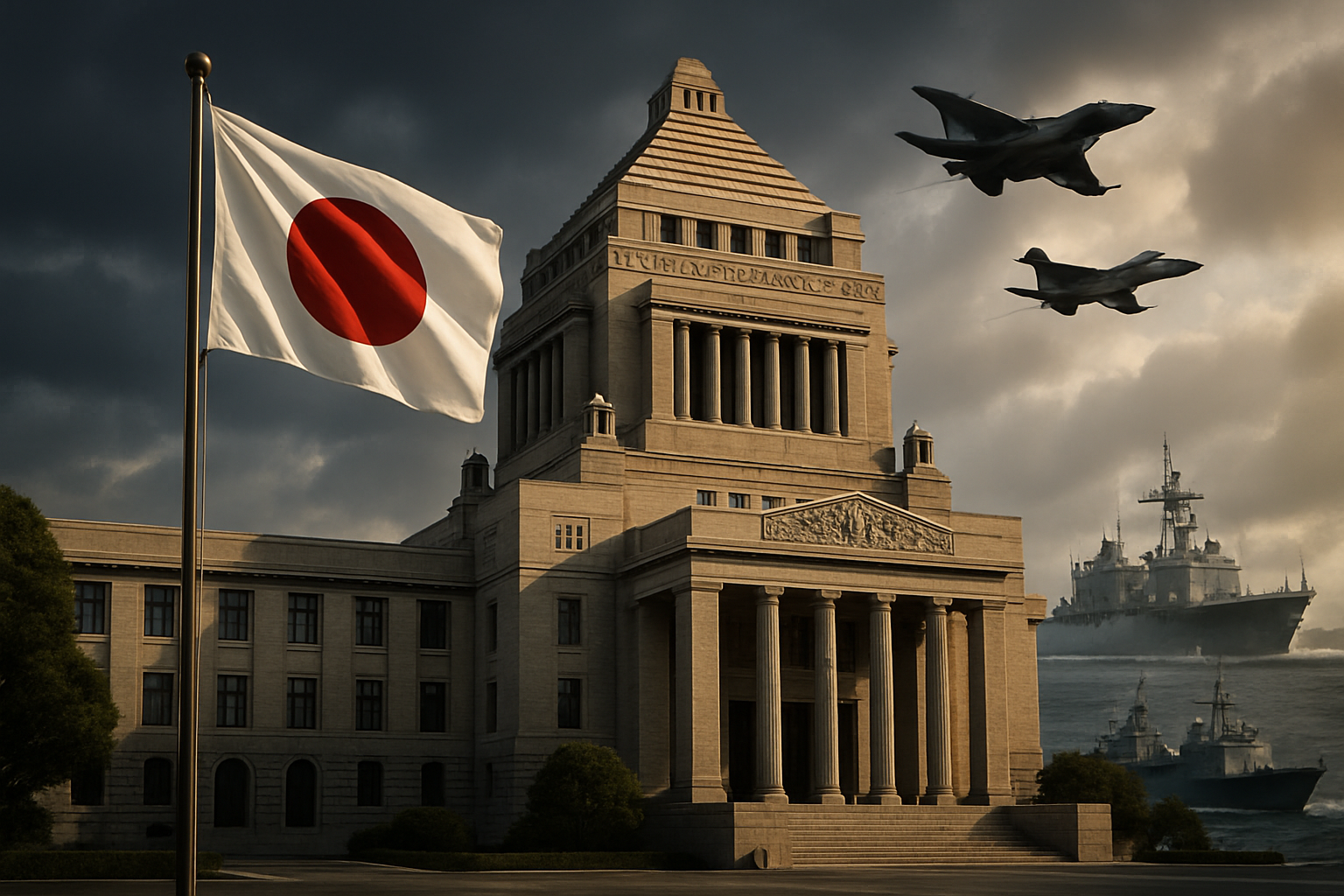
Japan has taken a historic step away from its post-war pacifist principles by lifting decades-old restrictions on lethal weapons exports, marking the most significant defense policy transformation since 1947 and signaling a fundamental shift in how the nation approaches international security cooperation.
The decision, announced Tuesday by Prime Minister Sanae Takaichi's government, represents Japan's biggest overhaul of defense export rules in decades. The move opens the way for exports of warships, missiles, and other weapons systems to allied nations, fundamentally altering Japan's approach to the global arms market.
Breaking Seven Decades of Arms Export Restrictions
The policy change ends restrictions first implemented in 1967 that largely prohibited Japan from exporting lethal military equipment. For the first time since World War II, Japanese defense manufacturers will be permitted to export materials beyond non-lethal equipment such as radar systems and protective gear.
Chief Cabinet Secretary Minoru Kihara confirmed the amendments would include previously prohibited lethal weapons, representing the most significant departure from constitutional pacifism since Japan's current constitution was adopted in 1947. The decision marks another step away from the pacifist restraints that have shaped Japan's postwar security policy.
"No single country can now protect its own peace and security alone, and partner countries are essential for Japan's defense."
— Sanae Takaichi, Prime Minister of Japan
The new framework will enable Japan to export next-generation fighter jets, combat drones, and sophisticated defense systems to allied nations. This represents a complete reversal of Japan's historical approach to international arms trade and military cooperation.
Strategic Context: Rising Regional Tensions
The policy shift comes amid escalating security concerns in the Asia-Pacific region. China's military activity around Taiwan increased by 23% in 2025, while North Korea continues advancing its nuclear capabilities. These developments have exposed Japan's vulnerability, with the nation dependent on imports for 95% of its oil needs and 70% of its energy transit through the Persian Gulf.
Defense Minister Koizumi has characterized the accelerating weapons development in the region as an "increasingly urgent threat" to national security, necessitating enhanced deterrent capabilities and stronger defense partnerships with allied nations.
The timing is particularly significant given recent global events. Wars in Ukraine and the Middle East have strained U.S. weapons production, creating new opportunities for Japan while expanding the market for alternative suppliers. At the same time, U.S. allies in Europe and Asia are looking to diversify their defense suppliers as Washington's security commitments face uncertainty under President Donald Trump.
Legislative Authority and Democratic Mandate
Prime Minister Takaichi's ability to implement this historic policy change stems from her party's unprecedented electoral victory in February 2026. The Liberal Democratic Party secured a two-thirds supermajority with 316 of 465 seats in the lower house, providing the strongest legislative authority for any Japanese government since the postwar era.
This overwhelming mandate has enabled constitutional reforms and defense policy changes that would have been impossible under previous coalition governments. For the first time since 1947, Japan now has the legislative capacity to modify Article 9 of its constitution, which enshrines the nation's pacifist principles.
Opposition Concerns and Democratic Accountability
Despite the government's strong mandate, the policy change has faced fierce resistance from opposition parties who argue that fundamental constitutional changes require broader deliberation regardless of mathematical advantages in parliament. Critics warn that such "power majority" governance threatens democratic accountability and institutional balance.
Economic Implications and Global Market Entry
Japan's entry into the global arms market positions the nation to leverage its advanced technological capabilities in precision engineering and manufacturing. The country's expertise in electronics, robotics, and advanced materials provides significant advantages in developing cutting-edge defense systems.
The policy change is expected to strengthen Japan's defense industrial base while creating new revenue streams for Japanese manufacturers. This comes at a time when Japan faces economic challenges, with inflation-adjusted wages declining 1.3% in 2025 and household food spending reaching 44-year highs.
Weapons exports will initially be limited to 17 countries that have signed defense equipment and technology transfer agreements with Japan, including the Philippines and Indonesia. This selective approach reflects Japan's careful balance between commercial opportunities and security considerations.
Strengthening Alliance Partnerships
The arms export liberalization is expected to significantly enhance Japan's alliance relationships, particularly with the United States. The policy shift aligns with Trump administration preferences and enables joint weapons development projects that enhance interoperability between allied forces.
Japan's technological expertise in precision engineering and advanced manufacturing makes it a valuable partner in defense cooperation frameworks. The nation's entry into the arms export market will benefit Quad partnership cooperation and strengthen democratic allies' collective defense capabilities.
"This represents the most significant geopolitical shift in modern East Asian history, transforming Japan from a pacifist nation to an active security partner."
— Regional Security Analyst
Constitutional and Historical Significance
Beyond arms exports, the government's supermajority enables potential modifications to Article 9 of Japan's constitution, which has prohibited the nation from maintaining armed forces for settling international disputes since 1947. These changes would represent the most significant constitutional reform opportunity since the current constitution was adopted.
The policy transformation also addresses Japan's demographic challenges, with 30% of the population over 65 and the lowest birth rate recorded in 2024. Enhanced defense capabilities and international partnerships provide new approaches to national security that complement traditional diplomatic and economic tools.
Regional and Global Implications
Japan's policy shift is being closely watched across the Asia-Pacific region and beyond. European allies are observing this democratic defense strengthening as a potential template for adapting to 21st-century security challenges while maintaining institutional accountability standards.
The success or failure of Japan's transformation will influence other democratic nations facing similar pressures to enhance their defense capabilities while preserving democratic institutions and international cooperation frameworks.
For regional partners, Japan's enhanced defense posture provides a stabilizing influence in an era of increasing great power competition. The nation's technological capabilities and democratic values make it an attractive partner for countries seeking to balance regional security concerns with respect for international law.
Implementation and Future Trajectory
The government will be required to notify parliament of any decisions by the National Security Council regarding arms exports, ensuring some level of legislative oversight despite the policy liberalization. This transparency measure addresses concerns about accountability while enabling the flexibility needed for effective defense cooperation.
Export decisions will focus on nations where active conflicts are not occurring, and agreements will include provisions preventing the re-export of Japanese weapons to third parties without approval. These safeguards reflect Japan's continued commitment to responsible arms trade practices.
Looking ahead, the policy change positions Japan as a major player in the global defense market while fundamentally altering the nation's role in international security. The transformation from a pacifist nation to an active defense partner represents one of the most significant shifts in post-war international relations, with implications extending far beyond Japan's borders to influence global security architecture for decades to come.