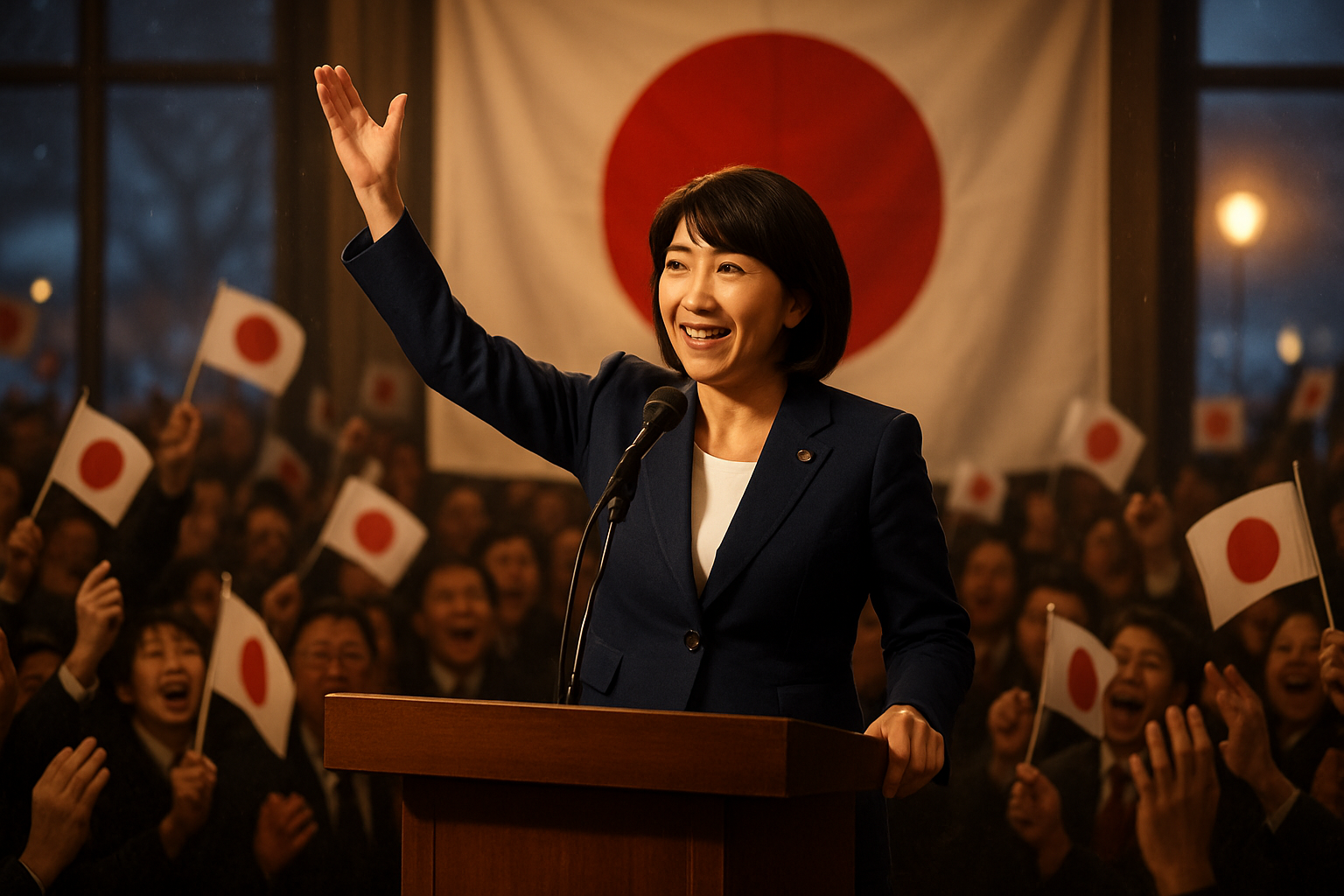
Japan's conservative Prime Minister Sanae Takaichi achieved a historic landslide victory in Sunday's snap parliamentary elections, with her Liberal Democratic Party (LDP) securing 316 of 465 lower house seats and cementing her position as the nation's first female leader to win an election in her own right.
The commanding victory, conducted amid Japan's worst winter storm crisis in decades, provides Takaichi with an unprecedented mandate to advance her conservative agenda, including potential constitutional reforms and strengthened defense capabilities to counter regional threats from China.
Overwhelming Electoral Success
The LDP's triumph represents one of the most decisive electoral victories in modern Japanese history. From defending 233 seats, the party surged to 316 seats, achieving a two-thirds supermajority when combined with coalition partner Japan Innovation Party. This level of parliamentary control hasn't been seen since the peak of the Abe era.
The victory is particularly remarkable given the challenging conditions under which the election was held. Japan has been battered by severe winter storms since late January, claiming over 35 lives and dumping more than two meters of snow in some northern regions. The election marked the first winter parliamentary contest in 36 years.
"This resounding mandate reflects public confidence in Sanae's vision for a more prosperous and safer Japan," Malaysian Prime Minister Anwar Ibrahim said in congratulating Takaichi on her victory.
— Anwar Ibrahim, Malaysian Prime Minister
Opposition Collapse
The election saw the complete collapse of the main opposition, the Centrist Reform Alliance—a merger of the Constitutional Democratic Party and Komeito formed just last month. The coalition suffered a crushing defeat, losing significant seats and failing to provide a credible alternative to Takaichi's vision.
Exit polls confirmed widespread voter rejection of the opposition's platform, with many citizens endorsing Takaichi's promise to make Japan "more prosperous and safer" amid economic pressures and regional security challenges.
Economic Mandate Amid Crisis
The election was fundamentally shaped by economic concerns, with 54% of voters citing inflation as their primary worry. Household food spending has reached a 44-year high of ¥314,001 monthly, representing a 4.6% increase that has strained family budgets across the nation.
Takaichi's economic revitalization promises, including significant tax cuts that initially spooked financial markets, resonated strongly with voters facing cost-of-living pressures. Her victory provides political cover to implement stimulus measures despite initial market skepticism.
The economic context was further complicated by Japan recording its lowest birth rate in history for 2024, with 30% of the population now over 65, making it the world's most aged society. These demographic challenges require urgent policy interventions that Takaichi's supermajority now enables.
International Implications
The victory carries significant international ramifications, particularly for regional security dynamics in the Asia-Pacific. U.S. President Donald Trump provided an unprecedented campaign endorsement—breaking diplomatic tradition—and has announced plans for a summit on March 19 to strengthen bilateral ties.
U.S. Treasury Secretary Scott Bessent congratulated Takaichi on her "great victory," signaling continued strong American support for her leadership. The relationship gains added importance amid tensions with China, where military activity around Taiwan increased 23% in 2025.
China had attempted to rally Southeast Asian support against Japan following Takaichi's controversial November remarks on Taiwan, but the effort gained little regional traction. ASEAN nations preferred multilateral approaches, balancing economic ties with China against security partnerships with Japan and the United States.
Technological Challenges Overcome
The election faced unprecedented challenges from AI-generated disinformation campaigns that created fabricated political content "in seconds"—including fake party logos, candidate imagery, and false testimonials. Digital platforms implemented enhanced fact-checking measures, while educational initiatives helped young voters identify AI manipulation.
Despite these technological threats to electoral integrity, Japan's democratic institutions proved resilient. The successful conduct of the election amid both natural disasters and information warfare provides encouragement for democratic processes worldwide facing similar challenges.
Constitutional Reform Potential
Takaichi's two-thirds supermajority opens the door to significant constitutional reforms, including potential modifications to Japan's pacifist constitution. As a politician who has long advocated for constitutional revisions and enhanced military capabilities, she now possesses the legislative authority to pursue these goals.
The timing is particularly significant given regional security concerns. Enhanced defense spending aimed at countering China's military expansion, structural economic changes to address demographic challenges, and infrastructure investments all become politically feasible with such a commanding mandate.
Democratic Milestone
Beyond policy implications, Takaichi's victory represents a historic milestone for Japanese democracy. As the nation's first female Prime Minister to achieve electoral success in her own right, she has established an important precedent for political leadership in the Asia-Pacific region.
The former heavy metal drummer, who has cited Margaret Thatcher's "Iron Lady" approach as inspiration, vindicated her political gamble in calling snap elections after promising resignation if the party failed to secure a majority.
Singapore Prime Minister Lawrence Wong congratulated Takaichi, noting that "the renewed mandate shows the strong confidence the Japanese people have in her leadership." Similar messages poured in from across the region, reflecting the international significance of her victory.
Challenges Ahead
Despite the electoral triumph, Takaichi inherits substantial challenges. Japan continues to face the ongoing winter storm crisis, with Self-Defense Forces deployed for emergency operations and 1,000+ snow plows clearing 3,800 kilometers of roads in Sapporo alone.
The economic recovery agenda requires careful balance between stimulus measures and fiscal responsibility. International observers will monitor how Takaichi utilizes her historic mandate to address persistent domestic challenges while strengthening Japan's regional leadership role.
The victory positions Japan as a stable democratic anchor in the Asia-Pacific during a period of global democratic stress. Success in implementing her conservative agenda while maintaining democratic governance principles could provide a template extending well beyond Japan's borders.
Looking Forward
With the most significant concentration of political authority in modern Japanese democracy, Takaichi's next steps will be closely watched both domestically and internationally. The March 19 summit with President Trump will likely focus on defense cooperation, trade relationships, and coordinated responses to China's regional ambitions.
The election results demonstrate that despite natural disasters, technological disruption, and international pressures, Japan's democratic institutions remain resilient and capable of delivering clear mandates for governance. This resilience provides valuable lessons for democratic systems worldwide facing similar challenges in an era of increasing global complexity.