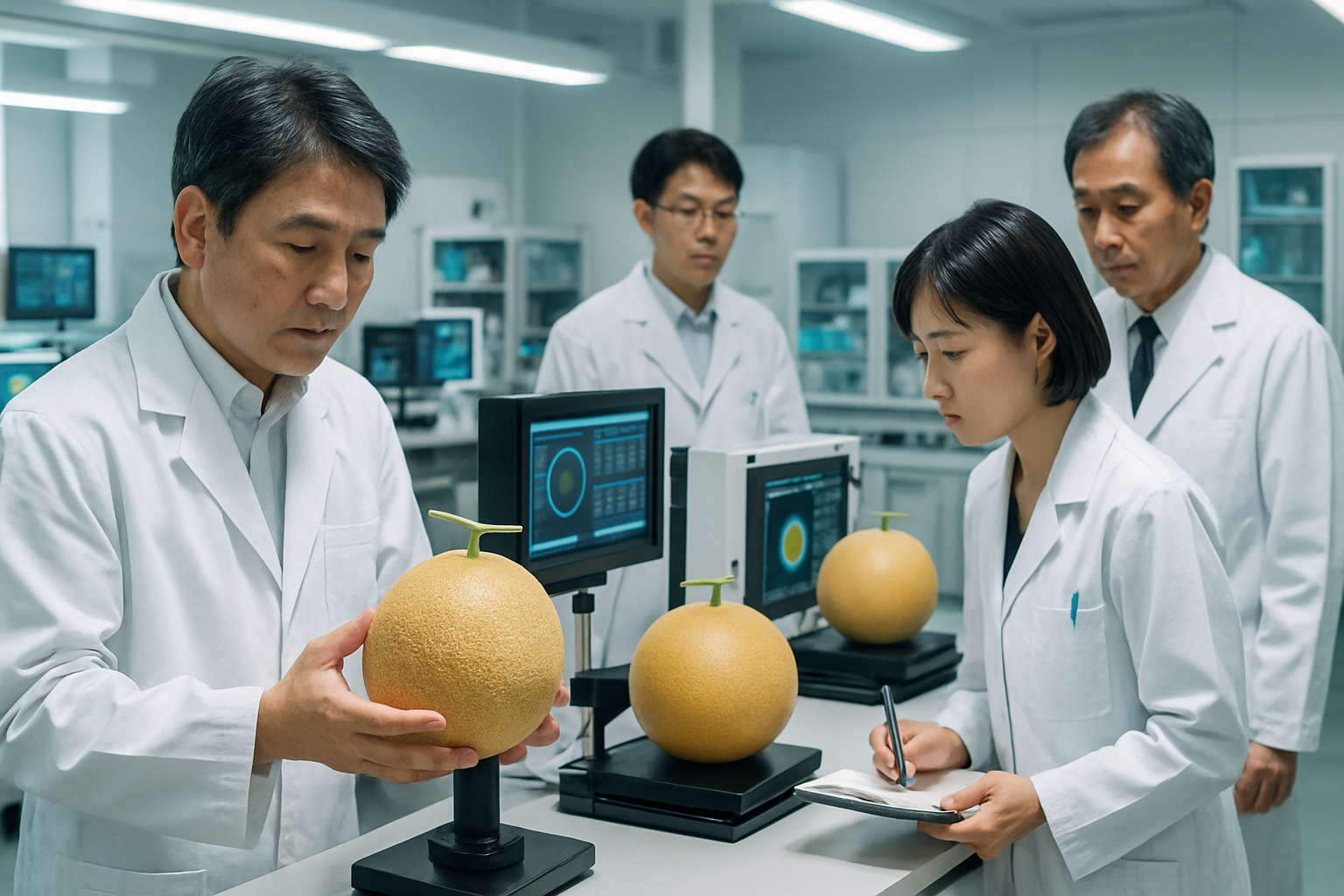
Japanese researchers have achieved a groundbreaking advancement in agricultural technology by developing muskmelons capable of ripening on demand, addressing one of the fruit industry's most persistent challenges—the notoriously short shelf life of premium melons.
The revolutionary development comes from a collaboration between a national agricultural research institute and the University of Tsukuba, marking a significant leap forward in controlled ripening technology that could transform global fruit distribution and reduce food waste.
The Challenge of Premium Fruit Distribution
Muskmelons, particularly the prized varieties cultivated in Japan, have long presented a logistical nightmare for producers and distributors. These premium fruits, which can sell for hundreds of dollars each in Japanese markets, traditionally have an extremely narrow window between optimal ripeness and spoilage.
"The short shelf life has always been the Achilles' heel of the muskmelon industry," explains a representative from the research team. "Timing distribution to coincide with natural ripening patterns results in significant losses and limits market reach."
This challenge becomes particularly acute when considering Japan's position as a global leader in premium agricultural products. The country's reputation for perfectionism in fruit cultivation—evidenced by their square watermelons, perfectly spherical melons, and individually wrapped apples—demands innovation that maintains quality while extending practical viability.
Breakthrough Technology Development
The research team's approach involves sophisticated manipulation of the fruit's natural ripening hormones, allowing producers to effectively "pause" the ripening process until activation is desired. The technology works by controlling ethylene production and sensitivity within the fruit, enabling precise timing of the ripening cascade.
Unlike traditional preservation methods that simply slow deterioration, this innovation allows the fruit to complete its natural ripening process on command, ensuring optimal flavor, texture, and nutritional content when activated.
The development represents years of research into plant hormone regulation and cellular mechanisms. Scientists have identified specific biochemical pathways that can be temporarily suspended and then reactivated without compromising the fruit's inherent quality characteristics.
Global Agricultural Context
This innovation arrives during a period of unprecedented agricultural challenges worldwide. With global temperatures having exceeded 1.5°C above pre-industrial levels for 18 consecutive months as of January 2026, traditional farming cycles face increasing disruption.
Japan's agricultural sector has demonstrated remarkable resilience through technological integration. Recent developments across the globe show similar patterns of innovation-driven adaptation—from Finland's controlled environment winter raspberry cultivation to Algeria's date waste conversion into livestock feed.
The muskmelon breakthrough exemplifies Japan's broader agricultural philosophy of combining traditional cultivation wisdom with cutting-edge technology. This approach has proven particularly effective during climate volatility, where predictable ripening schedules become increasingly valuable for supply chain stability.
Economic and Industry Implications
The economic implications of on-demand ripening technology extend far beyond individual fruit sales. Japanese agricultural exports, already valued in the billions, could see significant expansion as distribution windows extend and waste reduction improves profit margins.
For international markets, this technology could democratize access to premium Japanese produce. Previously, only specialized importers with rapid distribution networks could successfully bring Japanese melons to foreign markets before spoilage. On-demand ripening removes this barrier, potentially opening new consumer segments worldwide.
The innovation also addresses growing concerns about food waste in agricultural supply chains. By eliminating the guesswork in ripening timing, producers can reduce losses from premature spoilage while ensuring consistent quality delivery to consumers.
"This technology represents a fundamental shift from reactive to proactive fruit management. We're moving from accepting natural limitations to actively controlling optimal conditions."
— University of Tsukuba Research Team
Technical Innovation and Food Science
The scientific achievement involves complex biotechnology applications that manipulate natural plant processes without genetic modification. Researchers have identified specific trigger mechanisms that can suspend and resume cellular activities associated with ripening.
The process begins during cultivation, where fruits are treated with specialized compounds that create dormant activation pathways. These pathways remain inactive until specific conditions or treatments are applied, initiating the natural ripening sequence.
Quality testing has confirmed that artificially timed ripening produces fruits indistinguishable from naturally ripened specimens in terms of sugar content, aroma compounds, and textural characteristics. This preservation of authenticity addresses concerns about technological intervention compromising traditional fruit quality.
International Agricultural Innovation Context
Japan's melon innovation fits within a broader global pattern of agricultural modernization through technology integration. Countries worldwide are demonstrating sophisticated approaches to food system challenges, combining traditional knowledge with modern scientific capabilities.
From Kenya's irrigation rehabilitation serving 10,000+ farmers to Papua New Guinea's mechanized operations generating millions in revenue, developing nations are proving that agricultural innovation can drive economic development while maintaining cultural practices.
The success factors identified across these international initiatives—technology-traditional knowledge integration, community engagement, and adaptive management responding to changing environmental conditions—mirror the approach taken in Japan's melon development program.
Future Applications and Scaling
The research team's success with muskmelons opens possibilities for applying similar technology to other premium fruits with short shelf lives. Strawberries, peaches, and certain tropical fruits could benefit from controlled ripening approaches, potentially revolutionizing global fruit distribution networks.
Commercial implementation plans involve partnerships with major Japanese fruit producers and distributors. Initial rollouts will focus on domestic premium markets before expanding to international exports, allowing for refinement of application protocols and consumer acceptance testing.
The technology also holds promise for addressing food security concerns in regions with limited cold storage infrastructure. By eliminating dependence on continuous refrigeration for spoilage prevention, on-demand ripening could improve fruit access in developing markets.
Sustainability and Environmental Benefits
Beyond economic advantages, the innovation supports environmental sustainability through multiple pathways. Reduced food waste decreases the environmental burden associated with agricultural production, from water usage to carbon emissions from spoiled products.
Extended distribution windows could also reduce the need for air freight shipping, allowing more sustainable sea transport for international markets. This transportation flexibility aligns with global efforts to reduce the carbon footprint of food distribution.
The technology supports Japan's broader agricultural sustainability goals, including resource efficiency and climate adaptation. As extreme weather events become more frequent, having greater control over harvest timing and fruit maturation provides resilience against unpredictable conditions.
Challenges and Implementation Considerations
Despite its promise, the technology faces several implementation challenges. Regulatory approval for the ripening activation compounds requires extensive safety testing and certification across target markets.
Consumer acceptance represents another hurdle, particularly in markets where "natural" ripening is associated with superior quality. Education campaigns will be necessary to communicate that the technology enhances rather than compromises natural fruit development processes.
Cost considerations also factor into commercial viability. While premium melons command high prices that can absorb additional processing costs, broader application to commodity fruits would require cost reduction through scaling and process optimization.
Looking Ahead
The development of on-demand ripening technology represents more than a single agricultural breakthrough—it exemplifies a new approach to addressing food system challenges through precise biological control.
As climate change continues to disrupt traditional agricultural patterns, innovations that provide greater control over natural processes become increasingly valuable. Japan's melon technology demonstrates that solutions can emerge from combining deep understanding of natural systems with technological capability.
The success of this initiative positions Japan at the forefront of agricultural biotechnology while maintaining its reputation for premium produce quality. As the technology moves toward commercial implementation, its impact could extend far beyond muskmelons, potentially influencing how the global food system adapts to 21st-century challenges.
This achievement underscores the importance of sustained investment in agricultural research and the potential for technology to solve longstanding industry problems while supporting both economic development and environmental sustainability in an increasingly complex global food system.