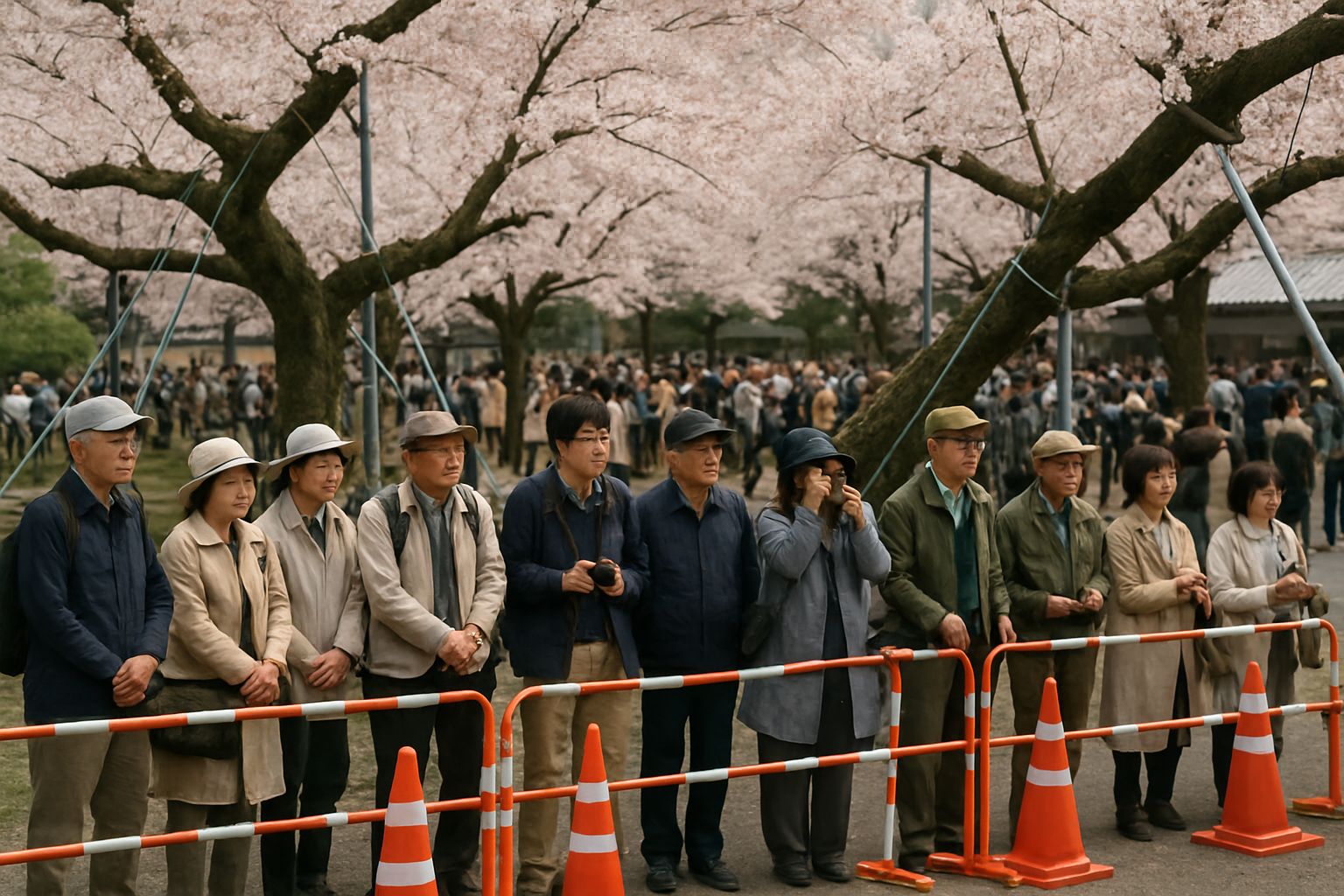
The global travel industry faces its most complex challenge yet as iconic destinations struggle to balance cultural preservation with overwhelming visitor demand, highlighted by Japan's unprecedented cherry blossom safety crisis and revolutionary overtourism management strategies worldwide.
Japan's Cherry Blossom Infrastructure Crisis
Two cherry trees collapsed on Thursday in Tokyo—one at Kinuta Park damaging perimeter fencing and another at the prestigious Chidorigafuchi greenway—creating an unprecedented safety crisis during Japan's most celebrated tourism season. The incidents involve aging Somei Yoshino trees planted during the 1960s post-war reconstruction boom, now reaching their 60-80 year natural lifespan as millions of international visitors arrive for hanami festivities.
The cherry blossom tourism industry generates ¥616 billion ($4.1 billion) annually for Japan's economy, making these safety concerns critical for the nation's economic recovery. Many historic trees now require extensive support structures including metal braces, cable systems, and protective barriers that fundamentally alter the traditional hanami experience.
"We're implementing emergency safety protocols using sonic tomography and resistograph testing to detect internal decay," explained Tokyo Parks officials. Advanced imaging technologies now assess tree health in real-time, while predictive analytics help safety officials make crowd management decisions during peak viewing periods.
Climate Change Accelerates Tree Decline
Climate change significantly accelerates tree stress through altered precipitation patterns, earlier bloom times disrupting natural cycles, and intensifying urban heat island effects. The traditional mono no aware—awareness of life's impermanence—takes on new meaning as Japan's most beloved cultural symbols face premature decline due to environmental pressures.
Replacement challenges compound the crisis: new cherry trees require 15-20 years to reach full flowering potential, while tourist expectations remain unchanged. Community volunteer monitoring programs now assist professional arborists in maintaining tree health, creating new forms of cultural stewardship that blend traditional values with modern conservation science.
Revolutionary Overtourism Management Strategies
Italy's island of Capri has implemented the world's most comprehensive overtourism management system, requiring wireless headsets for tour groups exceeding 20 people and prohibiting groups larger than 40 individuals. The initiative addresses severe overcrowding where 13,000 permanent residents host up to 50,000 daily tourists during summer peaks.
"We're prioritizing visitor experience quality and community well-being over pure volume. This represents a paradigm shift in European destination management."
— Capri Municipal Council, Tourism Management Division
Rome's Trevi Fountain €2 entry system generates €6 million annually while successfully managing visitor flows, providing a sustainable financing template studied globally. Venice has expanded its pioneering entry fee system to 60 days in 2026, compared to just 29 days during the 2024 pilot phase, demonstrating the rapid evolution of crowd control technologies.
Caribbean Innovation and Regional Responses
Saint Vincent and the Grenadines faces a unique challenge as Minister of National Security St Clair Leacock warns that continuing to highlight violence and crime could severely damage the nation's tourism reputation. The government emphasizes that media focus on crime statistics creates perception problems disproportionate to actual visitor safety risks.
Local tourism officials advocate for balanced reporting that acknowledges security improvements while maintaining transparency about ongoing challenges. The approach reflects broader Caribbean strategies to protect tourism economies while addressing legitimate safety concerns through enhanced security protocols rather than media management.
Infrastructure Investment and Technology Integration
Croatia leads European innovation with 62 tourist medical clinics deployed for the 2026 season—Europe's most extensive seasonal healthcare network. This comprehensive visitor support system demonstrates how destinations are evolving beyond traditional hospitality to provide complete travel ecosystems.
Global tourism infrastructure investment has exceeded $570 billion in 2026, focusing on quality-focused strategies over volume approaches. Technology integration includes AI-powered crowd management systems, real-time weather tracking for safety decisions, and blockchain-based visitor documentation that streamlines border processes while enhancing security.
Generation Z Driving Industry Transformation
Generation Z travelers, representing 50% of multiple annual trips lasting five or more days, demand authentic cultural experiences combined with AI-integrated travel planning. This demographic shift forces destinations to balance technological enhancement with cultural authenticity, creating new business models that prioritize meaningful engagement over mass tourism.
Success factors increasingly include cultural preservation, enhanced visitor experiences through strategic infrastructure, meaningful community involvement, and adaptive management responding to rapidly changing traveler preferences. Destinations that successfully integrate these elements while maintaining environmental sustainability are positioned to emerge stronger from current challenges.
Climate Resilience as Competitive Advantage
January 2026 marked the 18th consecutive month of global temperatures exceeding 1.5°C above pre-industrial levels, making climate adaptation essential for destination competitiveness. Proactive infrastructure design, alternative transportation systems, and weather-resistant facilities have become standard requirements rather than optional enhancements.
Japan's cherry blossom crisis exemplifies how climate change affects cultural tourism, while Mediterranean destinations implement comprehensive heat management strategies. The Caribbean develops hurricane resilience protocols that maintain tourism operations during extreme weather events, creating templates for global climate adaptation.
International Cooperation and Knowledge Sharing
Regional cooperation increasingly replaces individual destination competition through coordinated marketing initiatives, shared best practices, and multi-destination travel experiences. The Organization of Eastern Caribbean States (OECS) sustainable tourism framework, led by Saint Vincent and the Grenadines, provides templates for small island developing states facing similar challenges.
European destinations share overtourism management technologies, while Asian markets demonstrate quality-focused recovery strategies that prioritize visitor satisfaction over capacity maximization. This evolution toward collaborative development strengthens entire regions while maintaining distinctive local identities.
Economic Transformation and Community Benefits
Tourism development increasingly functions as comprehensive economic strategy rather than isolated sector growth. Projects generate year-round employment, support local artisan networks, and create multiplier effects extending far beyond traditional hospitality services.
Success requires sophisticated destination management combining marketing excellence, infrastructure investment, crisis communication capabilities, and adaptive operational models. The industry demonstrates post-pandemic maturation toward resilient economic frameworks less vulnerable to external shocks while serving authentic community needs.
Future Implications for Global Travel
Current transformations establish precedents influencing tourism development for decades ahead. Destinations successfully balancing economic prosperity with cultural identity, environmental integrity, and community well-being provide templates for sustainable tourism in an increasingly challenging global environment.
The convergence of overtourism management, climate adaptation, technology integration, and community engagement creates sophisticated frameworks addressing multiple challenges simultaneously. These innovations demonstrate that thoughtful tourism development can serve as infrastructure for human prosperity while preserving cultural heritage and environmental resources for future generations.