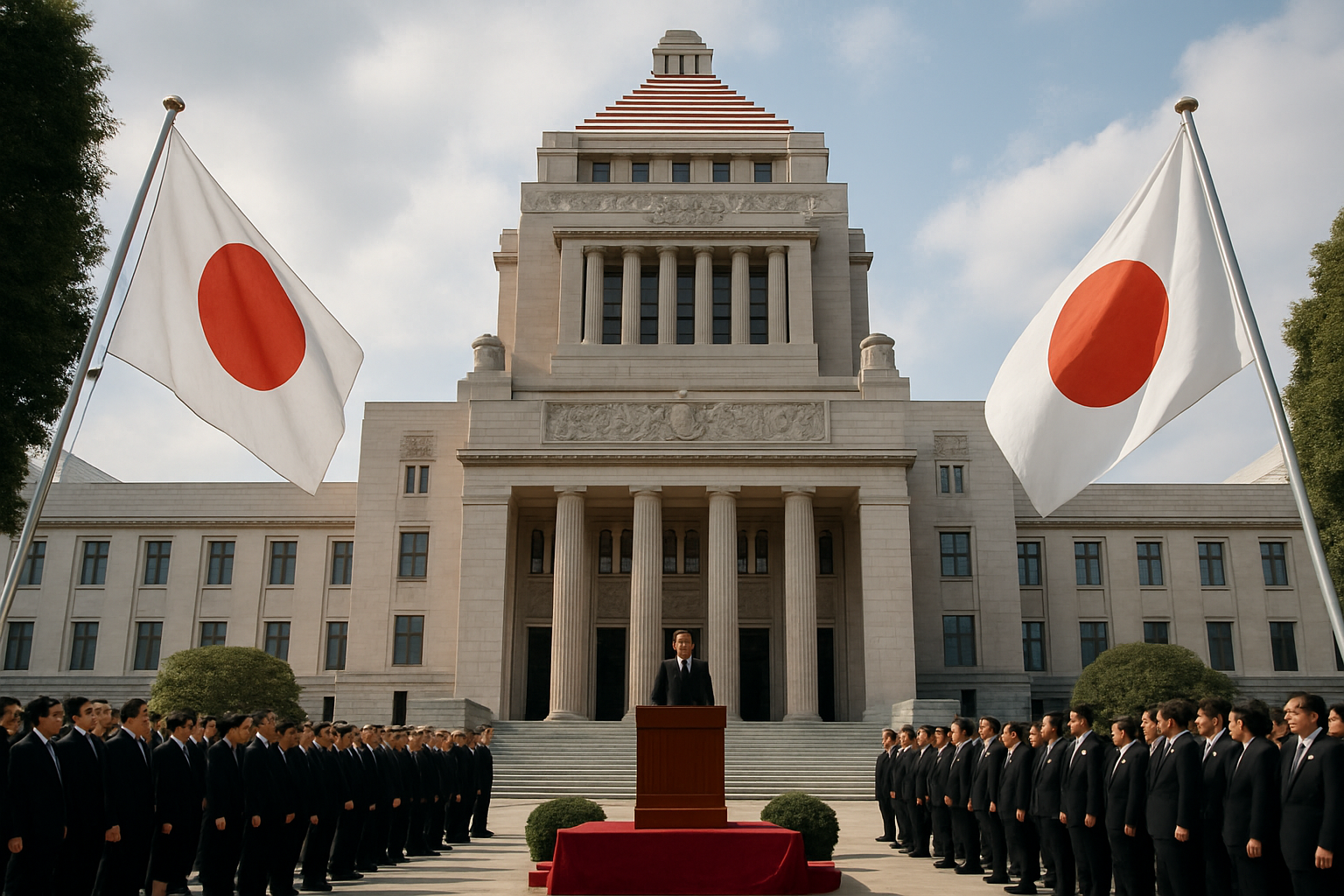
Japan's Parliament officially reconfirmed Sanae Takaichi as Prime Minister on Wednesday, February 18, 2026, completing the democratic transition process following her Liberal Democratic Party's historic electoral triumph that secured the largest parliamentary majority in postwar Japanese history.
During an extraordinary session of the Diet, Japan's parliament, lawmakers formally re-elected Liberal Democratic Party President Sanae Takaichi as the nation's 105th Prime Minister, cementing her position after achieving a decisive mandate in the February 8-9 snap elections.
Parliamentary Confirmation Process
Takaichi retained her position through votes in both chambers of the Diet. She was elected outright in the House of Representatives, the all-important lower chamber, and secured victory in a runoff vote in the House of Councilors, the upper chamber. The 150-day special session of the Diet was convened the same day, with Former Justice Minister Eisuke Mori of the LDP chosen as Lower House speaker.
The formal reappointment marks the culmination of Takaichi's remarkable political journey from becoming Japan's first female Prime Minister in October 2025 to achieving electoral victory in her own right through snap elections conducted during Japan's worst winter crisis in decades.
Historic Electoral Mandate
Takaichi's Liberal Democratic Party achieved an unprecedented landslide victory, securing 316 of 465 seats in the Lower House during the February 8-9 elections. Combined with coalition partner Japan Innovation Party's 36 seats, the governing coalition commands 352 seats total—representing a two-thirds supermajority that enables potential constitutional reforms for the first time since 1947.
The election was conducted under extraordinary circumstances, taking place during Japan's most severe winter storm in decades, which claimed over 35 lives and created snow accumulations exceeding 2 meters in some regions. Despite these challenges, the democratic process proceeded successfully, demonstrating the resilience of Japan's electoral institutions.
"This election represents the most decisive Japanese electoral triumph in modern democratic history, providing Japan's first female PM with unprecedented mandate for conservative agenda implementation."
— Times Kuwait Analysis
Constitutional Reform Implications
The two-thirds supermajority opens the possibility for Japan's first constitutional amendments since the current constitution was established in 1947. This includes potential modifications to Article 9's pacifist provisions, which could enhance Japan's defense capabilities in response to regional security challenges, particularly China's 23% increase in military activity around Taiwan during 2025.
The constitutional reform potential represents the most significant opportunity for structural changes in postwar Japanese history, addressing both defense capabilities and demographic challenges facing the nation, including the world's most aged society with 30% of the population over 65 and the lowest birth rate on record in 2024.
Regional Security Context
The reappointment strengthens Japan's position amid escalating regional tensions. Chinese military activity around Taiwan has intensified significantly, with daily deployments designed to pressure the island's population according to Taiwan's Defense Minister Wellington Koo. China's attempts to rally Southeast Asian nations against Japan following Takaichi's November remarks on Taiwan gained minimal traction, as ASEAN countries prefer multilateral balancing approaches.
The planned March 19 summit with President Trump, following his unprecedented campaign endorsement of Takaichi, signals strengthened U.S.-Japan ties that complicate China's regional objectives. This diplomatic partnership positions Japan as a crucial democratic anchor in the Asia-Pacific region amid intensifying great power competition.
Economic Challenges and Opportunities
Despite the electoral success, Takaichi faces significant domestic challenges. Fresh government data reveals that inflation-adjusted wages declined 1.3% in 2025, extending a three-year slide in real income that contradicts campaign promises about economic recovery. With 54% of voters citing inflation as their primary concern during the election, the government must balance defense spending increases with addressing household financial pressures.
The economic mandate provides political cover for implementing stimulus measures and structural reforms, though success in improving wages and living standards will be crucial for maintaining public support for regional security commitments.
Democratic Resilience Template
The successful conduct of elections during extreme weather conditions while defeating AI-generated disinformation campaigns establishes important precedents for democratic institutional resilience. The election faced unprecedented fake news campaigns using generative AI to create fabricated political content within seconds, but enhanced fact-checking and youth voter education successfully countered these technological threats.
This template for climate-democracy intersection provides a model for other democratic nations facing similar challenges, as extreme weather increasingly disrupts electoral processes worldwide. The success demonstrates how democratic institutions can adapt to multiple simultaneous pressures while maintaining their integrity.
International Implications
Takaichi's reconfirmation positions Japan for increased regional cooperation and democratic governance promotion. The victory influences regional democratic movements, strengthens Quad partnership cooperation, and provides a precedent for female political leadership achieving electoral success in traditionally conservative political cultures.
The international community is monitoring how this historic mandate translates into effective governance while maintaining democratic norms and international cooperation. Success or failure will influence global assessments of democratic resilience and Asia-Pacific stability frameworks.
Policy Implementation Authority
The unprecedented concentration of legislative power eliminates complex coalition negotiations that have historically complicated Japanese governance. This enables long-term conservative agenda implementation without traditional opposition constraints, though it requires careful balance between regional security concerns and domestic development needs.
Key policy areas include enhanced military spending for China deterrence, tax reductions, and addressing demographic challenges through immigration and social policy reforms. The government must sustain diplomatic gains while rebuilding institutional capacity after years of political instability.
Historical Significance
The reappointment represents the most significant concentration of political authority in modern Japanese democracy, achieved through democratic means during extreme conditions. This establishes precedents for constitutional democracies worldwide facing multi-dimensional challenges including technological disruption, extreme weather, international pressures, and demographic transitions simultaneously.
As Japan's first female Prime Minister to achieve electoral victory in her own right, Takaichi's success provides inspiration for diverse political representation while demonstrating how democratic systems can adapt to contemporary challenges through institutional resilience and voter engagement.