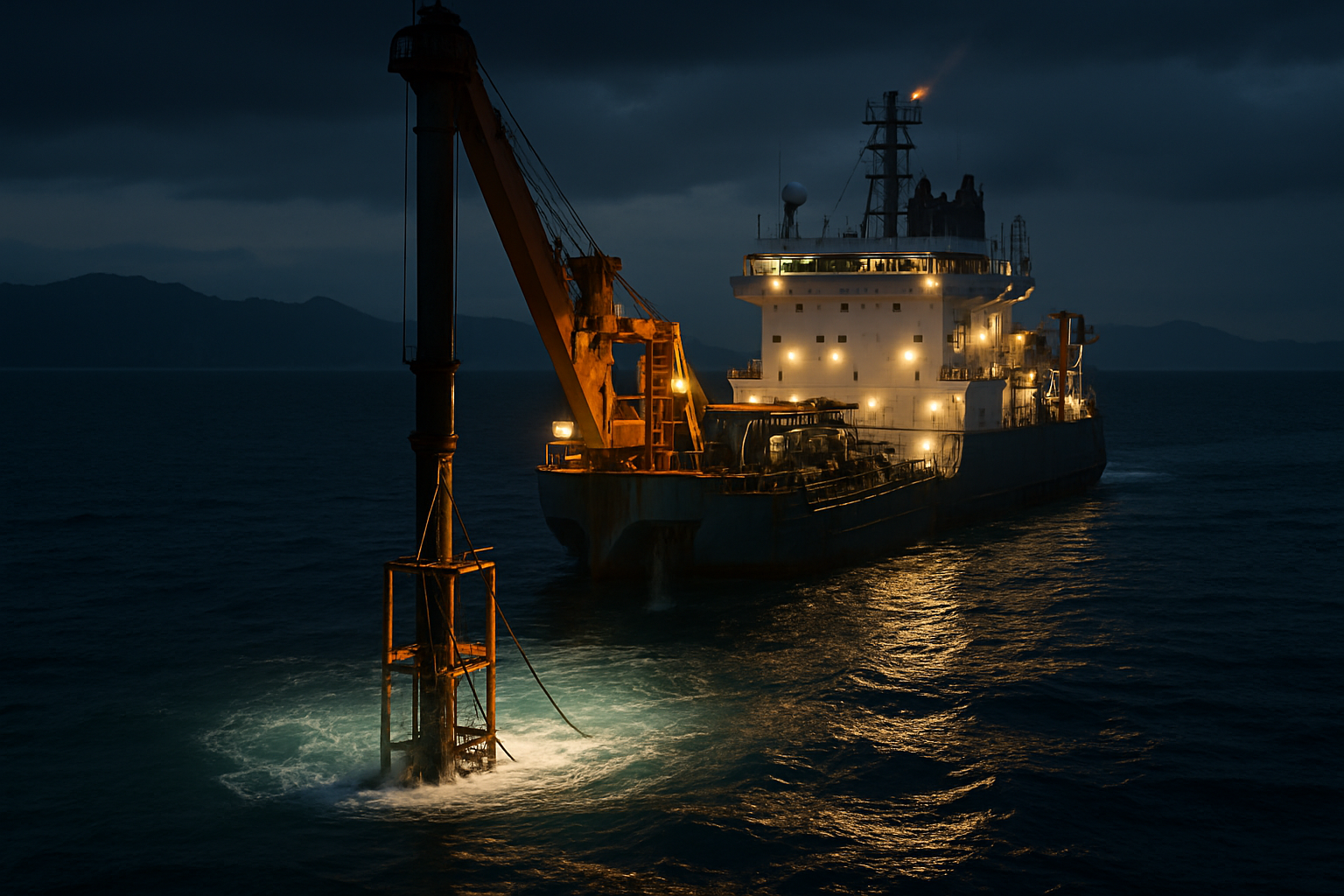
Japan has achieved a historic milestone in deep-sea mining technology, successfully recovering rare earth-bearing mud from a depth of 6,000 meters off Minamitorishima island in what officials describe as the world's first trial operation of its kind, potentially reshaping global supply chains for critical minerals.
The breakthrough extraction, announced by government officials on Monday, represents a crucial step in Japan's long-term strategy to reduce its dependence on China for rare earth elements—minerals essential for manufacturing everything from smartphones and electric vehicle batteries to advanced defense systems and renewable energy technologies.
The successful trial operation took place in the waters surrounding Minamitorishima, Japan's easternmost territory located approximately 1,850 kilometers southeast of Tokyo in the Pacific Ocean. The remote island, also known as Marcus Island, sits atop one of the world's most promising deep-sea rare earth deposits, which scientists estimate could contain enough materials to supply Japan's needs for centuries.
A World-First Achievement in Marine Mining
According to Japanese government sources, this marks the first time any nation has successfully extracted rare earth-bearing sediments from such extreme depths in a controlled trial mining operation. The technical achievement required overcoming significant engineering challenges, including the development of specialized equipment capable of operating under the immense pressure found at 6,000 meters below sea level—approximately 600 times atmospheric pressure.
The extracted sediments contain a variety of rare earth elements, including neodymium, dysprosium, and yttrium, which are critical components in high-tech manufacturing. These materials are particularly valuable for producing permanent magnets used in wind turbines, electric motors, and advanced electronics.
Strategic Importance for Japanese Mineral Security
Japan's success in deep-sea rare earth extraction comes at a time of heightened global awareness about mineral supply chain vulnerabilities. Currently, China controls approximately 60% of global rare earth production and 85% of processing capacity, giving Beijing significant leverage over industries dependent on these materials.
For Japan, which imports nearly all of its rare earth requirements, the development of domestic extraction capabilities represents a potential game-changer for national security and economic independence. The country's heavy reliance on foreign mineral supplies has been a longstanding strategic concern, particularly given periodic tensions in regional geopolitics.
The Minamitorishima deposits are estimated to contain rare earth concentrations significantly higher than those found in land-based mines, with some areas showing concentrations up to 20 times greater than commercially viable terrestrial deposits. This could make deep-sea extraction economically competitive once full-scale operations are developed.
Technical Challenges and Environmental Considerations
The successful trial represents years of technological development and testing by Japanese research institutions and private companies. The extraction process involves using remotely operated vehicles and specialized pumping systems to collect sediment from the seafloor while minimizing environmental impact.
Environmental protection remains a key consideration as Japan moves toward potential commercial operations. The deep-sea environment around Minamitorishima hosts unique ecosystems that scientists are still studying. Japanese officials have emphasized their commitment to developing extraction methods that comply with international environmental standards and minimize ecological disruption.
The technical complexity of deep-sea mining operations means that commercial viability will depend on continued technological advancement and cost reduction. Current estimates suggest that full-scale commercial operations could begin within the next decade, pending successful scaling of extraction technologies and regulatory approvals.
Global Implications for Rare Earth Markets
Japan's breakthrough could have significant implications for global rare earth markets and supply chain diversification efforts. Other nations, including the United States, Australia, and members of the European Union, have been actively seeking to reduce their dependence on Chinese rare earth supplies through various initiatives, including domestic mining development and alternative sourcing arrangements.
The demonstration of viable deep-sea extraction technology could accelerate international interest in marine mineral resources. Several countries possess territorial waters with similar deep-sea rare earth deposits, and Japan's success may spur increased investment in marine mining capabilities worldwide.
Industry analysts suggest that successful commercialization of Japanese deep-sea rare earth extraction could help stabilize global prices and reduce market volatility associated with supply chain concentration. This development comes as demand for rare earth elements continues to grow rapidly, driven by the global transition to renewable energy and electric vehicles.
Next Steps and Commercial Timeline
Following the successful trial extraction, Japanese authorities are expected to conduct additional testing and analysis of the recovered materials to verify their quality and commercial viability. The next phase will likely involve larger-scale pilot operations to demonstrate the feasibility of sustained extraction at commercially relevant volumes.
Government officials have indicated that continued development will require collaboration between public research institutions and private industry partners. Several major Japanese corporations, including those in the mining, technology, and maritime sectors, are expected to participate in advancing the technology toward commercial application.
The timeline for full commercial operations will depend on factors including technological refinement, environmental impact assessments, regulatory framework development, and market conditions. However, the successful completion of this initial trial represents a significant milestone in what could become a transformative development for Japan's mineral security and the global rare earth industry.
As nations worldwide grapple with supply chain vulnerabilities exposed by recent global events, Japan's achievement in deep-sea rare earth mining demonstrates the potential for technological innovation to address critical resource dependencies and enhance national economic security.