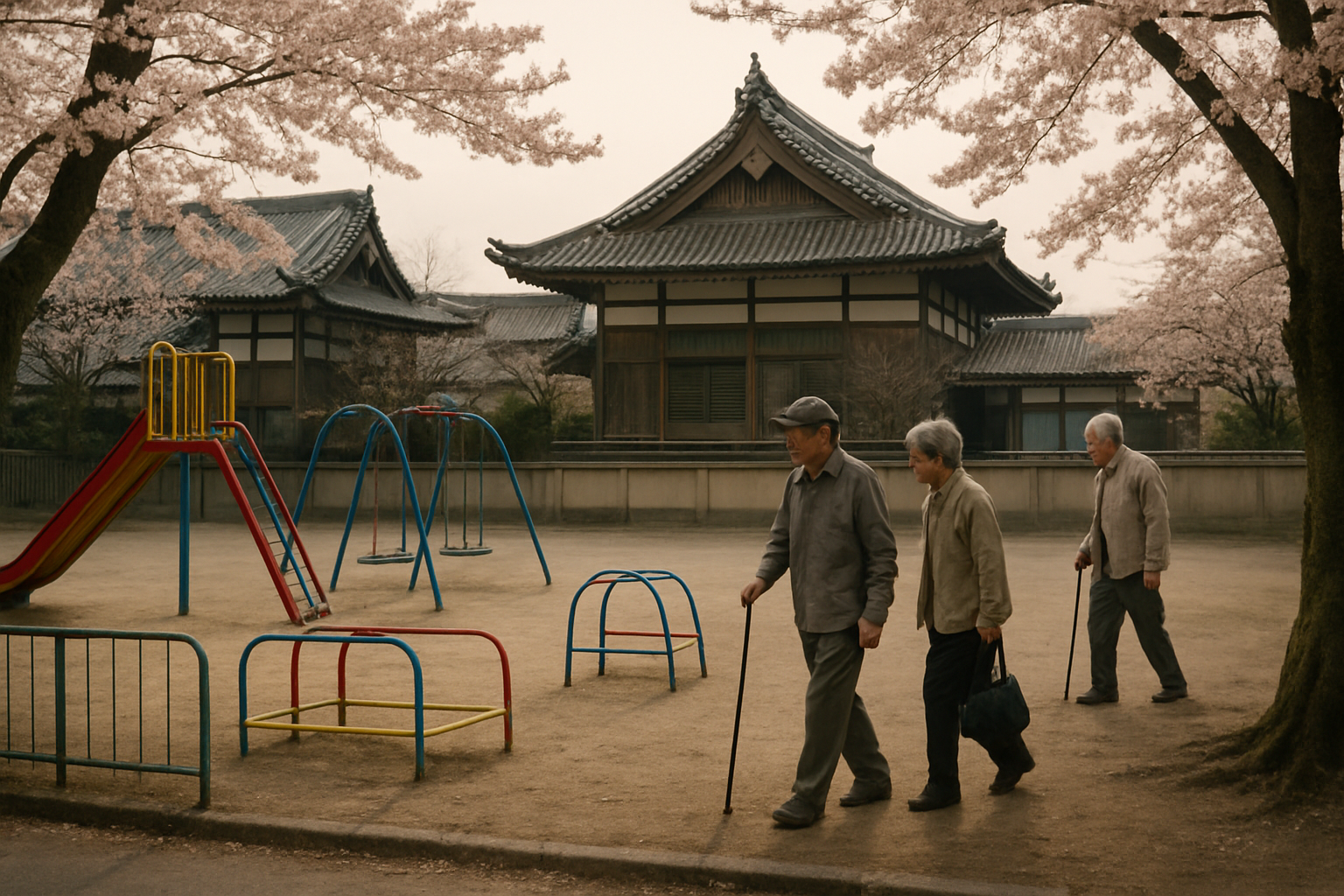
Japan has recorded its lowest birth rate in history for 2024, marking the ninth consecutive year of decline and deepening the nation's demographic crisis as it grapples with an aging society and shrinking workforce.
According to ministry data revealed this week, Japan's birth rates have continued their relentless downward spiral, highlighting the severity of demographic challenges facing the world's fourth-largest economy. The record-low figures underscore the persistent nature of a crisis that threatens to reshape Japan's social fabric and economic prospects for generations to come.
Nine Years of Continuous Decline
The 2024 birth rate data represents nearly a decade of uninterrupted demographic decline, a trajectory that has alarmed policymakers and economists alike. Since 2016, Japan has witnessed a steady erosion of birth rates despite numerous government initiatives aimed at encouraging families to have more children.
This sustained decline reflects deeper structural issues within Japanese society, including changing social attitudes toward marriage and family formation, economic pressures on young adults, and evolving career priorities among women. The consistency of this downward trend suggests that traditional policy interventions have proven insufficient to reverse the demographic tide.
Aging Society Under Pressure
Japan's demographic challenge is compounded by its rapidly aging population, creating what demographers call a "double burden" of fewer births and longer lifespans. With approximately 30% of the population already over 65 years old, Japan holds the distinction of being the world's most aged society.
This demographic structure places enormous strain on social security systems, healthcare infrastructure, and the working-age population. Each year of declining birth rates exacerbates the imbalance between those who contribute to the economy and those who require support and care.
The implications extend far beyond statistics, affecting everything from rural community sustainability to urban planning, from educational institution viability to healthcare service delivery. Many rural areas have already become "ghost towns" as young people migrate to cities and families become smaller or disappear entirely.
Economic and Social Implications
The record-low birth rate carries profound economic consequences for Japan's future. A shrinking workforce threatens the nation's economic competitiveness and innovation capacity, while an expanding elderly population increases demand for healthcare and pension services.
Labor shortages have already become apparent in various sectors, from construction and agriculture to healthcare and hospitality. Companies are increasingly relying on automation and foreign workers to fill gaps, fundamentally altering Japan's traditionally homogeneous employment landscape.
The demographic shift also affects consumer markets, with businesses adapting products and services to cater to an older population. Traditional industries focused on child-related products face declining demand, while sectors serving elderly needs experience growth.
Government Response and Policy Challenges
Japanese governments have implemented numerous pro-natalist policies over the years, including child allowances, parental leave extensions, and childcare facility expansions. However, these measures have failed to significantly impact birth rate trends, suggesting that the underlying causes run deeper than financial incentives alone.
Recent policy discussions have focused on more comprehensive approaches, including workplace culture reform, housing policy adjustments, and gender equality initiatives. Some experts argue that Japan's demanding work culture and traditional gender roles continue to discourage family formation among younger generations.
Immigration policy has also emerged as a contentious topic, with some advocating for increased foreign worker acceptance to offset population decline. However, this approach faces cultural and political resistance in a nation that has historically maintained strict immigration controls.
Regional and Global Context
Japan's demographic challenges reflect broader trends across developed nations, particularly in East Asia. South Korea faces even more severe birth rate declines, while China's population has begun shrinking despite the recent abandonment of its one-child policy.
European nations have experienced similar demographic transitions, though many have maintained higher birth rates through different policy approaches and cultural contexts. Nordic countries, in particular, have demonstrated that comprehensive family support systems can help maintain more stable population growth.
The global implications of demographic decline in major economies like Japan extend to international trade, migration patterns, and geopolitical dynamics. Countries with shrinking populations may find their global influence diminished as their economic weight decreases relative to nations with growing populations.
Looking Ahead: A Demographic Crossroads
The 2024 record-low birth rate data places Japan at a critical demographic crossroads. Without significant intervention or unexpected cultural shifts, the nation faces a future of continued population decline, with profound implications for its social, economic, and political systems.
Some experts argue that Japan could become a model for managing demographic decline, developing innovative approaches to maintaining quality of life with fewer people. This perspective emphasizes technological solutions, urban planning adaptations, and new social structures suited to an aging society.
Others warn that without reversing the birth rate decline, Japan risks economic stagnation, reduced international competitiveness, and social instability. These voices advocate for more radical policy interventions and cultural changes to encourage family formation.
As Japan grapples with this latest milestone in its demographic decline, the international community watches closely. The nation's response to this challenge may provide valuable lessons for other countries facing similar demographic transitions in the coming decades.