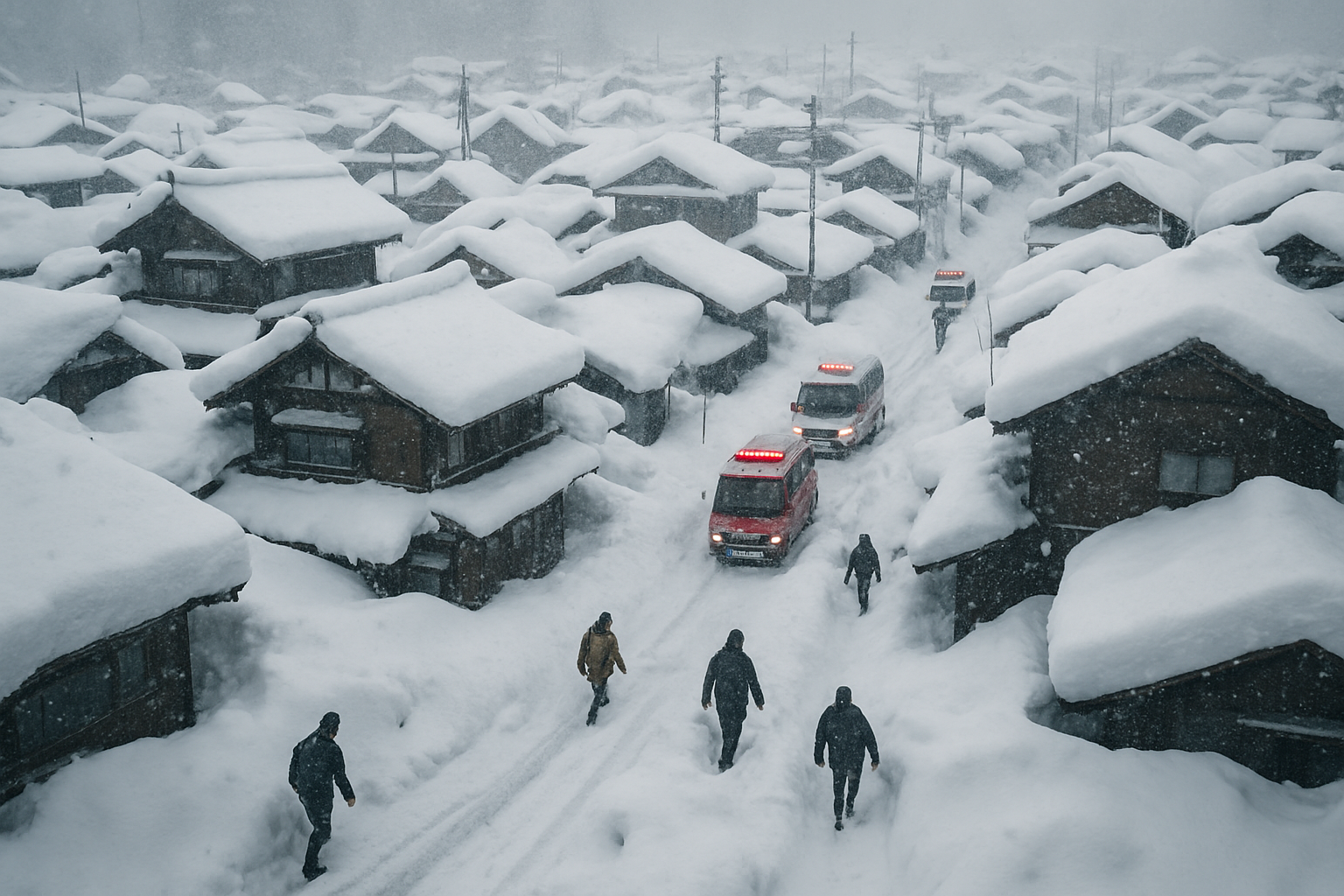
Japan is grappling with a deadly winter weather crisis as record-breaking snowfall has claimed at least 30 lives over the past two weeks, prompting authorities to issue emergency warnings across multiple prefectures as the nation faces some of its most severe winter conditions in decades.
The devastating toll includes victims found buried under massive snow accumulations, with one tragic case involving a 91-year-old woman discovered beneath a three-meter-high snowdrift outside her home. The unprecedented snowfall has created dangerous conditions across large swaths of the country, particularly affecting vulnerable elderly populations.
Historic Snow Depths Challenge Records
In the city of Aomori, snow depths have exceeded 1.8 meters, marking the highest accumulation recorded since 1945. This measurement represents a critical milestone that underscores the exceptional nature of this weather event, as meteorological records from the post-war era are being challenged by current conditions.
The extreme accumulations have transformed the landscape across affected regions, with traditional Japanese architecture and infrastructure struggling to cope with the weight and volume of snow. Rooftops have collapsed under the pressure, and transportation networks have been severely disrupted, isolating communities and hampering emergency response efforts.
Emergency Response and Government Action
Prime Minister Takayuki Takaichi has convened emergency cabinet meetings to address the crisis, directing government agencies to prevent further casualties and coordinate rescue operations. The Prime Minister's office has emphasized the need for immediate action to protect vulnerable populations, particularly the elderly who comprise a significant portion of the victims.
Local authorities have established emergency shelters and warming centers across affected areas, while snow removal teams work around the clock to clear critical transportation routes. However, the unprecedented scale of the snowfall has overwhelmed local resources in many areas, requiring coordination between prefectural and national emergency services.
Pattern of Casualties
The death toll has steadily risen as rescue teams reach previously inaccessible areas and as the full extent of the storm's impact becomes clear. Many victims have been elderly residents who became trapped in their homes or were caught outside during the most severe phases of the snowfall.
Among the casualties reported, several involve individuals who were attempting to clear snow from their properties when they became overwhelmed by the accumulation. Others were found after family members or neighbors reported them missing during the height of the storms.
Infrastructure and Transportation Impact
The heavy snowfall has caused widespread disruption to Japan's normally reliable transportation infrastructure. Rail services have faced significant delays and cancellations, with the Japan Railway companies implementing safety protocols that prioritize passenger safety over schedule adherence.
Road conditions have deteriorated to dangerous levels in many prefectures, with highways experiencing reduced capacity or complete closures in the most severely affected areas. Emergency services have struggled to reach remote communities, particularly in mountainous regions where snowfall has been most intense.
Power outages have affected thousands of households, as snow and ice accumulation on power lines have caused equipment failures. Utility companies have deployed emergency crews to restore service, but access challenges have slowed repair efforts in some areas.
Regional Weather Patterns
Meteorologists attribute the severe snowfall to unusual atmospheric conditions that have brought sustained moisture-laden air masses from the Sea of Japan. These conditions, combined with topographical factors that enhance snowfall accumulation, have created a perfect storm for record-breaking precipitation levels.
The Japan Meteorological Agency has maintained emergency weather warnings across multiple prefectures, with forecasters indicating that additional snowfall is expected in some regions. This has prompted continued vigilance from emergency management officials who fear the death toll could rise further.
Community Response and Preparedness
Japanese communities have demonstrated remarkable resilience in facing these challenging conditions, with neighbors assisting elderly residents and community organizations coordinating welfare checks. Local volunteer groups have organized snow removal efforts for vulnerable households, though the scale of accumulation has overwhelmed many volunteer initiatives.
The crisis has highlighted the particular vulnerability of Japan's aging population to extreme weather events. Rural areas with higher concentrations of elderly residents have faced disproportionate challenges, as limited mobility and physical capacity make snow removal and emergency evacuation more difficult.
International Context
This severe weather event occurs as part of a broader pattern of extreme winter conditions affecting the Northern Hemisphere in February 2026. Multiple regions globally have experienced unprecedented cold temperatures, snowfall, and winter storms that have challenged emergency response systems and resulted in significant casualties.
The Japanese crisis adds to mounting evidence of increasingly severe weather events that test the resilience of infrastructure and emergency preparedness systems worldwide. Climate experts continue to analyze whether these extreme events represent a temporary anomaly or part of longer-term weather pattern changes.
Looking Ahead
As recovery efforts continue, Japanese authorities are focusing on both immediate rescue operations and longer-term preparations for potentially continued severe weather. The government has indicated that additional resources will be allocated to affected prefectures, including enhanced emergency shelter capacity and expanded emergency response personnel.
Officials emphasize that residents in affected areas should remain vigilant and heed evacuation orders or safety warnings as conditions continue to evolve. The combination of existing snow accumulation and potential additional snowfall creates ongoing risks for roof collapses, avalanches, and transportation accidents.
The crisis serves as a stark reminder of nature's power to disrupt even highly prepared societies like Japan, where disaster preparedness is typically considered exemplary. As communities work to recover from this unprecedented snowfall, the focus remains on preventing additional casualties while preparing for potential future extreme weather events.