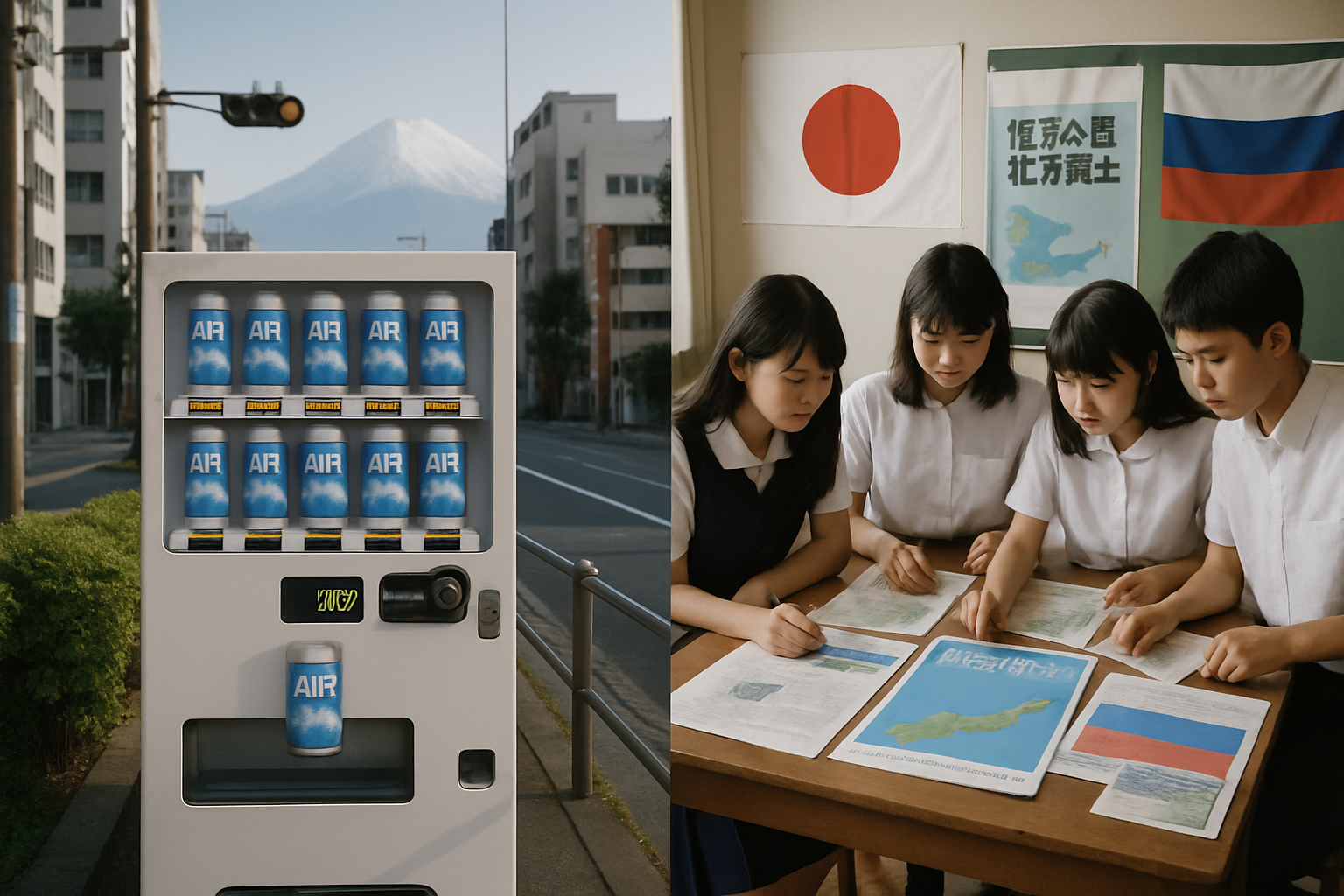
Japan's regional tourism landscape is experiencing a remarkable renaissance, with Hiroshima launching an unexpected viral sensation through canned local air sales while Okinawan students participate in groundbreaking educational exchanges about Japan's disputed Northern Territories, demonstrating the nation's innovative approach to cultural preservation and tourism development.
Hiroshima's Unconventional Tourism Innovation
In a move that has captured international attention, a vending machine in Hiroshima prefecture has begun offering an entirely novel product: canned local air. The company behind this unusual venture reports that the canned air products are "going viral" and expresses optimism that they could become the prefecture's new specialty product, according to The Japan Times.
This innovative tourism strategy reflects Japan's long-standing culture of omiyage (souvenir) giving, where regional specialties serve as tangible connections to specific places and experiences. Unlike traditional food-based souvenirs, the canned air concept pushes the boundaries of what constitutes a meaningful regional memento.
The phenomenon occurs within Japan's broader struggle with domestic tourism recovery, as annual figures remain significantly below pre-pandemic levels. Previously reaching 600 million domestic trips before COVID-19, the sector dropped to below 300 million in 2020, with recovery continuing at a measured pace. This context makes Hiroshima's viral marketing success particularly noteworthy as a potential template for regional tourism innovation.
Educational Diplomacy: Okinawa's Northern Territories Program
Simultaneously, Okinawa is pioneering a different form of cultural engagement through educational initiatives focused on Japan's disputed Northern Territories. Students from Okinawa have traveled to Hokkaido to learn about the islands seized by Soviet forces over 80 years ago, where former Japanese residents remain unable to return to their hometowns.
This educational exchange program represents a sophisticated approach to territorial awareness, connecting students from Japan's southernmost prefecture with the challenges facing the nation's northern frontier. The initiative demonstrates how educational tourism can serve multiple purposes: cultural education, historical understanding, and diplomatic awareness among younger generations.
The Northern Territories dispute, involving four islands taken by the Soviet Union in 1945, remains one of Japan's most enduring diplomatic challenges. By engaging Okinawan students—who themselves live in a region with complex historical relationships with mainland Japan and international powers—the program creates meaningful cross-regional understanding.
Regional Tourism Strategy Evolution
These developments occur against the backdrop of Japan's evolving regional tourism strategy, which emphasizes authentic local experiences over mass tourism approaches. The country's regional governments increasingly recognize that unique, locally-specific attractions can generate significant visitor interest and media attention.
Hiroshima's canned air initiative exemplifies this trend toward experiential novelty. Rather than competing with established tourist destinations through traditional means, the prefecture has created an entirely new category of regional specialty that generates social media engagement and international curiosity.
The success of such unconventional approaches reflects changing tourist preferences, particularly among younger demographics who seek unique, shareable experiences over conventional sightseeing. This aligns with broader global tourism trends emphasizing authentic, location-specific experiences that cannot be replicated elsewhere.
Cultural Education as Tourism Development
The Okinawa-Hokkaido educational exchange demonstrates another dimension of Japan's regional tourism evolution: the integration of serious cultural and historical education with travel experiences. This approach recognizes that meaningful tourism often involves deeper engagement with local issues and historical contexts.
For Okinawan participants, the program provides firsthand exposure to territorial disputes that mirror their own region's complex historical relationship with sovereignty and international politics. Okinawa's unique position—having been under U.S. administration until 1972 and continuing to host significant American military presence—gives these students particular insight into territorial and sovereignty questions.
Such educational tourism initiatives serve multiple stakeholders: they provide students with expanded perspectives on national issues, offer Hokkaido communities opportunities to share their experiences with territorial displacement, and create new forms of inter-regional connection within Japan.
Innovation in Traditional Tourism Models
Both initiatives represent significant departures from traditional Japanese tourism models that typically emphasize seasonal natural beauty, historical sites, and cultural performances. Instead, these programs demonstrate how regions can develop distinctive attractions that reflect contemporary concerns and innovative thinking.
The canned air phenomenon particularly illustrates how tourism innovation can emerge from unexpected sources. By transforming an intangible element—local atmosphere—into a tangible product, Hiroshima has created a conversation starter that generates far more media attention and tourist curiosity than conventional promotional campaigns might achieve.
This approach reflects broader trends in Japanese business culture toward omoshiroi (interesting/amusing) concepts that capture public imagination through their unexpected nature. The success of such initiatives often depends not on their practical utility but on their ability to generate discussion and social media engagement.
Regional Identity and National Cohesion
Both programs contribute to strengthening regional identity within Japan's national framework. Hiroshima's marketing innovation reinforces the prefecture's distinctiveness while the Okinawa-Hokkaido exchange builds inter-regional understanding of shared challenges related to territorial sovereignty.
These initiatives demonstrate how regional tourism development can serve broader social purposes beyond economic generation. They create platforms for cultural exchange, historical education, and national conversation about contemporary challenges.
The educational component of the Okinawa program particularly addresses Japan's ongoing need to maintain public awareness of territorial disputes that might otherwise fade from younger generations' consciousness. By making these issues tangible through direct experience and personal connection, the program ensures continued public engagement with significant diplomatic challenges.
International Implications and Future Directions
Japan's regional tourism innovations occur within a global context of increased competition for visitor attention and the need for destinations to differentiate themselves through unique offerings. The success of unconventional approaches like Hiroshima's canned air suggests that tourism innovation increasingly rewards creativity over conventional thinking.
The educational exchanges meanwhile contribute to Japan's broader soft power initiatives, demonstrating the country's commitment to transparent historical education and regional cooperation. Such programs enhance Japan's international reputation as a nation willing to engage seriously with complex historical and territorial issues.
As Japan continues to navigate post-pandemic tourism recovery, these initiatives provide templates for other regions seeking to develop distinctive attractions that generate both domestic and international interest. The combination of innovative marketing with serious cultural education demonstrates the potential for tourism development that serves multiple social objectives simultaneously.
The viral success of Hiroshima's canned air and the thoughtful implementation of Okinawa's territorial education program suggest that Japan's regional tourism future may increasingly emphasize creativity, authenticity, and meaningful cultural engagement over conventional attraction development. This evolution positions Japanese regional tourism as a laboratory for innovative approaches that other countries may well study and adapt for their own tourism development strategies.