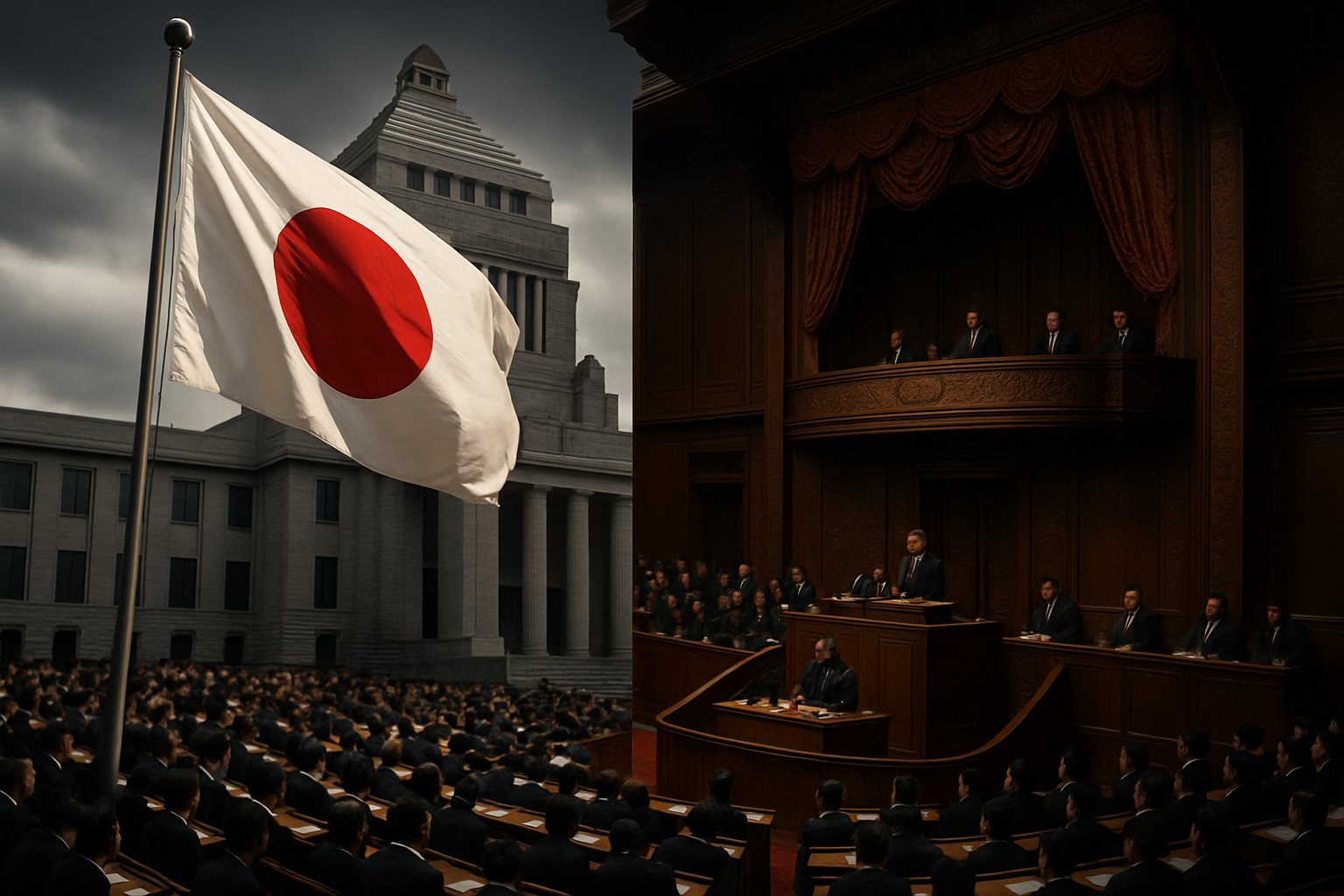
Japan's ruling Liberal Democratic Party has deployed its historic two-thirds parliamentary supermajority to force through the fiscal 2026 budget while simultaneously advancing controversial national intelligence council legislation, prompting fierce opposition criticism of what critics call a "threat to fiscal democracy."
The dual legislative push comes as Prime Minister Sanae Takaichi's government leverages the most concentrated political authority in modern Japanese democratic history, following February's unprecedented electoral victory that secured 316 of 465 lower house seats. Opposition parties have intensified their condemnation of what they term the ruling bloc's authoritarian approach to governance.
Unprecedented Parliamentary Authority
Takaichi's Liberal Democratic Party, combined with coalition partner Japan Innovation Party's 36 seats, commands an overwhelming 352-seat majority in the Diet. This represents the first time since 1947 that a single political force has possessed the constitutional amendment threshold of two-thirds parliamentary control.
The government has utilized Article 49.3-style procedural mechanisms to bypass traditional opposition input on the budget, automatically triggering no-confidence motions that the ruling coalition can easily defeat. This approach mirrors tactics seen in other democracies facing political fragmentation, but represents a significant departure from Japan's typically consensus-driven political culture.
"The government believes that the current security environment is the most severe and complex since the end of World War II."
— Government spokesperson on intelligence legislation
National Intelligence Council Controversy
Simultaneously, the administration is advancing legislation to establish a National Intelligence Council, citing what officials describe as the most challenging security environment since World War II's conclusion. The legislation aims to enhance Japan's intelligence coordination capabilities amid rising regional tensions, particularly concerning China's increased military activity around Taiwan.
The timing of both legislative initiatives reflects the government's strategy to maximize its unprecedented mandate while facing potential erosion of public support. Recent polling data suggests growing concern about inflation and cost-of-living pressures, with 54% of voters in February's election citing rising prices as their primary concern.
Opposition Response and Democratic Concerns
Opposition parties across the political spectrum have united in their criticism of the ruling coalition's approach. The remnants of the Constitutional Democratic Party and other opposition forces argue that the government's use of "power majority" tactics undermines Japan's democratic traditions.
The criticism centers on the speed and manner of legislative passage rather than necessarily the content of specific measures. Opposition leaders contend that proper democratic deliberation requires meaningful consultation, regardless of mathematical parliamentary advantages.
"Opposition parties have intensified their criticism, calling the ruling bloc's move a threat to fiscal democracy."
— Parliamentary sources
Historical Context and Constitutional Implications
The current political configuration represents a watershed moment in postwar Japanese politics. Takaichi's victory in February came during Japan's worst winter crisis in decades, demonstrating democratic resilience while simultaneously concentrating unprecedented political authority in a single party.
The government's approach draws comparisons to constitutional crises in other democratic nations, where ruling parties with large majorities face questions about the balance between democratic mandate and institutional restraint. The two-thirds threshold enables potential constitutional amendments, including modifications to Article 9's pacifist provisions.
Regional Security Calculations
The intelligence legislation timing coincides with significant regional developments, including a 23% increase in Chinese military activity around Taiwan throughout 2025. Japan's strategic position as a democratic anchor in the Asia-Pacific region adds international dimensions to domestic legislative debates.
The Takaichi government has emphasized enhanced defense cooperation with the United States, building on Trump's February endorsement and planned bilateral summits. This international support provides additional legitimacy for security-related legislation despite domestic opposition concerns.
Economic and Fiscal Pressures
The fiscal 2026 budget passage occurs amid significant economic challenges. Despite electoral success, the government faces declining real wages (down 1.3% in 2025) and household food spending at 44-year highs. These economic pressures create tension between the government's defense spending increases and social welfare demands.
The budget's rapid passage through parliament reflects the administration's calculation that decisive action is preferable to prolonged deliberation that might expose internal coalition tensions or provide opportunities for opposition mobilization.
International Observers and Democratic Norms
International observers are closely monitoring how Japan's concentrated political authority translates into governance practices. The success or failure of Takaichi's approach could influence democratic governance models across the Asia-Pacific region, particularly regarding the balance between effective decision-making and institutional accountability.
European and American analysts have noted parallels with other democratic nations facing similar challenges of governing with large majorities while maintaining democratic legitimacy. The Japanese case provides insights into how established democracies adapt to contemporary political pressures.
Future Political Implications
The ruling coalition's current approach establishes precedents for Japanese political governance that will outlast the current administration. Opposition parties are already preparing for future elections by highlighting what they characterize as democratic deficits in the current government's legislative strategy.
Public opinion polling will likely serve as the ultimate arbiter of whether voters approve of the government's decisive approach or prefer more traditional consensus-building methods. The administration's approval ratings remain strong but face potential erosion from economic pressures and concerns about democratic processes.
As Japan navigates an increasingly complex international environment while managing domestic economic challenges, the balance between effective governance and democratic accountability continues to evolve. The current legislative session may prove to be a defining moment for both Takaichi's premiership and the broader trajectory of Japanese democratic governance in the 21st century.