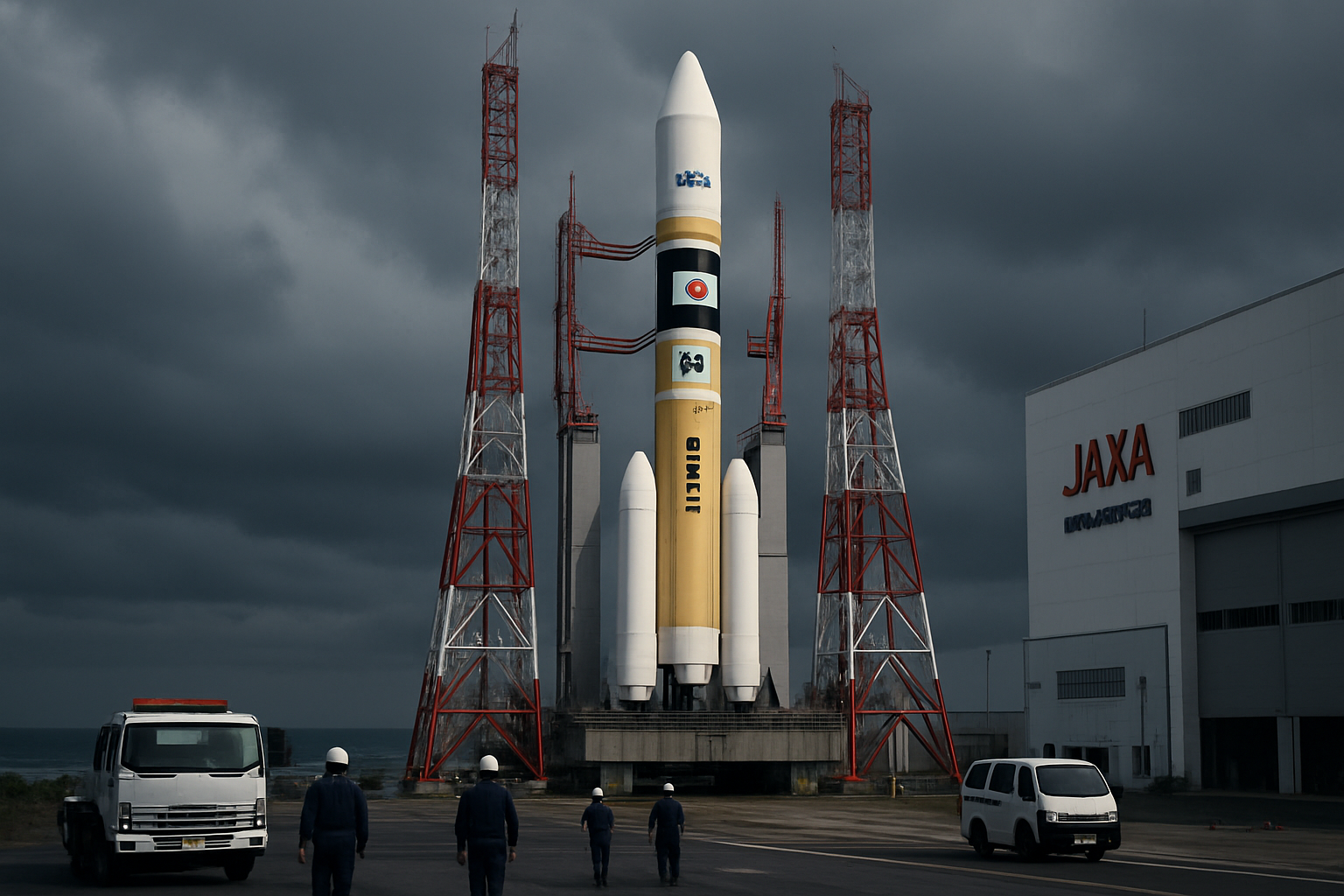
Japanese space startup Space One made the difficult decision on Wednesday to cancel its third consecutive rocket launch attempt, a setback that underscores the persistent operational challenges facing commercial space companies as they struggle to establish reliable launch capabilities in an increasingly competitive market.
The Tokyo-based company had been targeting Wednesday for the launch of its Kairos rocket after weather conditions forced postponements on February 25 and Sunday, March 2. However, safety system activations at the last minute prompted engineers to abort the mission, dealing another blow to the company's ambitious timeline to become Japan's first private entity to reach orbit.
Weather Dependency Emerges as Critical Challenge
The repeated cancellations highlight one of the most significant challenges facing the commercial space industry: weather dependency. Unlike government space programs that can afford extended delays, private companies operate under intense economic pressure to maintain regular launch schedules to remain financially viable.
Space One's struggles reflect broader industry trends documented in recent months. Weather-related delays affect private companies disproportionately because their business models require frequent, predictable launches to serve the growing small satellite market. Each postponement represents not only lost revenue but also mounting operational costs that can quickly erode investor confidence.
Safety Systems vs. Commercial Pressure
Wednesday's last-minute cancellation due to safety system activation demonstrates the delicate balance commercial space companies must maintain between operational safety and commercial viability. The decision to prioritize safety over schedule adherence aligns with industry best practices established by companies like SpaceX, which has built its reputation on methodical problem-solving approaches.
"The commercial space industry is learning that there are no shortcuts to reliability," explains a space industry analyst. "Weather dependency and safety protocols are realities that even the most ambitious startups must respect."
— Industry Expert
The technical challenges facing Space One mirror difficulties experienced by other emerging space companies worldwide. The company's Kairos rocket represents Japan's attempt to develop indigenous commercial launch capabilities, competing in a market dominated by established players like SpaceX while newer entrants from China and Europe rapidly advance their own programs.
Japan's Commercial Space Strategy Under Scrutiny
Space One's setbacks come at a critical time for Japan's commercial space sector development. The country has invested heavily in transitioning from government-led space programs to private-sector capabilities, viewing commercial space access as essential for economic competitiveness in the emerging space economy.
The repeated delays underscore the technical complexity of rocket operations, particularly for smaller companies without the extensive infrastructure and testing capabilities of major aerospace corporations. Weather monitoring, launch window optimization, and safety system management require sophisticated coordination that many startups are still developing.
Japan's space ambitions occur within the broader context of what industry experts term the "space economy golden age" – a period of unprecedented commercial space activity characterized by massive investments, technological breakthroughs, and international competition. SpaceX's planned June 2026 IPO with a potential trillion-dollar valuation exemplifies the sector's explosive growth.
International Competition Intensifies
While Space One grapples with operational challenges, international competitors continue advancing their capabilities. China's Shenlong program has achieved significant milestones in reusable spacecraft technology, while European companies like Germany's Isar Aerospace are expanding manufacturing capabilities with new Swedish facilities capable of testing 30 rocket engines monthly.
The competitive landscape includes emerging space nations, with Pakistan recently selecting astronaut candidates for China's Tiangong space station mission scheduled for October-November 2026, demonstrating the democratization of space access that commercial companies aim to serve.
Meanwhile, established programs face their own challenges. NASA's Artemis II lunar mission has encountered multiple delays due to hydrogen leak issues and helium system failures affecting the Space Launch System rocket, showing that technical difficulties persist even for the most experienced organizations.
Small Satellite Market Drives Demand
Despite operational setbacks, the fundamental market drivers supporting companies like Space One remain robust. The small satellite market continues expanding rapidly, driven by applications in communications, Earth observation, weather monitoring, and emerging space-based data center concepts designed to address Earth's semiconductor shortage crisis.
Commercial demand for reliable, cost-effective launch services continues growing as companies seek alternatives to traditional large satellite deployments. This market segment represents Space One's primary opportunity, requiring frequent launches of smaller payloads rather than occasional deployment of massive spacecraft.
The convergence of artificial intelligence and space operations also creates new opportunities. Recent successes include NASA's fully AI-planned Mars rover missions in December 2025, demonstrating autonomous navigation capabilities that reduce Earth-based control dependencies and enable real-time decision-making during space operations.
Technical and Financial Sustainability
Space One's challenges reflect broader questions about the technical and financial sustainability of the commercial space industry's rapid expansion. While investment continues pouring into space startups, operational realities often prove more challenging than initial projections suggest.
The company's experience illustrates that achieving space access requires not only advanced rocket technology but also sophisticated systems integration, weather management capabilities, and operational expertise that takes time to develop. Success in commercial space requires sustained investment in both technology and operational infrastructure.
Environmental considerations are also gaining importance, with recent Austrian research documenting atmospheric pollution from rocket debris showing lithium concentrations elevated tenfold above normal levels. Commercial space companies increasingly face pressure to demonstrate environmental responsibility alongside technical competence.
Industry Maturation and Future Prospects
The challenges facing Space One represent growing pains typical of emerging industries transitioning from experimental phases to commercial viability. Historical parallels exist in aviation industry development, where early commercial airlines faced similar struggles with weather dependency, safety protocols, and operational reliability before achieving today's mature transportation systems.
Space industry experts suggest that current difficulties will ultimately contribute to improved industry standards, better weather prediction capabilities, and more robust safety protocols that will benefit all participants in the commercial space ecosystem.
Japan's space industry remains committed to developing independent commercial capabilities despite recent setbacks. The country's broader space strategy includes significant government investment in space infrastructure, international cooperation through programs like the International Space Station, and support for private sector innovation in space technologies.
Success for companies like Space One will likely require patience from investors, continued technical development, and operational expertise that comes only through experience. The company's willingness to prioritize safety over schedule pressure, while frustrating in the short term, demonstrates the mature approach necessary for long-term success in the unforgiving space environment.
As the commercial space industry continues evolving, Space One's experiences provide valuable lessons for other emerging companies worldwide seeking to establish reliable space access capabilities in an increasingly competitive and technically demanding market.