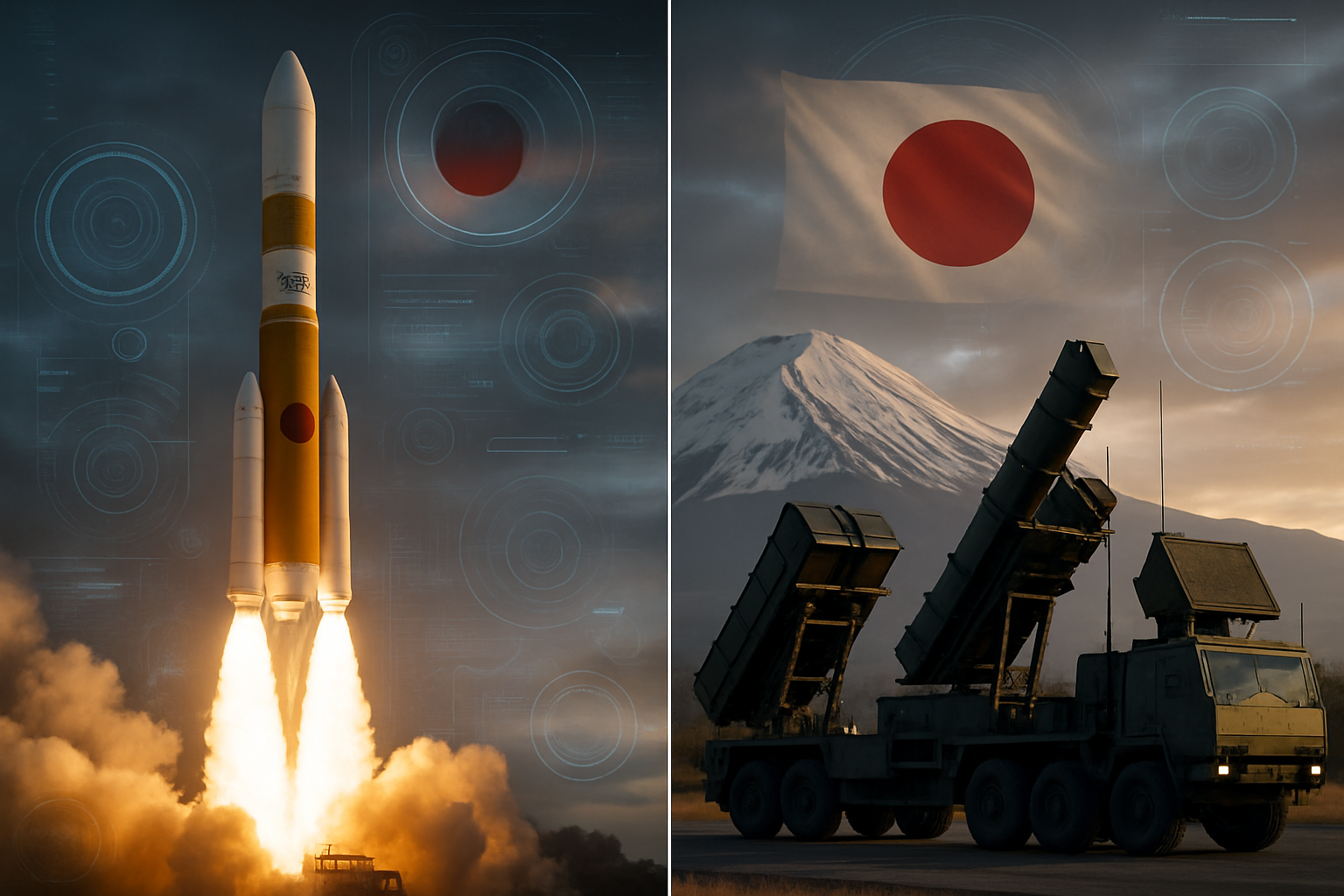
Japan's technological ambitions face a complex landscape of delays and breakthroughs as the nation balances ambitious space exploration goals with enhanced defense capabilities, marking both setbacks and achievements in its pursuit of technological leadership.
The dual nature of Japan's technological progress became evident this week as Ispace, the country's leading commercial lunar exploration company, announced a significant delay in its NASA-sponsored moon landing mission, pushing the timeline from the originally planned date to 2030. Meanwhile, Japan's Maritime Self-Defense Force (MSDF) achieved a historic milestone with its destroyer Chokai becoming the first Japanese vessel capable of firing Tomahawk missiles, significantly expanding the nation's defense reach with weapons capable of striking targets up to 1,600 kilometers away.
Space Ambitions Meet Reality
The announcement of Ispace's mission delay highlights the murky outlook for commercial lunar ventures as global space competition intensifies. The postponement comes amid a broader U.S. strategy to revamp lunar missions through partnerships with commercial and international partners, all racing against China's accelerating space program. The delay represents a significant setback for Japan's space industry, which has positioned itself as a key player in the emerging "space economy golden age."
This setback occurs within the context of Japan's remarkable space technology achievements over the past year. In February 2026, the nation became the first country to approve iPS cell medical products, including ReHeart for heart failure and Amchepry for Parkinson's disease, positioning Japan as a global leader in regenerative medicine during what experts call the "Therapeutic Revolution of 2026."
Japan's space sector has demonstrated significant capabilities through partnerships with international organizations and domestic innovations. The country's precision engineering expertise has contributed to Mars rover instruments, satellite components, and ISS equipment, carving out a significant niche in the global space economy despite not being a traditional space power. The space sector employs thousands of highly skilled workers and generates substantial economic returns through international partnerships.
Defense Capabilities Expansion
While space ambitions face delays, Japan's defense modernization has achieved critical milestones. The MSDF destroyer Chokai's new Tomahawk missile capability represents a transformative enhancement of Japan's defensive reach, allowing the vessel to put targets deep inside China and North Korea within striking distance. This development comes as Chinese military activity around Taiwan increased by 23% in 2025, intensifying regional security concerns.
The timing of this defense enhancement is particularly significant given Prime Minister Sanae Takaichi's historic electoral victory in February 2026, which secured a two-thirds parliamentary supermajority enabling potential constitutional reforms. This unprecedented political authority opens possibilities for modifications to Article 9 of Japan's pacifist constitution, marking the most significant constitutional reform opportunity in postwar Japanese history.
Japan's defense technology development extends beyond traditional weapons systems. The country is considering implementing a SHIELD defense system featuring over 10 drone types for coastal defense, including capabilities for ship attack, intelligence gathering, and radar protection. This system reflects broader automation trends similar to NASA's AI-planned Mars rover missions and demonstrates the convergence between military and civilian technology applications.
International Context and Competition
Japan's technological developments occur within an increasingly complex international landscape. The nation's space industry faces competition from SpaceX's trillion-dollar IPO preparations, China's advancing Shenlong reusable spacecraft program, and European launch independence investments. Meanwhile, the global memory crisis, with semiconductor prices increasing sixfold, affects both space technology development and AI systems, creating additional challenges for Japan's high-tech industries.
The strategic implications of Japan's dual technological focus—space exploration and defense capabilities—reflect broader geopolitical realities. As regional tensions escalate and space becomes increasingly militarized, nations must balance civilian technological advancement with national security requirements. Japan's approach demonstrates this delicate equilibrium, pursuing commercial space ventures while strengthening defense infrastructure.
International cooperation remains crucial for Japan's technological success. The nation's space achievements benefit from partnerships with NASA, ESA, and other international organizations, while its defense modernization aligns with strengthened U.S.-Japan alliance frameworks. The planned March 19 summit between Prime Minister Takaichi and former President Trump, following unprecedented campaign endorsement, signifies the strategic importance of these technological developments.
Challenges and Opportunities
Japan faces significant challenges in maintaining technological leadership amid global competition and supply chain constraints. The memory crisis affecting semiconductors crucial for both space and defense technologies highlights vulnerabilities in Japan's high-tech supply chains. Additionally, the nation's demographic challenges—with 30% of the population over 65 and the world's lowest birth rate in 2024—create long-term questions about maintaining the skilled workforce necessary for advanced technological development.
However, Japan's systematic approach to technological development provides advantages. The integration of government research support with private innovation, demonstrated through partnerships between companies like Ispace and government agencies, creates a model for sustaining technological leadership during rapid global change. This approach balances fundamental research with practical applications, supporting immediate economic benefits and long-term scientific advancement.
The convergence of space medicine research, defense technology, and civilian applications offers unique opportunities. Japanese scientists' work on Space-Associated Neuro-Ocular Syndrome (SANS) research contributes to understanding microgravity effects on human biology, essential for both lunar settlements and Mars exploration preparation. These dual-use technologies strengthen both civilian and defense applications while contributing to international scientific cooperation.
Future Implications
Despite current setbacks in lunar exploration timelines, Japan's overall technological trajectory remains promising. The nation's strength in precision engineering, advanced manufacturing, and innovative research positions it well for the projected trillion-dollar space economy by 2030. The successful integration of defense technologies with civilian applications provides models for other nations seeking to balance security requirements with peaceful technological development.
The success of Japan's MSDF Tomahawk missile capability demonstrates the nation's ability to adapt and implement advanced defense technologies effectively. This achievement, combined with ongoing space technology development, positions Japan as a crucial partner in regional security frameworks while maintaining its commitment to international cooperation in space exploration.
Japan's experience offers lessons for other nations navigating similar challenges: the importance of sustained political commitment to technological development, the value of international partnerships in overcoming resource constraints, and the necessity of balancing immediate security needs with long-term peaceful objectives. As global technological competition intensifies, Japan's approach of combining government support with private innovation while maintaining international cooperation provides a viable model for technological advancement in the 21st century.
The coming months will be critical for Japan's technological future. The resolution of supply chain challenges, the success of continued space technology development, and the effective integration of enhanced defense capabilities will determine Japan's position in the emerging technological landscape. With strong political support, international partnerships, and a foundation of technological excellence, Japan remains well-positioned to achieve its ambitious goals despite current challenges.