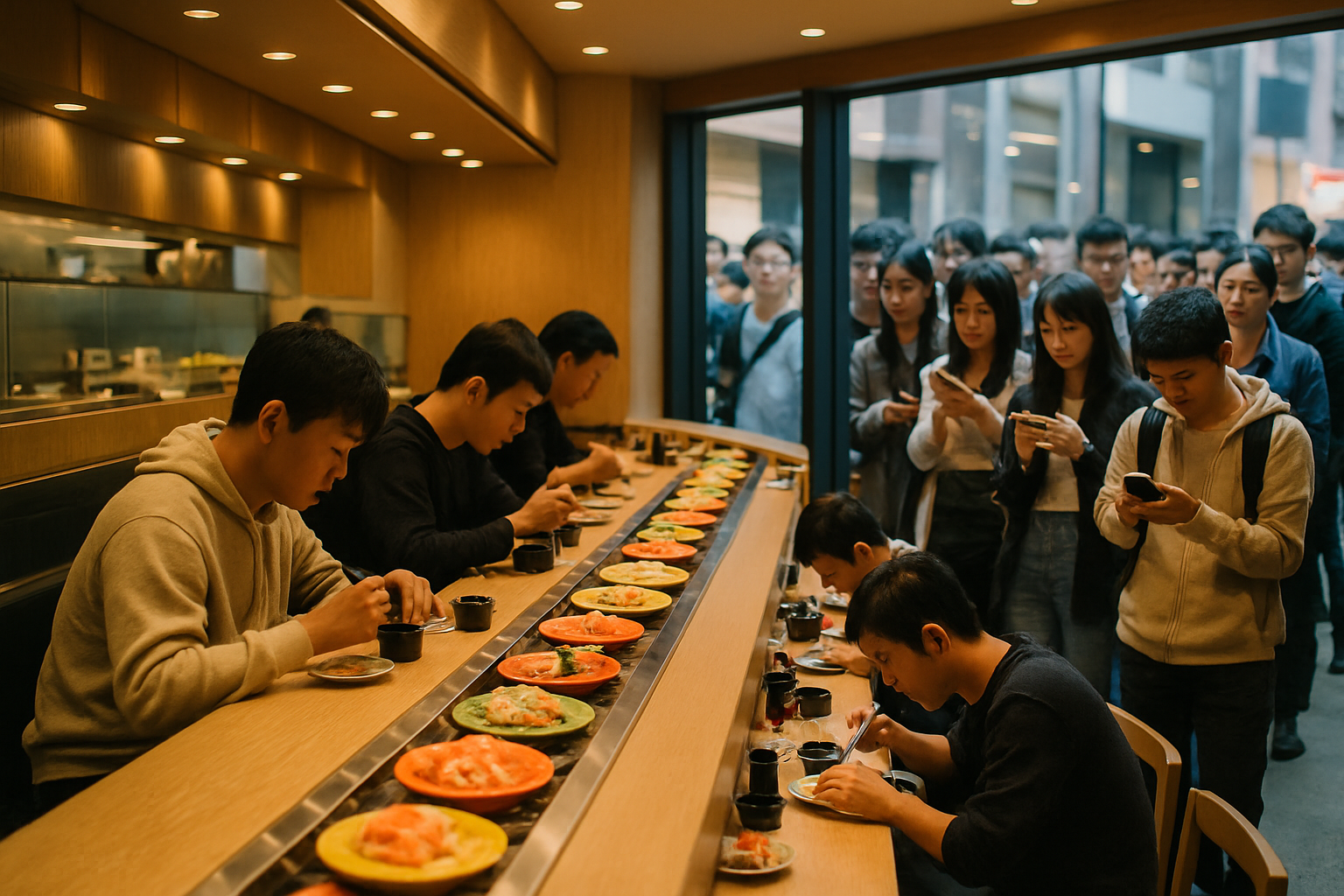
A Japanese conveyor belt sushi chain's meteoric rise in China has exposed a fundamental transformation in Chinese dining culture, with Sushiro restaurants generating wait times of up to 1,500 tables and spawning secondary markets for reservations as solo dining becomes a cultural phenomenon among young Chinese consumers.
The dramatic success of Sushiro, which opened its first mainland China location in Guangzhou in 2021, represents more than just restaurant popularity—it signals the emergence of a new social dining paradigm that challenges traditional Chinese communal eating customs and reflects broader lifestyle changes among China's younger generation.
From Regional Experiment to National Sensation
Sushiro's journey in China began modestly with a single location in Guangzhou, Guangdong province, in 2021. However, the brand's expansion to Beijing in 2024 marked a turning point that transformed it from a regional curiosity into a national phenomenon. The Beijing opening generated unprecedented demand, with reports of queues reaching 1,500 tables—a scale that few restaurant chains anywhere in the world have experienced.
The momentum continued to build as Sushiro prepared to enter Shanghai in December 2025. Even before the restaurant's official opening, an extraordinary 700 groups had already registered on waiting lists, demonstrating the brand's ability to generate anticipation and demand that extends far beyond typical restaurant marketing.
"The scale of demand we're seeing for Sushiro is unprecedented in China's restaurant industry. This isn't just about food preferences—it's about a new way of experiencing dining that resonates with modern Chinese consumers."
— Industry Analysis, South China Morning Post
The Solo Dining Cultural Revolution
The success of Sushiro coincides with and amplifies a broader solo dining trend that is reshaping Chinese food culture. This shift represents a significant departure from traditional Chinese dining customs, which historically emphasized family-style meals and communal eating experiences. The conveyor belt sushi format, with its individual portion sizing and counter seating arrangement, perfectly accommodates this new preference for independent dining experiences.
This cultural transformation aligns with broader lifestyle changes documented across Asia, where younger generations are increasingly prioritizing personal experiences over traditional social obligations. The trend reflects growing urbanization, changing work patterns, and evolving social relationships that make solo dining not just acceptable but preferred for many consumers.
Economic Impact and Market Dynamics
The extreme popularity of Sushiro has created secondary market effects reminiscent of concert ticket sales or luxury product launches. The emergence of scalpers reselling restaurant reservations indicates that demand has reached levels where access itself becomes a valuable commodity. This phenomenon suggests that Sushiro has achieved a level of cultural cachet that extends beyond food quality to encompass social status and cultural participation.
The economic implications extend beyond individual restaurants to influence broader market dynamics. Other Japanese restaurant chains and solo dining concepts are likely monitoring Sushiro's success for expansion opportunities, while traditional Chinese restaurant operators may need to adapt their formats to accommodate changing consumer preferences.
Infrastructure and Operational Challenges
Managing demand at this scale presents significant operational challenges. Traditional reservation systems and queuing mechanisms prove inadequate when dealing with hundreds or thousands of waiting customers. The need for sophisticated crowd management, digital reservation platforms, and expanded seating capacity becomes critical for sustainable operations.
The geographical expansion pattern—from Guangzhou to Beijing to Shanghai—demonstrates strategic market development targeting China's most affluent and cosmopolitan urban centers. This approach maximizes early adoption among consumers most likely to embrace new dining concepts while building brand recognition for future expansion into secondary cities.
Technology Integration and Service Innovation
Sushiro's success in China benefits from technological integration that enhances the solo dining experience. Digital ordering systems, mobile payment integration, and app-based queue management align with Chinese consumers' expectations for seamless digital experiences. The conveyor belt format itself represents a form of automated service that reduces wait staff interaction while maintaining food quality and variety.
This technological approach contrasts with traditional Chinese restaurant service models that emphasize personal attention and customization. The standardized, efficient service model appeals to consumers seeking consistent quality without the social obligations inherent in traditional dining experiences.
Regional Context and Competitive Landscape
Sushiro's success occurs within a broader context of international restaurant expansion in China and evolving food culture preferences. The phenomenon reflects China's continued openness to international food concepts while demonstrating how foreign brands can achieve success by aligning with emerging cultural trends rather than simply transplanting existing models.
The timing proves particularly significant as China's restaurant industry recovers from pandemic-related disruptions and adapts to changed consumer behaviors. Solo dining options provide flexibility and safety that appeals to health-conscious consumers while accommodating busy urban lifestyles.
Future Implications for China's Dining Culture
The Sushiro phenomenon suggests broader implications for China's evolving food culture. Traditional communal dining customs may not disappear but will likely coexist with new formats that accommodate individual preferences and changing social patterns. Restaurant operators across all cuisines may need to consider how their formats and service models can adapt to solo dining preferences.
The success also indicates potential opportunities for other international restaurant concepts that can effectively combine cultural authenticity with operational efficiency. The key appears to be understanding how international food formats can serve emerging Chinese lifestyle preferences rather than simply replicating overseas success formulas.
Long-term Cultural Transformation
Beyond immediate business implications, Sushiro's success represents a marker of generational change in Chinese society. The willingness of young consumers to wait hours for individual dining experiences suggests shifting priorities that value personal choice, quality experiences, and cultural exploration over traditional social obligations.
This transformation occurs alongside documented trends toward traditional values in other aspects of Chinese youth culture, suggesting a complex negotiation between cultural preservation and modernization that plays out differently across various life domains.
Strategic Implications for the Restaurant Industry
The Sushiro phenomenon provides valuable insights for restaurant operators, real estate developers, and investors monitoring Chinese consumer trends. The ability to generate sustained demand at this scale demonstrates the potential rewards for concepts that successfully identify and serve emerging cultural preferences.
Success factors include operational excellence, cultural sensitivity, technological integration, and strategic market entry timing. The experience also highlights the importance of scalability planning, as unexpected success can create operational challenges that affect customer experience and brand reputation.
As solo dining culture continues developing in China, Sushiro's pioneering success establishes benchmarks for market entry strategies, operational requirements, and cultural adaptation approaches that other international restaurant concepts may study and emulate. The lasting impact may extend far beyond sushi to influence how Chinese consumers think about dining as individual expression rather than purely social activity.