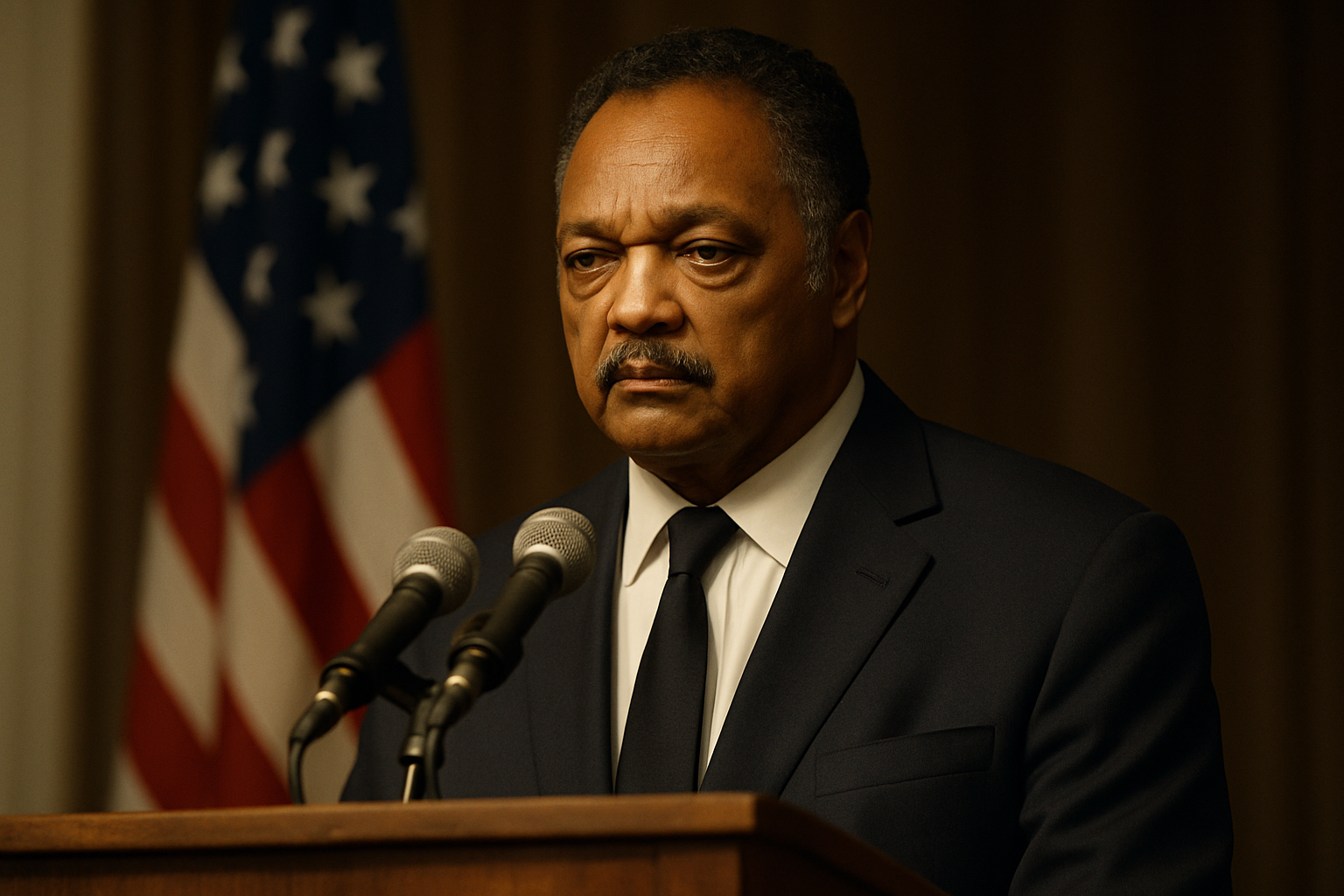
The Rev. Jesse Louis Jackson, a towering figure of the American civil rights movement and the first African American to mount a serious presidential campaign, died peacefully Tuesday morning at age 84, surrounded by family at his Chicago-area home.
Jackson had been battling progressive supranuclear palsy (PSP), a rare neurological condition affecting movement and balance, and had been hospitalized in recent months. His family confirmed his passing in a statement calling him "a servant leader—not only to our family, but to the oppressed, voiceless, and overlooked around the world."
From King's Inner Circle to National Leadership
Born October 8, 1941, in Greenville, South Carolina, during the depths of Jim Crow segregation, Jackson rose from humble beginnings to become one of America's most recognizable civil rights leaders. His journey to prominence began when he joined Dr. Martin Luther King Jr.'s inner circle in the 1960s, becoming the youngest member of King's leadership team at age 26.
Jackson was present at the Lorraine Motel in Memphis on April 4, 1968, when King was assassinated. That tragic moment transformed Jackson from a promising young activist into a national leader who would carry forward King's vision of social justice and economic equality for the next five decades.
"Jesse Jackson was a bridge between several generations and fought to keep alive the dream of Martin Luther King," noted Portuguese media outlet PÚBLICO in their coverage.
— PÚBLICO, Portugal
Building the Rainbow Coalition
In 1971, Jackson founded Operation PUSH (People United to Save Humanity), which focused on economic empowerment and educational opportunities for African Americans. But his most significant organizational achievement came in 1984 with the creation of the Rainbow Coalition, a diverse political movement that united African Americans, Hispanics, Native Americans, Asian Americans, and progressive whites under a common vision of social and economic justice.
Jackson's Rainbow Coalition broke new ground in American politics by demonstrating that a multiracial coalition could be both politically viable and electorally competitive. This model would later influence progressive politics for decades and helped pave the way for future leaders, including Barack Obama.
Historic Presidential Campaigns
Jackson made history in 1984 as the first African American to mount a serious campaign for the Democratic presidential nomination. His 1988 campaign proved even more successful, winning 13 primaries and caucuses and finishing second to eventual nominee Michael Dukakis.
His electrifying speech at the 1988 Democratic National Convention in Atlanta became legendary in American political history. "When I look out at this convention, I see the face of America—red, yellow, brown, black and white," Jackson declared, delivering his famous "Keep Hope Alive" message that continues to inspire political activists today.
Jackson's campaigns demonstrated that an African American candidate could compete at the highest levels of American politics, opening doors for future generations of Black political leaders. His success laid crucial groundwork for Obama's eventual victory in 2008.
Global Diplomat and Moral Voice
Beyond electoral politics, Jackson served as an unofficial diplomat and moral voice on the international stage. He negotiated the release of American prisoners in Syria in 1984 and Yugoslavia in 1999, demonstrating his ability to bridge cultural and political divides through personal diplomacy.
Jackson traveled to apartheid South Africa and met with Nelson Mandela, advocated for human rights in various global contexts, and consistently promoted America's moral leadership internationally. France recognized his contributions by awarding him the Légion d'honneur in 2021 for his lifetime of activism.
"Arab American advocates eulogise Jackson as a civil rights giant who embraced their communities and defended Palestine," reported Al Jazeera, highlighting his broad coalition-building approach.
— Al Jazeera
International Recognition and Tributes
News of Jackson's death sparked an outpouring of international tributes, reflecting his global impact on human rights and social justice movements. From European capitals to Caribbean nations, world leaders recognized Jackson's contributions to the universal struggle for equality and dignity.
Jamaica's People's National Party issued a statement calling Jackson "a moral voice in the global fight for justice, equality, and human rights. His lifelong advocacy for the oppressed and marginalised helped to shape international conversations on dignity, democracy, and inclusion."
In Nicaragua, Vice President Rosario Murillo highlighted Jackson's global legacy in defending justice, dignity, and civil rights worldwide, demonstrating how his influence extended far beyond American borders.
Master Orator and Cultural Icon
Jackson was renowned for his powerful oratory, characterized by a rhythmic, call-and-response style that energized audiences across racial and cultural lines. His signature phrases—"I am somebody" and "Keep hope alive"—became rallying cries for the dispossessed and disenfranchised.
As constitutional law professor Gloria J. Browne-Marshall told France 24, Jackson's death will "harness the power of the people again to go forward with a vision of the country that is diverse and not just run by oligarchs."
Family Legacy and Personal Challenges
Jackson is survived by his wife of more than 50 years, Jacqueline Brown Jackson, and five children, including former Congressman Jesse Jackson Jr., who served from 1995 to 2012. His family has been central to both his personal life and his public mission, often joining him on the front lines of social justice campaigns.
In 2017, Jackson was diagnosed with Parkinson's disease, but he remained active in civil rights causes well into his 80s. His later battle with progressive supranuclear palsy led to his recent hospitalization and peaceful death surrounded by loved ones.
Lasting Impact on American Democracy
Jackson's influence on American politics extends far beyond his own campaigns. His Rainbow Coalition model demonstrated the electoral potential of diverse coalitions, his international advocacy elevated America's moral standing globally, and his persistent focus on economic justice kept poverty and inequality in public consciousness for decades.
Political analysts widely credit Jackson with making Obama's presidency possible by proving that African American candidates could compete at the highest levels of American politics. His coalition-building strategies and grassroots organizing techniques became templates for progressive political movements nationwide.
Philosophical Legacy
Throughout his career, Jackson emphasized the interconnected nature of justice struggles. "Suffering breeds character. Character breeds faith. In the end, faith will not disappoint," he often said, encapsulating his belief that personal resilience and collective action could overcome seemingly insurmountable obstacles.
His vision of an inclusive, diverse America—articulated most memorably in his "face of America" speech—remains one of his most enduring contributions to the national conversation about identity, belonging, and democratic participation.
End of an Era
With Jackson's death, America loses its last major surviving civil rights leader from the King era. His passing marks the end of a historic chapter in American civil rights, occurring during a period of renewed focus on racial justice that makes his legacy particularly poignant.
Memorial services are expected in both Chicago, where Jackson built his career, and South Carolina, his birthplace. Thousands of mourners, including civil rights leaders, politicians, and ordinary Americans whose lives he touched, are anticipated to pay their respects to a man who dedicated his life to expanding the boundaries of American democracy.
As tributes continue to pour in from around the world, Jesse Jackson's death truly marks the end of an era in American civil rights leadership—the passing of a bridge between the historic struggles of the 1960s and the ongoing fight for equality in the 21st century.