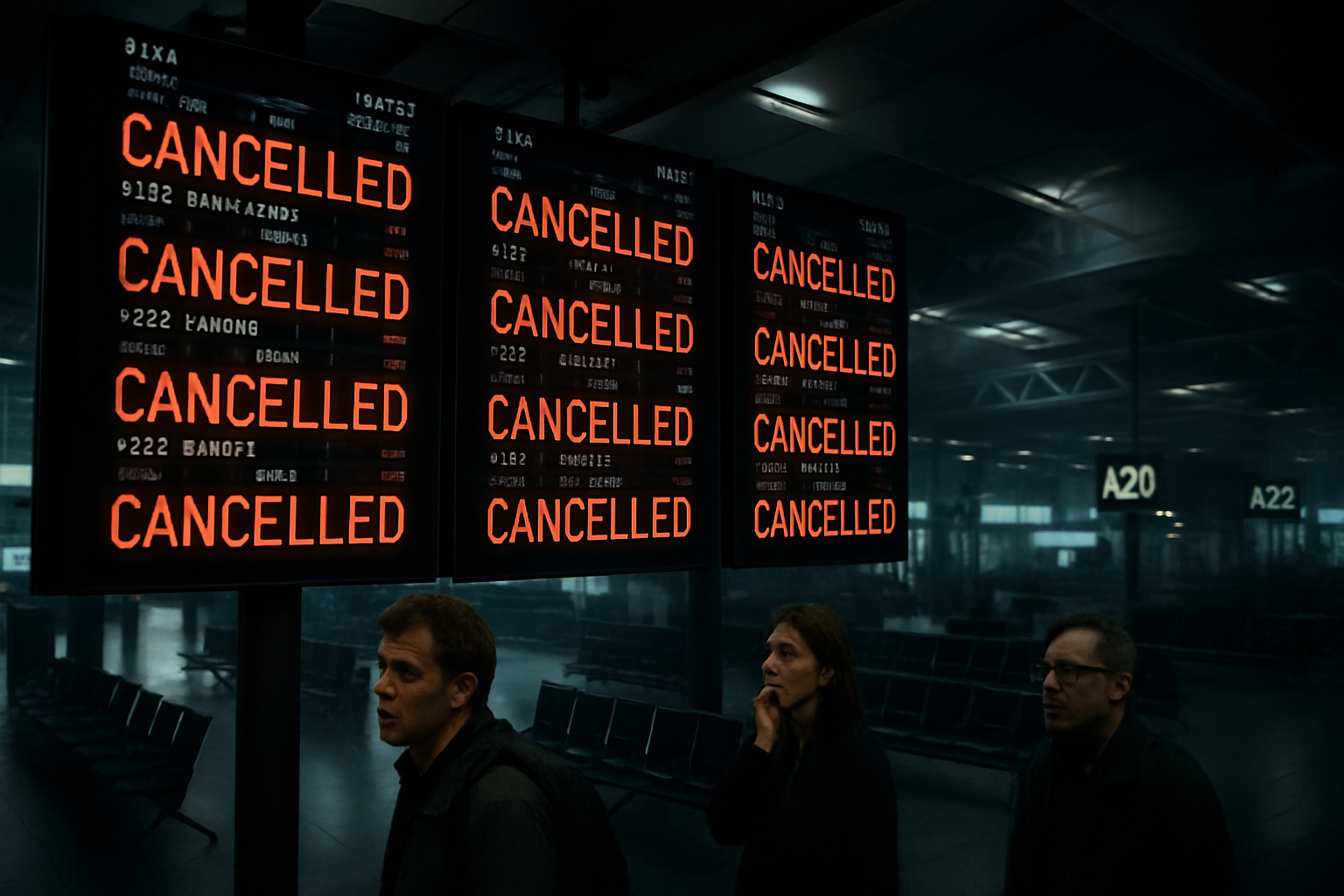
Europe faces its most severe aviation fuel crisis since the COVID-19 pandemic as soaring jet fuel costs and critical supply shortages force airlines to cancel thousands of flights, threatening to paralyze the continent's summer travel season.
The crisis has escalated dramatically in recent weeks, with International Energy Agency (IEA) Director Fatih Birol issuing an unprecedented warning that Europe has "perhaps six weeks of jet fuel" remaining before systematic flight cancellations become inevitable by early June. This represents the most severe threat to European aviation infrastructure in modern history.
Crisis Scale and Immediate Impact
Aviation industry data reveals the staggering scope of the current disruption. Over 18,000 flights have been cancelled worldwide since the crisis began in March 2026, marking the most extensive aviation disruption since the COVID-19 pandemic. The situation has been compounded by eight Middle Eastern countries maintaining simultaneous airspace closures, creating what industry experts describe as an "aviation black hole" that has severed critical Europe-Asia travel corridors.
Transavia, the low-cost subsidiary of Air France-KLM, announced significant flight cancellations for May and June, representing "less than 2% of the program" according to company spokespersons. However, this seemingly modest percentage translates to thousands of affected passengers during the crucial summer booking period.
The fuel crisis has hit Italian airports particularly hard, with severe limitations reported at Brindisi, Bologna, Milan Linate, Treviso, Venice, Reggio Calabria, and Pescara. Some facilities have temporarily operated without adequate jet fuel supplies despite broader market interventions from European governments.
Unprecedented Fuel Price Surge
The root cause of the crisis lies in the dramatic surge in jet fuel prices, which have increased by 122% from $85-90 per barrel to $150-200 per barrel. This unprecedented increase stems from the closure of the Strait of Hormuz by Iran's Revolutionary Guard, which has blocked approximately 40% of global oil transit through the 21-mile waterway since February.
Airlines across the continent have been forced to implement emergency surcharges to offset unsustainable fuel costs. Air France-KLM has added €50 to economy tickets and €200 to business class for long-haul flights. Norwegian Airlines deployed 125 additional flights to capture market share after SAS was forced to cancel over 1,000 flights due to fuel cost pressures.
"We are facing the most severe aviation fuel shortage in European history. The situation is untenable for our industry."
— Michael O'Leary, CEO Ryanair
Ryanair CEO Michael O'Leary has been conducting daily emergency calls with fuel suppliers across Europe in an attempt to maintain operations. The airline has warned that European jet fuel supplies could face disruption from June if the Middle East conflict continues, potentially forcing widespread summer flight cancellations during the industry's most critical revenue period.
Government Emergency Responses
European governments have implemented unprecedented emergency measures to address the crisis. The European Union has announced comprehensive contingency plans including arrangements for US jet fuel imports and mandatory minimum reserve requirements - the most significant aviation fuel intervention in EU history.
Individual member states have taken decisive action to protect consumers and maintain energy security. Hungary imposed immediate price caps on gasoline and diesel citing "war-driven explosions" in fuel costs. France deployed 500 fuel inspectors to prevent market manipulation, while Romania developed five emergency scenarios to prevent diesel prices from exceeding 10 lei per liter.
Germany has strengthened antitrust laws governing gas station pricing in what represents the most significant market intervention in modern German policy. Slovakia activated its strategic fuel reserves for the first time under current protocols, demonstrating the severity of the supply situation.
Tourism Industry Transformation
The aviation crisis is fundamentally reshaping European tourism patterns, with some destinations benefiting while others face severe challenges. Croatia has positioned itself as a safer European alternative, operating 62 medical clinics - Europe's most extensive seasonal healthcare network for tourists.
Spain, with its capacity of 513.6 million annual tourist nights, is capturing significant redirected demand from traditional Middle Eastern destinations. However, other regions face a "perfect storm" of challenges. The Caribbean tourism sector is struggling with Middle East disruptions compounded by Cuba's aviation isolation, while New Zealand's tourism recovery is threatened as approximately one-third of European travelers typically use Middle Eastern hubs.
The crisis has also exposed critical gaps in travel insurance coverage. Standard policies exclude war-related cancellations, leaving individual travelers financially exposed. This has driven a significant shift toward package tours over independent travel, as the former typically provides more comprehensive coverage frameworks.
Energy Security Implications
The International Energy Agency has deployed the largest strategic petroleum reserve release in its 50-year history, with 400 million barrels released from 32 countries - double the amount released during the 2022 Ukraine crisis. Japan contributed 80 million barrels in its first such release since the 2011 Fukushima disaster, highlighting the global nature of the response.
Energy expert Samuel Ciszuk has described the situation as "the most severe energy security crisis in decades, with single-chokepoint vulnerabilities fully exposed." The crisis has highlighted dangerous over-dependence on the 21-mile Strait of Hormuz, which serves as a critical single-point failure in modern global logistics with no realistic alternatives for the affected volume of transit.
Industry Transformation and Long-term Implications
The crisis is accelerating permanent changes in aviation operations. Enhanced security screening, mandatory conflict insurance, and pre-approval requirements for high-risk destinations are becoming standard features of international travel. Airlines are prioritizing route diversification to reduce dependence on Middle Eastern hubs, recognizing the critical vulnerability exposed by the current crisis.
Technology integration is accelerating across the industry, with airlines implementing sophisticated fuel optimization systems, real-time routing capabilities, and predictive maintenance programs to maximize efficiency under constrained conditions. These adaptations are likely to remain permanent features of modern aviation operations.
Nuclear Diplomacy Breakdown
The aviation and energy crisis stems from the complete breakdown of nuclear diplomacy between the United States and Iran. Despite what was described as "broad agreement on guiding principles" - the most significant diplomatic progress since the 2018 JCPOA collapse - insurmountable disagreements over scope led to military confrontation.
The situation has been complicated by the expiration of the New START treaty in February 2026, marking the first time in over 50 years without US-Russia nuclear constraints. Iran continues uranium enrichment to 60% purity with over 400kg of weapons-grade material, sufficient for multiple weapons according to international assessments.
Summer Travel Season Under Threat
The timing of the crisis poses particular challenges for the European aviation industry, which relies heavily on summer travel revenue. UN Secretary-General António Guterres has described the situation as "the greatest test of multilateral cooperation and crisis management in the modern era," with nuclear risks at their "highest level in decades."
Airlines are conducting daily operational reviews but cannot make long-term scheduling decisions with multiple airspaces closed and fuel supplies volatile. The industry faces a fundamental choice between maintaining global connectivity and adapting to regionalized, security-conscious travel patterns.
Recovery Timeline and Future Outlook
Unlike weather-related disruptions, recovery from this crisis depends on military and diplomatic resolution of the Middle East conflict rather than predictable economic factors. Aviation industry experts warn that passenger backlog clearing could take weeks even after normal operations resume.
The crisis represents a template-setting moment for 21st-century aviation crisis management, with decisions made in the coming weeks likely to influence operational practices, regulatory frameworks, and international cooperation approaches for decades to come.
Qatar Energy Minister Al Kaabi has warned that Gulf states may declare force majeure "within weeks" if oil prices reach $150 per barrel, threatening to "bring down economies of the world." This stark warning underscores the global implications of what began as a regional conflict but has evolved into the most consequential energy and transportation crisis in modern European history.
The success or failure of European aviation in navigating this unprecedented crisis will determine whether the industry emerges stronger and more resilient, or fragments into limited regional networks prioritizing security over seamless international connectivity. The outcome will shape the nature of international mobility in an increasingly volatile and interconnected world for generations to come.