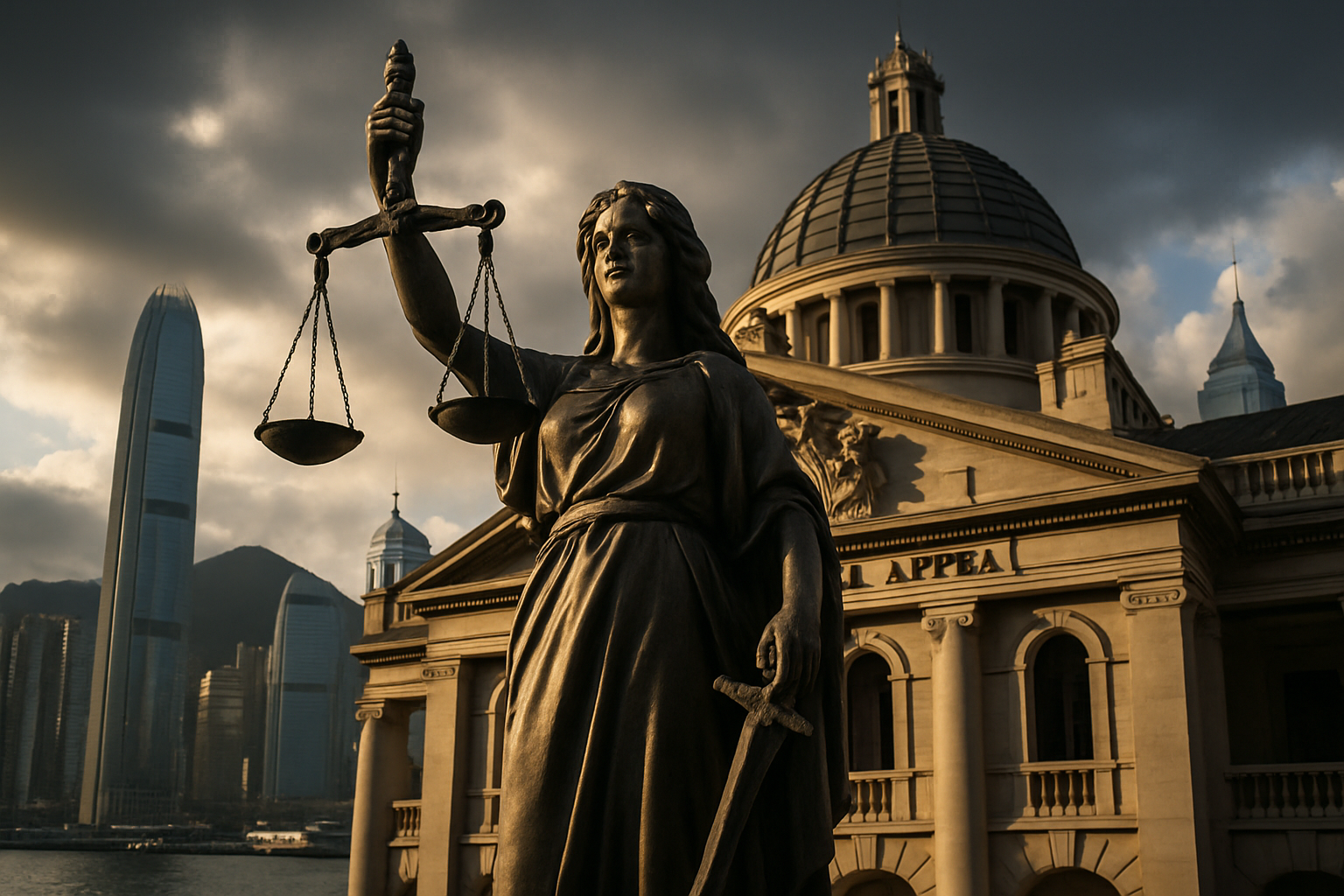
Hong Kong's Court of Appeal delivered a stunning legal victory for pro-democracy media mogul Jimmy Lai on Thursday, unanimously overturning his 2022 fraud conviction in a rare judicial decision that comes just weeks after the 78-year-old was sentenced to 20 years imprisonment on separate national security charges.
The three-judge panel, comprising Chief Judge Jeremy Poon, Judge Anthea Pang, and Judge Derek Pang, ruled that the lower court had erred in convicting Lai and a co-defendant over allegations they improperly used office space at a government-leased facility. The decision represents the most significant legal victory for any pro-democracy figure since the implementation of the national security law in 2020.
A Technical Victory Amid Political Persecution
The fraud charges stemmed from Lai's alleged breach of lease terms at the headquarters of his now-defunct Apple Daily newspaper. Prosecutors claimed that Lai had concealed the operations of Dico Consultants Limited, a private company, within the Apple Daily building, violating the terms of the government lease agreement.
However, the Court of Appeal found that the original conviction and five-year, nine-month sentence were legally flawed. The unanimous decision to quash both the conviction and sentence represents a technical legal success that stands in stark contrast to the more serious political charges that have effectively silenced Hong Kong's pro-democracy movement.
This legal victory, while significant, does not affect Lai's current imprisonment. In February 2026, he was sentenced to 20 years under the national security law for conspiracy to collude with foreign forces and publishing seditious materials — charges that effectively ended Hong Kong's last major pro-democracy newspaper when Apple Daily was forced to close in June 2021.
The Broader Context of Legal Oppression
Lai's case has become emblematic of the systematic erosion of Hong Kong's autonomy under the "One Country, Two Systems" framework. The Apple Daily founder, once a vocal critic of Beijing's influence in Hong Kong, has faced relentless legal persecution since his first arrest in August 2020.
"This rare judicial victory cannot restore Apple Daily or reverse the broader press freedom crackdown, but it provides small validation of legal processes amid Hong Kong's transformed media landscape."
— Legal observers following the case
The international community has closely watched Lai's prosecution, viewing it as a test case for Hong Kong's judicial independence. The European Union and national governments continue to call for his release, seeing his prosecution as part of the broader civil society dismantling since the national security law's implementation.
The timing of this legal victory is notable given recent international focus on Lai's case, including his daughter's attendance at high-profile political events in the United States. His status as a British citizen has created additional diplomatic pressure on UK-China relations.
Questions About Judicial Independence
Thursday's decision raises complex questions about the current state of Hong Kong's judicial system. While technical legal victories appear possible, political prosecutions under the national security law continue to proceed with devastating consequences for the pro-democracy movement.
The three-judge unanimous ruling suggests the decision was based on legal merits rather than political considerations, offering a glimpse of independent judicial decision-making in certain circumstances. However, this independence remains constrained when it comes to cases deemed politically sensitive under the national security framework.
Legal experts note that this distinction between technical legal matters and political charges highlights the transformed nature of Hong Kong's legal system. While some traditional legal protections may still function in narrow circumstances, the broader framework for political expression and media freedom has been fundamentally altered.
The Legacy of Apple Daily
The building that once housed Apple Daily's newsroom now stands as a stark reminder of Hong Kong's swift media transformation. Founded in 1995, the pro-democracy tabloid reached a circulation of hundreds of thousands at its peak, serving as the territory's last major independent voice critical of Beijing.
The forced closure of Apple Daily in June 2021, following asset freezing and staff arrests under the national security law, marked the end of an era for Hong Kong's media landscape. The newspaper's closure created a chilling effect that extended far beyond journalism, influencing self-censorship across all sectors of Hong Kong society.
Limited Practical Impact
While the Court of Appeal's decision represents a legal vindication for Lai, its practical impact remains severely limited. The fraud conviction reversal does nothing to address his national security sentences, and he remains imprisoned indefinitely on the more serious charges.
Nevertheless, the ruling provides a rare example of Hong Kong's courts ruling favorably for a pro-democracy figure, offering some hope to other defendants while highlighting the crucial distinction between technical legal matters and politically sensitive cases.
For the international community monitoring Hong Kong's adherence to rule of law principles, this decision demonstrates that the territory's legal system retains some capacity for independent decision-making, even as broader questions remain about the scope and sustainability of such independence.
Future Implications
Whether Hong Kong's judicial independence can be maintained or expanded in other areas remains a key question for the territory's future as an international financial center and legal hub. The ability to maintain rule of law principles while navigating an increasingly politicized environment will be crucial for Hong Kong's continued relevance in global business and finance.
As this rare legal victory shows, the rule of law can occasionally still prevail over political expediency in Hong Kong's transformed political landscape. However, the broader trajectory of civil liberties and judicial independence continues to face unprecedented challenges under the current framework.
For Jimmy Lai, now 78 years old, this legal victory represents a small measure of justice in what has been a devastating series of prosecutions. While he remains behind bars on national security charges, Thursday's Court of Appeal decision serves as a reminder that even in Hong Kong's changed circumstances, legal principles can sometimes triumph over political considerations.