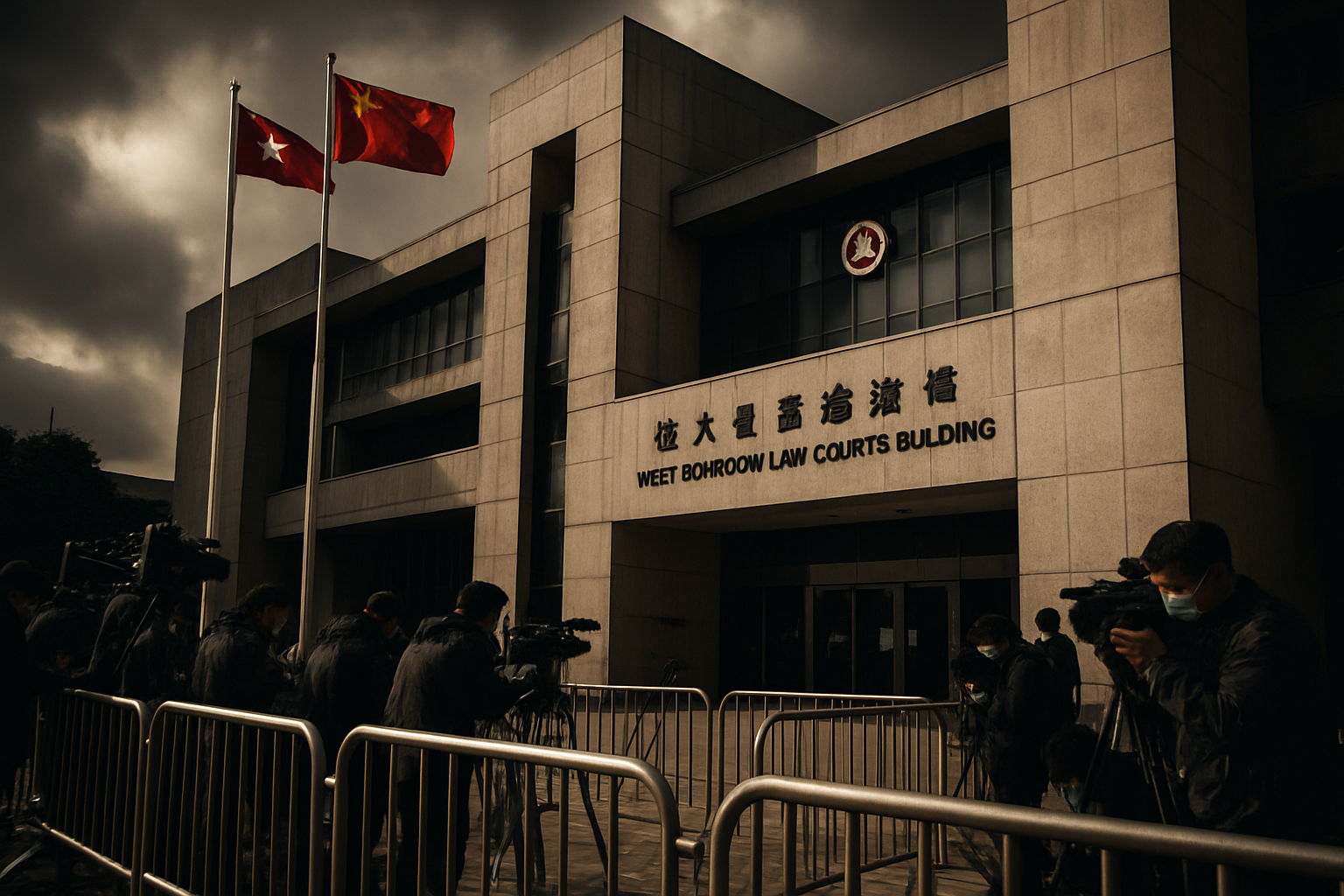
Hong Kong's most prominent pro-democracy media tycoon Jimmy Lai was sentenced to 20 years in prison on Monday, February 9, 2026, concluding one of the most significant national security trials in the territory's history since the implementation of Beijing's sweeping security legislation.
The 78-year-old founder of the now-defunct Apple Daily newspaper received the sentence from three High Court judges at West Kowloon Court following his conviction in December 2025 on two counts of conspiracy to collude with foreign forces and one count of publishing seditious materials. The sentence represents the longest punishment handed down under Hong Kong's national security law, surpassing the previous record of 10 years given to legal scholar Benny Tai in 2024.
The Charges and Conviction
The court described Lai's sentence as falling within the most severe "grave nature" penalty band of 10 years to life imprisonment. Judges emphasized that Lai was the "mastermind" and driving force behind foreign collusion conspiracies, which enhanced his sentence significantly. The brief 10-minute hearing concluded a nearly five-year legal saga that began with Lai's first arrest in August 2020.
"After considering the serious and grave criminal conduct of Lai, we have settled on 20 years' imprisonment."
— Hong Kong High Court Judges
The prosecution argued that Lai used his media platform and international connections to undermine Chinese sovereignty and encourage foreign interference in Hong Kong affairs. During the trial, prosecutors cited hundreds of articles they deemed seditious for "arousing dissatisfaction" with the government and called for foreign sanctions against China.
International Condemnation and Response
The sentence prompted immediate international condemnation, with world leaders and human rights organizations denouncing what they described as an assault on press freedom and democracy. The European Union issued a statement "deploring" the ruling and calling for Lai's "immediate and unconditional release." EU officials emphasized that the sentence represents a significant blow to Hong Kong's already diminished press freedoms.
In response to the sentencing, the United Kingdom expanded its Hong Kong visa scheme, opening up eligibility to thousands more Hongkongers. Adult children of British national (overseas) status holders who were under 18 at the time of Hong Kong's 1997 handover to China will now be eligible to apply for the route independently of their parents, according to Home Office officials.
Rights groups condemned the sentence as "effectively a death sentence" given Lai's advanced age, highlighting concerns about his deteriorating health conditions during his prolonged detention.
The Fall of Apple Daily
Lai's conviction marks the symbolic end of Hong Kong's last major pro-democracy newspaper. Apple Daily, founded in 1995, was forced to cease operations in June 2021 after authorities froze the company's assets and arrested key staff members. The tabloid had been a fierce critic of Beijing's policies and a vocal supporter of Hong Kong's pro-democracy movement.
Six senior Apple Daily executives and two activists were also sentenced alongside Lai, receiving jail terms ranging from six to 10 years. Additionally, three companies associated with the media group faced financial penalties as part of the coordinated legal action.
Beijing's Defense and Broader Crackdown
China's Foreign Ministry defended the sentence, with spokesperson Lin Jiang stating that Lai "deserved to be strictly punished according to law." Beijing officials argued that Hong Kong's judicial organs fulfilled their duties in accordance with the law, and the central government "firmly supports Hong Kong's efforts to safeguard national security within the framework of the law."
The case represents part of a systematic dismantling of Hong Kong's civil society since the implementation of the national security law in June 2020. Hundreds of pro-democracy activists have been arrested or forced into exile, international media organizations have relocated operations, and a pervasive atmosphere of self-censorship has taken hold across the territory.
Historical Context and Timeline
Lai's legal troubles began during Hong Kong's massive pro-democracy protests in 2019, which saw hundreds of thousands take to the streets calling for greater democratic freedoms. The demonstrations were met with tear gas and rubber bullets as police sought to disperse crowds.
Key events in Lai's case include:
- June 1995: Lai publishes first edition of Apple Daily
- June 2019: Mass pro-democracy protests begin
- June 30, 2020: China imposes national security law on Hong Kong
- August 2020: Lai first arrested under national security legislation
- June 2021: Apple Daily forced to cease operations
- December 2025: Lai convicted on security charges
- February 9, 2026: 20-year sentence imposed
Implications for Hong Kong's Future
The sentencing sends a chilling message to remaining pro-democracy voices in Hong Kong and raises fundamental questions about the territory's autonomy under the "One Country, Two Systems" framework. Legal experts suggest the broad interpretation of the national security law extends far beyond media and journalism, affecting universities, businesses, and civil society groups across Hong Kong.
The case has become a significant geopolitical flashpoint between China and Western nations, testing international community responses to what critics describe as the erosion of Hong Kong's autonomy. It may trigger additional Western sanctions and further strain China-Western relations in an already tense international environment.
Economic and Social Impact
The systematic crackdown on press freedom and civil liberties has raised concerns among international businesses about Hong Kong's long-term viability as a global financial center. The sentencing of a prominent British citizen like Lai creates additional diplomatic pressure on UK-China relations and may influence international business confidence in making long-term commitments to Hong Kong.
Two years of Lai's sentence will overlap with existing charges, but the 20-year term effectively ensures the 78-year-old media mogul will likely spend the remainder of his life in prison unless his conviction is overturned on appeal or he receives clemency.
As Hong Kong continues to navigate its transformed political landscape, the Lai case stands as a defining moment that will be remembered as marking the end of an era for the territory's pro-democracy movement and independent media sector. The international community's response will likely shape future approaches to accountability for transnational authoritarian practices and the protection of press freedom globally.