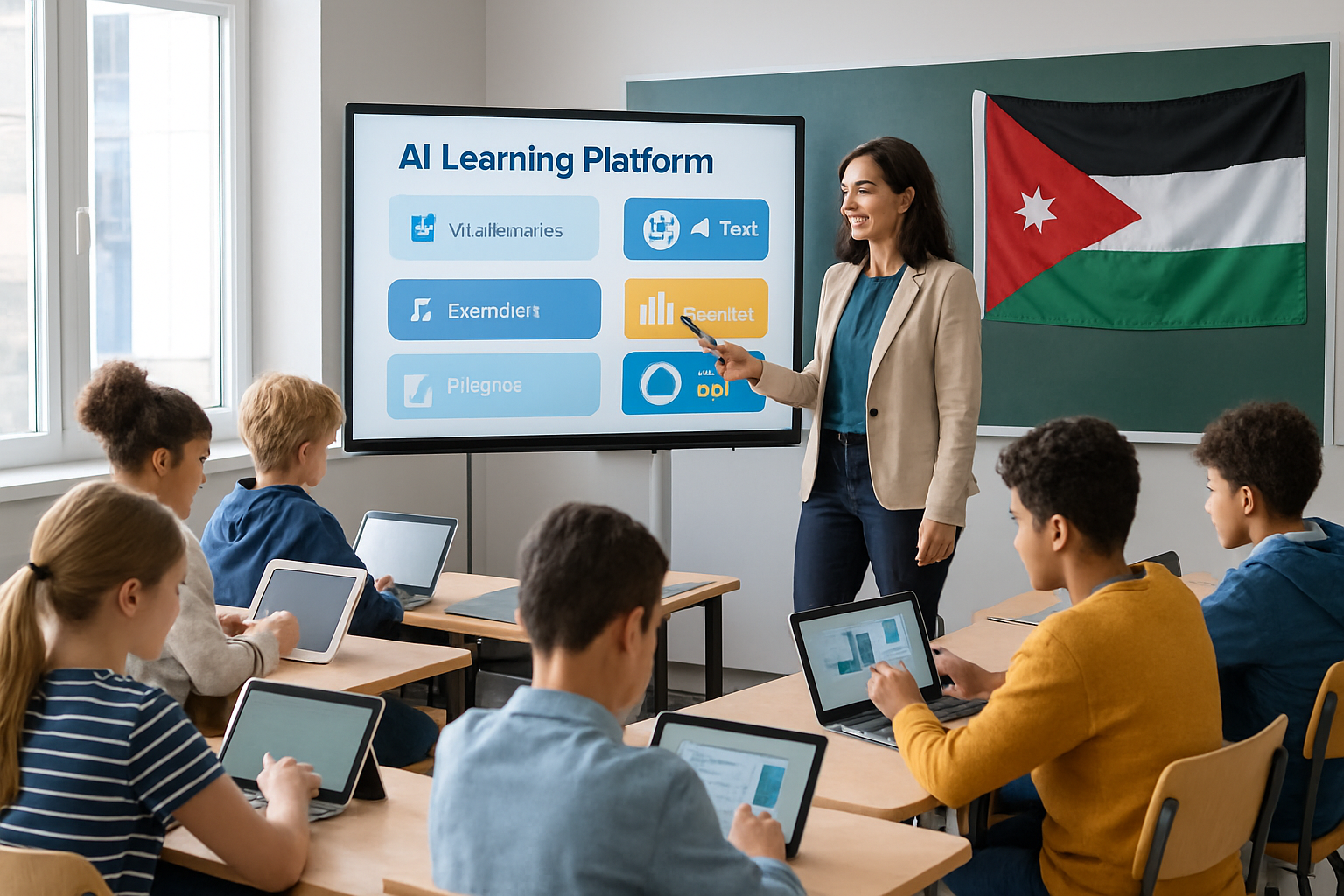
Two major educational technology developments emerged February 24, 2026, as Jordan launched a groundbreaking Chromebook integration study in partnership with Google and the World Bank, while Singapore's EtonHouse International Education Group deployed ChatGPT Edu across its global network, positioning both nations at the forefront of the worldwide educational technology renaissance.
Jordan's Ministry of Education announced a pioneering pilot study measuring the impact of providing Chromebook devices to selected students, representing the kingdom's most significant digital learning initiative to date. The program operates within a strategic partnership framework involving Google and funding support from the World Bank through the "Masar" program, demonstrating unprecedented international cooperation in educational technology deployment.
Jordan's Revolutionary Digital Learning Study
The Jordanian initiative aims to enhance the digital learning environment through reliable devices, digital educational platforms, updated educational resources, and a comprehensive suite of modern tools supporting creative learning and fostering innovation among students. The study represents a carefully designed research approach to measure tangible outcomes from technology integration rather than implementing wholesale changes without evidence-based assessment.
This strategic approach reflects lessons learned from global educational technology implementations over the past decade, where rushed deployments often failed to demonstrate meaningful learning improvements. Jordan's methodical research framework positions the kingdom as a leader in evidence-based educational technology policy development.
The timing of Jordan's announcement coincides with the global memory crisis affecting semiconductor production, with prices surging sixfold across major manufacturers including Samsung, SK Hynix, and Micron. Despite these infrastructure constraints expected to persist until 2027, Jordan's partnership with international organizations enables access to devices during a period of global technology scarcity.
Singapore's Enterprise AI Workspace Deployment
Simultaneously, Singapore's EtonHouse International Education Group announced collaboration with OpenAI to deploy ChatGPT Edu across its global education network. This deployment establishes a secure, enterprise-grade AI workspace designed to strengthen governance, operational excellence, and institutional capability within educational settings.
The initiative aligns with Prime Minister Lawrence Wong's announcement of Singapore's National AI Council, designed to accelerate mission-driven artificial intelligence deployment throughout the nation. Singapore's coordinated approach demonstrates how national AI strategy can drive educational innovation while maintaining security and governance standards.
EtonHouse's implementation represents one of the most significant educational AI deployments globally, providing a template for how international education networks can integrate advanced AI capabilities while maintaining pedagogical integrity. The secure, enterprise-grade platform addresses critical concerns about student data privacy and age-appropriate AI interaction that have hindered educational AI adoption worldwide.
Global Educational Technology Renaissance Context
These developments occur within what educational researchers now term the "2026 Educational Technology Renaissance" – a global phenomenon characterized by thoughtful digital tool integration with traditional educational values rather than wholesale technology replacement. This movement represents a maturation from earlier technology-for-technology's-sake approaches toward outcome-oriented enhancement of learning effectiveness.
Malaysia operates the world's first AI-integrated Islamic school, successfully combining artificial intelligence with traditional religious and academic learning. Canada has pioneered responsible AI teaching assistants across universities while maintaining critical thinking standards. These success models demonstrate that effective educational AI requires cultural sensitivity, clear pedagogical objectives, and comprehensive stakeholder engagement.
The global context includes significant infrastructure challenges. The semiconductor shortage affecting major manufacturers creates bottlenecks for AI-powered educational systems, forcing institutions to develop memory-efficient algorithms and hybrid approaches combining AI tools with traditional methods. These constraints paradoxically drive innovation in educational technology efficiency.
International Cooperation and Knowledge Sharing
Both Jordan's and Singapore's initiatives highlight the critical importance of international cooperation in educational technology development. Jordan's partnership framework involving Google and World Bank support demonstrates how developing nations can access cutting-edge technology through strategic international relationships without compromising educational sovereignty.
Singapore's national AI strategy coordination with private sector deployment shows how developed nations can create comprehensive frameworks enabling rapid educational technology adoption while maintaining governance standards. The contrast between approaches provides valuable insights for other nations developing their educational technology strategies.
Educational experts emphasize that successful technology integration requires sustained political commitment, adequate resource allocation, comprehensive teacher training, and realistic implementation timelines. Both Jordan's measured pilot approach and Singapore's systematic enterprise deployment exemplify these success factors in different contexts.
Implications for Global Education Policy
The simultaneous announcements from Jordan and Singapore represent a critical juncture in global educational technology policy. As nations worldwide grapple with preparing students for an AI-integrated economy while preserving human-centered learning approaches, these initiatives provide practical templates for balanced implementation.
Early indicators suggest measurable improvements in student outcomes through thoughtful technology integration that enhances rather than replaces traditional educational strengths. Jordan's research-focused approach will provide crucial data on device provision effectiveness, while Singapore's AI workspace deployment will offer insights into large-scale educational AI implementation.
The success of these programs could influence international educational standards and funding approaches. The World Bank's support for Jordan's initiative suggests multilateral development institutions recognize educational technology as strategic infrastructure investment, potentially leading to increased funding for similar programs globally.
Challenges and Future Outlook
Both initiatives face significant implementation challenges. Teacher training represents a critical factor, as educators must develop AI literacy and digital pedagogy skills to effectively utilize new tools. The global teacher shortage crisis, documented across multiple countries, adds complexity to technology integration efforts.
Privacy and security concerns remain paramount, particularly for AI systems interacting with students. Singapore's enterprise-grade approach addresses these concerns through secure workspace design, while Jordan's partnership framework ensures compliance with international data protection standards.
The infrastructure crisis affecting global technology supply chains requires creative solutions. Both countries demonstrate how strategic partnerships can overcome individual nation capacity limitations, providing models for international cooperation in educational technology deployment.
Looking ahead, these initiatives position Jordan and Singapore as influential voices in global educational technology policy discussions. Their approaches – Jordan's evidence-based pilot methodology and Singapore's comprehensive AI integration strategy – offer complementary models for different national contexts and development stages.
As the educational technology renaissance continues, the success or failure of these high-profile initiatives will significantly influence global approaches to classroom AI integration, international educational partnerships, and the balance between technological advancement and human-centered learning values that define 21st-century education.