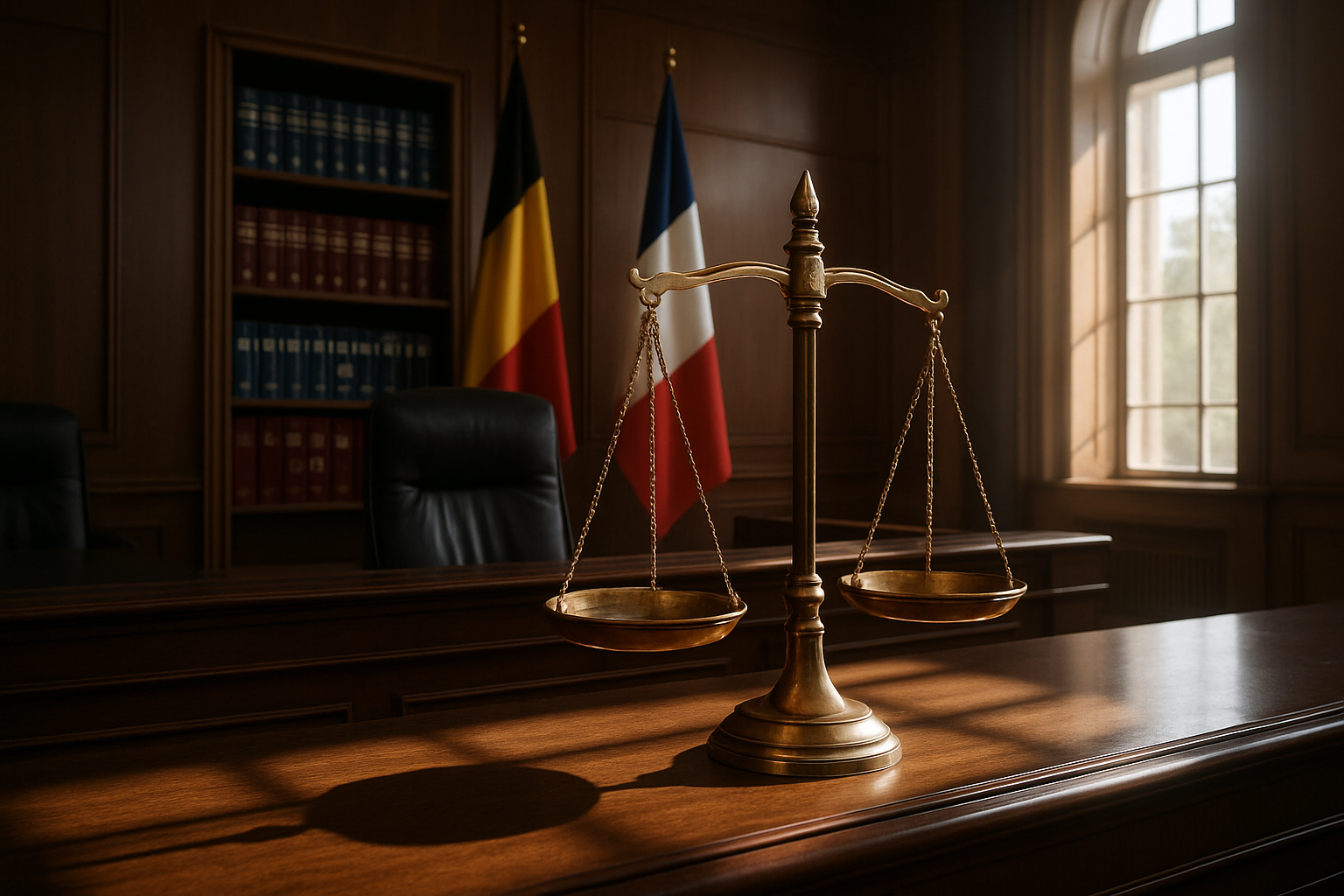
European judicial systems are grappling with complex cases that highlight both the evolving nature of legal challenges and the ongoing strain on institutional resources, as Belgium discovers unlicensed mortuaries operating in residential buildings while France reduces sentences in the Samuel Paty terrorism case.
Belgium's Disturbing Discovery in Zaventem
Belgian authorities made a shocking discovery in the Flemish Brabant municipality of Zaventem on March 3, 2026, when an unlicensed mortuary was found operating within a residential apartment block. The discovery came to light after a vigilant neighbor spotted someone walking on the terrace of one of the flats and contacted local councillor Tim De Vits of the Flemish nationalist party.
The case represents a significant breach of public health regulations and highlights gaps in regulatory oversight of funeral services. Belgian law requires strict licensing and health standards for mortuaries, including proper facilities for body storage, sanitation protocols, and zoning compliance. Operating such facilities in residential buildings poses serious public health risks and violates multiple municipal regulations.
Following the discovery, authorities immediately removed the bodies from the premises and opened a comprehensive investigation. The case underscores the challenges facing Belgian regulatory agencies in monitoring compliance with health and safety standards, particularly in sectors where illegal operations can pose significant risks to public welfare.
France Reduces Sentences in Samuel Paty Case
In a significant judicial development, a French appeal court has upheld one jail term while reducing three others in connection with the chain of events that led to the tragic beheading of teacher Samuel Paty by a Chechen jihadist in October 2020. The case has remained a symbol of the ongoing struggle against terrorism and the protection of free expression in French society.
Samuel Paty, a history teacher at Collège du Bois-d'Aulne in Conflans-Sainte-Honorine, was murdered after showing caricatures of the Prophet Muhammad during a lesson on freedom of expression. The killing shocked France and prompted a national debate about secularism, free speech, and the protection of educators.
The appeal court's decision to reduce sentences for three individuals involved in the events leading to Paty's murder reflects the complex legal considerations in terrorism-related cases. While the court maintained accountability for those who contributed to the tragedy, the sentence reductions suggest judicial recognition of varying degrees of culpability among the defendants.
"The judicial system must balance the need for justice with proportional sentencing that reflects individual responsibility in complex terrorism cases."
— Legal Expert Commentary
Broader Context of European Judicial Challenges
These cases emerge against a backdrop of unprecedented strain on European judicial systems. Historical context from our analysis reveals that courts across the continent have been experiencing mounting pressure from case backlogs, resource constraints, and evolving social expectations while maintaining their role as constitutional guardians.
The Belgian mortuary case exemplifies regulatory enforcement challenges that many European jurisdictions face. As traditional oversight mechanisms struggle to keep pace with changing business practices and potential regulatory evasion, authorities must adapt their monitoring and enforcement capabilities. The residential nature of this illegal operation highlights how regulatory violations can occur in unexpected contexts, requiring more sophisticated detection and prevention strategies.
Similarly, the French court's handling of the Samuel Paty case demonstrates the complex balancing act required in terrorism-related prosecutions. French judicial authorities have consistently worked to ensure that justice proceedings maintain both security imperatives and due process protections, particularly in cases with significant public interest and emotional resonance.
Institutional Resilience and Reform Needs
Both cases illustrate the resilience of European legal institutions while highlighting areas requiring reform and additional resources. The swift Belgian response to the unlicensed mortuary discovery demonstrates effective inter-agency cooperation between local officials, health authorities, and law enforcement. However, the case also suggests the need for enhanced preventive measures and regular compliance monitoring.
In France, the appeal court's careful consideration of sentence proportionality reflects judicial independence and the application of established legal principles even in emotionally charged cases. The court's decision-making process shows the French judicial system's commitment to individualized justice while maintaining accountability for serious crimes.
European judicial cooperation has become increasingly important for addressing transnational challenges, including regulatory compliance issues that may cross borders and terrorism cases with international dimensions. The European Union's judicial cooperation frameworks provide mechanisms for sharing best practices and coordinating responses to complex legal challenges.
Technology and Modern Judicial Challenges
Both cases highlight how modern judicial systems must adapt to contemporary challenges. The Belgian mortuary case demonstrates the importance of community vigilance and effective reporting mechanisms in identifying regulatory violations. Digital case management systems and improved inter-agency communication can help authorities respond more quickly to such discoveries.
The French terrorism case processing reflects the judicial system's evolution in handling complex cases involving social media, online radicalization, and the intersection of free expression with security concerns. Courts must navigate these challenges while maintaining fundamental legal principles and procedural safeguards.
Looking Forward: Institutional Adaptation
These developments underscore the need for continued investment in judicial infrastructure, training, and resources. European judicial systems must balance efficiency improvements with the preservation of due process and equal treatment under law. The cases demonstrate that while institutions face significant pressures, they retain the fundamental capacity to address complex challenges and deliver justice.
The Belgian mortuary investigation will likely lead to enhanced regulatory oversight procedures and potentially stricter monitoring of funeral service operations. The French court's handling of the Samuel Paty case contributes to the evolving jurisprudence on terrorism-related crimes and the protection of educators and free expression.
Both cases will influence legal development patterns across Europe, establishing precedents for similar situations and contributing to the ongoing evolution of European jurisprudence. The outcomes demonstrate that despite mounting pressures, European judicial systems maintain their essential democratic functions while adapting to 21st-century challenges.
As European integration continues, these cases contribute to a broader understanding of how national judicial systems can work together to address common challenges while maintaining their distinct legal traditions and institutional characteristics. The success of these adaptations will be crucial for maintaining public confidence in legal institutions and the rule of law across Europe.