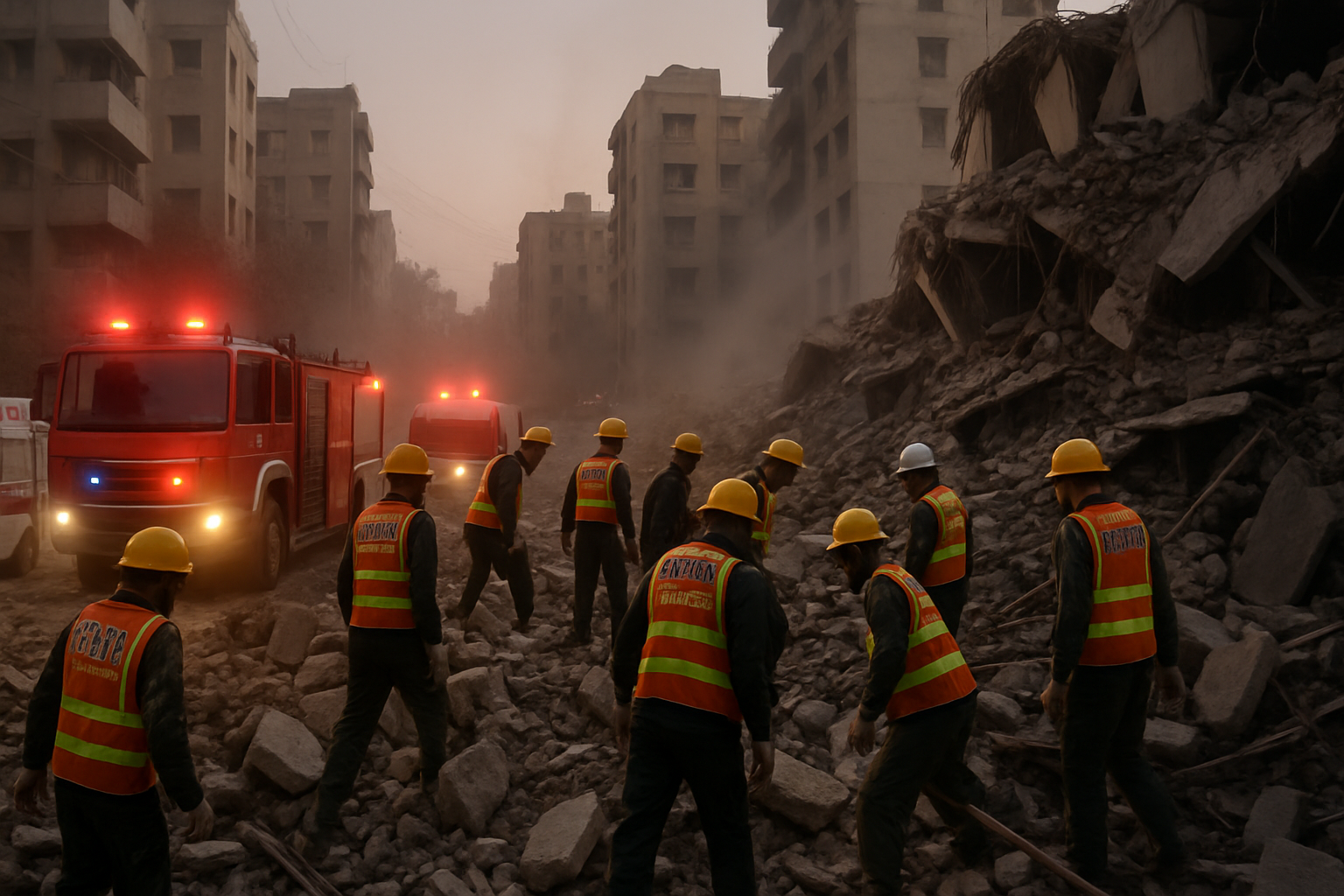
At least 16 people, including women and children, were killed and 14 others injured when a suspected gas explosion caused part of a residential building to collapse in Karachi's Soldier Bazaar area during the early morning hours of February 19, 2026.
The tragedy struck at approximately 4:15 AM during Sehri (pre-dawn meal) in the Gul Rana Colony area of Soldier Bazaar, one of Karachi's densely populated commercial and residential districts. Assistant Superintendent of Police (ASP) Jamshed Asher confirmed the explosion occurred on the building's first floor, causing structural failure that trapped multiple residents beneath the debris.
Emergency Response and Rescue Operations
Rescue 1122 teams immediately launched search and rescue operations at the collapse site, deploying specialized urban search and rescue equipment and disaster response vehicles. The scale of the operation reflects the severity of the incident, with rescue officials working methodically through concrete and debris to locate any remaining survivors.
Dr. Mohammad Sabir Memon, director of Civil Hospital's Trauma Centre, confirmed that 13 bodies from the incident were brought to the hospital, with both the deceased and injured transferred to Civil Hospital for treatment. The discrepancy in casualty figures reported by different sources is common in the immediate aftermath of such disasters as rescue operations continue.
According to Rescue 1122 Chief Operating Officer Dr. Abid, search and rescue operations remain ongoing as teams systematically clear debris sections to ensure no victims remain trapped beneath the collapsed structure.
Gas Safety Concerns in Urban Pakistan
The incident highlights ongoing concerns about gas safety infrastructure in Pakistan's major urban centers. Gas explosions in residential buildings have become a recurring tragedy across Pakistani cities, often linked to aging infrastructure, inadequate maintenance, and safety violations in densely populated areas.
Karachi, as Pakistan's largest city and commercial hub with over 16 million residents, faces particular challenges in maintaining safety standards across its sprawling residential neighborhoods. The Soldier Bazaar area, known for its mix of commercial activity and residential housing, represents the type of urban environment where such incidents can have devastating consequences due to population density.
Context of Recent Security Challenges
This tragedy occurs against the backdrop of Pakistan's ongoing security challenges. The country has been conducting intensive counter-terrorism operations in recent months, particularly in Balochistan province where over 400 militants were eliminated in February 2026 alone. However, this building collapse appears to be a civil infrastructure incident rather than security-related.
Pakistan's urban centers have also faced recent challenges including the February 6 ISIS-claimed bombing at an Islamabad mosque that killed 31 people, highlighting the diverse nature of threats facing Pakistani communities from both security and infrastructure safety perspectives.
Infrastructure and Urban Development Challenges
The collapse underscores broader challenges facing Pakistan's urban infrastructure development. Rapid urbanization, aging building stock, and enforcement gaps in construction standards create ongoing risks for residents in major cities. Gas supply systems, in particular, require regular maintenance and safety inspections to prevent the type of explosion that appears to have triggered this collapse.
Pakistani authorities have increasingly focused on improving emergency response capabilities, with organizations like Rescue 1122 providing professional emergency services across major cities. However, prevention through improved building codes, regular safety inspections, and infrastructure upgrades remains critical for reducing future risks.
Community Impact and Government Response
The Soldier Bazaar incident represents a significant tragedy for the local community, with families losing loved ones in what should have been the safety of their homes. The timing during Sehri, when Muslim families gather for their pre-dawn meal during Ramadan preparation, adds particular poignancy to the loss of life.
Local authorities are expected to launch investigations into the cause of the gas explosion and any potential safety violations that may have contributed to the tragedy. Such investigations typically examine gas line maintenance, building structural integrity, and compliance with safety regulations.
Regional Building Safety Concerns
This incident reflects broader regional challenges with building safety and infrastructure maintenance. Recent months have seen similar tragedies across South Asia and beyond, including building collapses in Lebanon that killed multiple people, highlighting the need for enhanced building codes and safety enforcement.
The tragedy also occurs during a period of extreme weather challenges globally, with January 2026 marking the 18th consecutive month of temperatures exceeding 1.5°C above pre-industrial levels. While this particular incident appears gas-related rather than weather-related, climate pressures can exacerbate infrastructure vulnerabilities.
Looking Forward
As rescue operations continue and investigations begin, this tragedy serves as a stark reminder of the importance of infrastructure safety in Pakistan's rapidly growing urban centers. The loss of 16 lives in a preventable incident underscores the need for enhanced building safety standards, regular maintenance of gas infrastructure, and robust emergency response capabilities.
The incident will likely prompt renewed discussions about urban safety regulations, gas infrastructure modernization, and emergency preparedness in Pakistani cities. For the families affected by this tragedy, however, the immediate focus remains on supporting survivors and mourning those lost in this devastating incident during what should have been a peaceful morning meal.