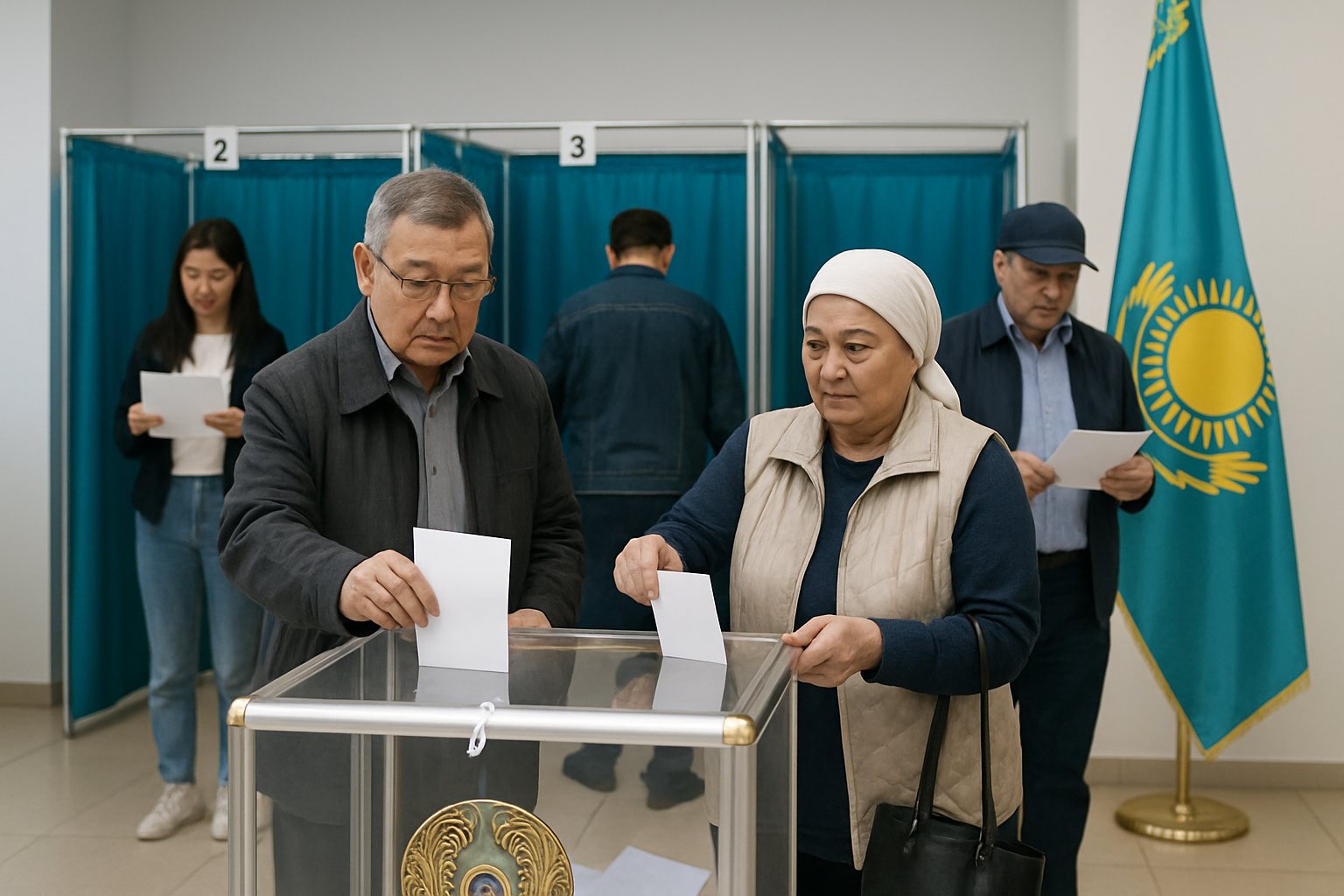
Kazakhstan concluded its constitutional referendum on March 15, 2026, with voter turnout reaching 73.24%, surpassing the 50% threshold required for validity and representing the highest electoral participation since the 2019 presidential elections.
The Central Referendum Commission confirmed that 9,126,850 citizens received ballots from the 12,461,796 eligible voters nationwide, establishing the referendum as a significant exercise in direct democratic participation. Polling stations closed at 8:00 PM local time across all regions, with international observers praising the transparent and well-organized voting process.
Record Participation Across Kazakhstan
The referendum demonstrated remarkable civic engagement, with the highest participation rates recorded in Kyzylorda region (82.02%), East Kazakhstan (78.98%), and Aktobe (77.65%). By 4:00 PM, turnout had already reached 64.43% nationally, indicating strong public interest in constitutional reform.
More than 10,388 polling stations operated across Kazakhstan's vast territory, coordinating voting across multiple time zones. The logistical achievement of managing such extensive geographic coverage while maintaining democratic standards has been recognized as a significant administrative accomplishment.
"We have witnessed an increase in first-time voters and broader participation by civil society in Kazakhstan's constitutional referendum. The voting process was well-organized with strong public engagement at polling stations."
— International Observer Mission Statement
International Oversight and Transparency
The Central Election Commission accredited 359 observers from 11 international organizations and 38 countries, representing one of the most comprehensive international monitoring missions in Kazakhstan's electoral history. International observers reported no major violations that could affect the referendum's outcome.
Foreign observation missions highlighted the peaceful conduct of voting, with observers noting the absence of significant electoral violence—a milestone achievement for the region. The transparency measures and accessibility provisions were particularly commended by international delegations.
Global Participation Through Overseas Voting
Kazakhstani citizens abroad participated through 71 polling stations at diplomatic missions in 54 countries. Deputy Foreign Minister Arman Issetov reported that 9,050 citizens had cast ballots overseas by 7:00 PM Astana time, with voting beginning at 3:00 AM due to global time differences.
The overseas voting concluded with the last referendum station at the Consulate General in San Francisco closing on March 16 at 8:00 AM Astana time, ensuring global participation in this democratic exercise.
Constitutional Reform Implications
The referendum represents Kazakhstan's commitment to democratic governance and constitutional development through direct citizen participation. Unlike purely legislative constitutional amendments, this process allowed citizens to directly influence fundamental legal frameworks that will shape the country's governance for decades.
The successful completion of the referendum strengthens Kazakhstan's position as a democratic model in Central Asia, demonstrating the country's institutional capacity to conduct transparent electoral processes across its extensive territory while maintaining international standards.
Regional and Global Context
The constitutional referendum occurs within a broader pattern of global democratic participation in 2026, joining Thailand's February parliamentary elections and constitutional referendum, Switzerland's constitutional amendments, and Bangladesh's historic democratic transition. These concurrent democratic exercises reflect renewed citizen engagement in constitutional governance worldwide.
For Central Asia, Kazakhstan's referendum success provides a template for democratic constitutional reform through transparent, inclusive processes that respect both legal continuity and popular sovereignty.
"The referendum opens a new historical stage for Kazakhstan. This democratic exercise demonstrates the country's commitment to institutionalized constitutional development."
— Head of Central Electoral Commission of Uzbekistan
Democratic Legitimacy and Future Governance
The referendum's success, validated by international observation and high citizen participation, establishes strong democratic legitimacy for constitutional reforms. The 73.24% turnout significantly exceeds typical referendum thresholds, providing robust popular mandate for constitutional changes.
The Prosecutor General's office confirmed that voting proceeded "within the legal field," ensuring democratic transparency and constitutional compliance throughout the process. This legal framework adherence reinforces Kazakhstan's commitment to rule of law and democratic institutions.
The constitutional referendum's successful implementation demonstrates Kazakhstan's democratic maturity and provides foundations for continued institutional modernization. As the country moves forward with constitutional implementation, the strong popular mandate achieved through this democratic exercise will support effective governance and democratic development.