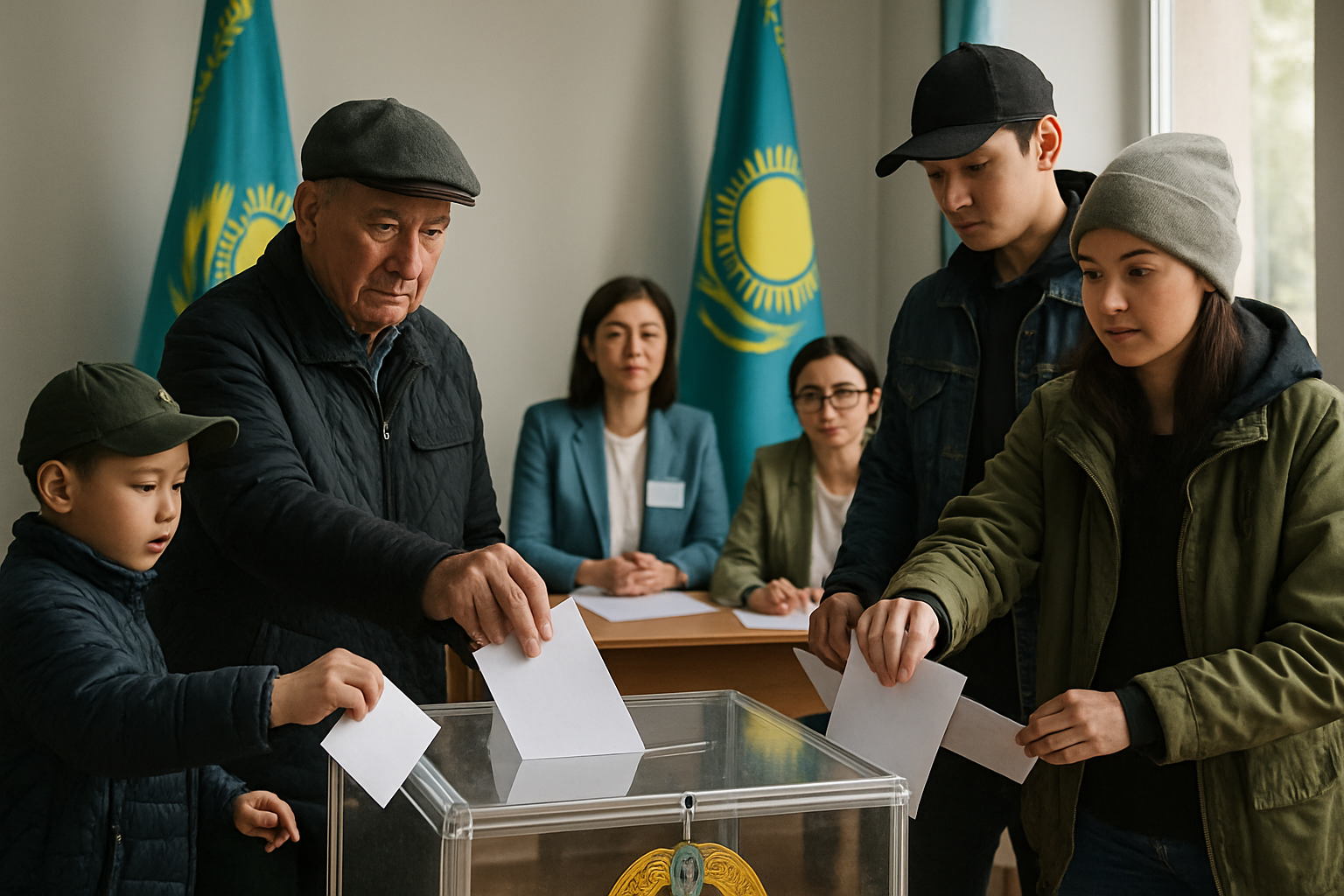
Kazakhstan conducted a historic nationwide constitutional referendum on March 15, 2026, with voter turnout reaching 37.54% by noon and extensive international monitoring, representing a significant milestone in the nation's democratic evolution and Central Asian governance.
The referendum, featuring over 10,388 polling stations nationwide and serving 12,461,796 eligible citizens, began at 7:00 AM local time across Kazakhstan's multiple time zones. According to the Central Referendum Commission, the process proceeded smoothly with transparent procedures and democratic compliance.
Presidential Leadership and International Engagement
President Kassym-Jomart Tokayev cast his vote at polling station No. 51, located in the Palace of Schoolchildren, emphasizing the historic significance of the referendum in a briefing with local and foreign media representatives. Following his vote, Tokayev addressed questions on constitutional reform goals, political reforms, and foreign policy initiatives.
"This referendum represents a critical moment in Kazakhstan's democratic development," Tokayev stated during the media briefing, highlighting the importance of direct citizen participation in fundamental constitutional matters.
Regional Turnout Patterns and Democratic Participation
By midday, the Central Referendum Commission reported that 4,677,595 citizens had received ballots nationwide, with turnout varying across regions and major cities. The highest participation levels were documented in several key regions, demonstrating strong citizen engagement with the constitutional process.
The referendum's scope extended beyond Kazakhstan's borders, with 71 polling stations operating at diplomatic missions in 54 countries, allowing 14,380 citizens abroad to participate. However, 11 stations in 10 countries, including Iran, Israel, Jordan, Qatar, the United Arab Emirates, Oman, Lebanon, Kuwait, and Ukraine, could not operate due to regional security conditions.
Constitutional Reform Context and Implications
The constitutional referendum allows direct citizen influence on fundamental laws, representing a departure from purely legislative constitutional changes. This approach demonstrates Kazakhstan's commitment to democratic participation and popular sovereignty during a period of global democratic challenges.
The Prosecutor General's office confirmed that voting was "proceeding within the legal field," ensuring democratic transparency and constitutional compliance throughout the process. This legal framework reflects Kazakhstan's dedication to internationally recognized democratic principles.
International Monitoring and Democratic Standards
The referendum attracted significant international attention, with observers monitoring the process to ensure compliance with democratic standards. Kazakhstan citizens abroad voted at diplomatic missions globally, with Japan and South Korea among the first locations to complete voting due to time zone differences.
International observers praised the transparent procedures and accessibility measures, reflecting Kazakhstan's commitment to maintaining democratic legitimacy through open and inclusive processes. The extensive international participation demonstrates the global significance of Kazakhstan's constitutional development.
Administrative Achievement and Technical Capacity
The successful coordination of over 10,000 polling stations across Kazakhstan's vast territory and multiple time zones represents a significant administrative achievement. This technical accomplishment ensures accessibility for all citizens regardless of geographical location, demonstrating the government's capacity to manage complex democratic processes.
Central Referendum Commission member Mukhtar Yerman confirmed the smooth opening of polling stations, with 92 stations beginning operations at 6:00 AM to accommodate different time zones, while the majority opened at the standard 7:00 AM local time.
Regional and Global Democratic Context
Kazakhstan's constitutional referendum occurs within a broader pattern of direct democratic participation in 2026, including Thailand's February parliamentary elections combined with constitutional referendum, Switzerland's March constitutional amendments, and Bangladesh's historic February elections. This positions Kazakhstan as part of a global democratic renewal trend.
The referendum serves as a Central Asian model for democratic constitutional reform through transparent, inclusive processes. As one of the region's most significant constitutional exercises, it provides valuable precedents for neighboring countries considering similar democratic reforms.
Democratic Development and Future Implications
The constitutional referendum represents Kazakhstan's continued institutional modernization and democratic evolution. The process demonstrates administrative capacity for managing complex democratic procedures while maintaining international standards and ensuring broad citizen participation.
Beyond immediate constitutional changes, the referendum establishes Kazakhstan as a regional leader in democratic governance, showing how Central Asian nations can successfully conduct transparent constitutional reforms through direct citizen participation rather than top-down legislative changes.
The results of this referendum will determine Kazakhstan's constitutional framework for decades to come, establishing foundations for continued institutional modernization and democratic development in Central Asia. The successful implementation of such an extensive democratic exercise reinforces Kazakhstan's position as a model for regional democratic practices.