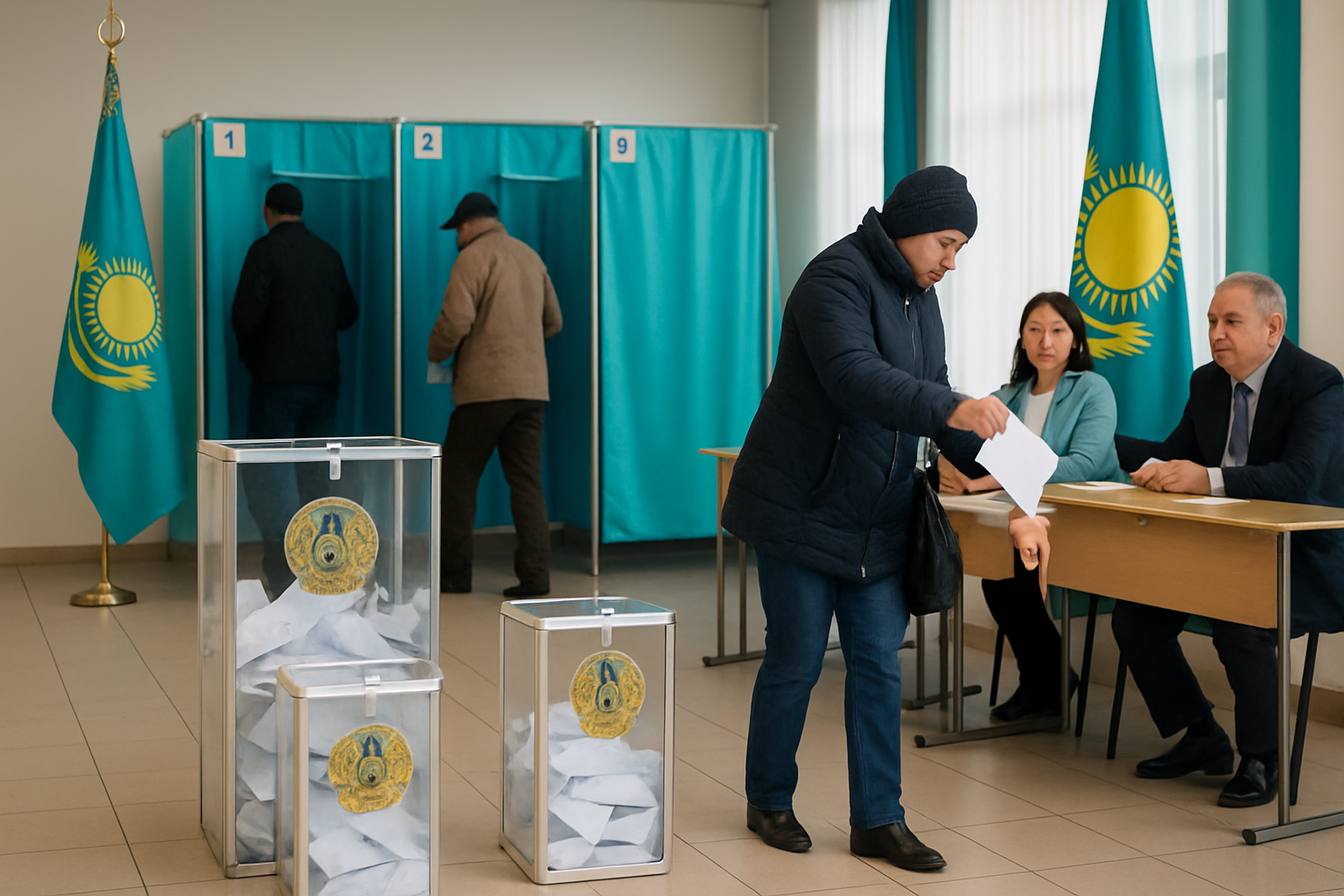
Kazakhstan opened 10,388 polling stations across the country on March 15 for a nationwide referendum on adopting a new constitution, marking a significant milestone in the Central Asian nation's democratic development.
According to Mukhtar Yerman, a member of the Central Referendum Commission, polling stations began operating at 7 a.m. local time, with 92 stations opening earlier at 6 a.m. to accommodate voters in different time zones. The referendum represents one of the most comprehensive democratic exercises in Kazakhstan's post-independence history, with 12,461,796 citizens eligible to participate.
Constitutional Framework and Legal Oversight
The referendum is being conducted within established legal frameworks, according to Kazakhstan's Prosecutor General's office, which confirmed that "voting on the referendum is proceeding within the legal field." This assurance comes as the country seeks to demonstrate its commitment to democratic governance and constitutional reform through transparent processes.
The constitutional referendum allows citizens to directly influence the fundamental laws governing their nation, representing a departure from purely legislative constitutional amendments. This direct democratic participation echoes recent global trends, including Switzerland's March 2026 referendum that saw 73% approval for constitutional cash payment guarantees, and Thailand's February constitutional referendum conducted alongside parliamentary elections.
International Participation and Observer Presence
The referendum includes participation from Kazakhstan citizens living abroad, with voting taking place at diplomatic missions worldwide. Citizens in Japan and South Korea were among the first to cast their ballots, taking advantage of Kazakhstan's global diplomatic presence to ensure expatriate participation in this historic vote.
International observers are monitoring the process to ensure compliance with democratic standards and transparency. The presence of international oversight reflects Kazakhstan's commitment to conducting the referendum according to internationally recognized democratic principles.
Regional Context and Democratic Development
Kazakhstan's constitutional referendum occurs within a broader Central Asian context of democratic evolution and institutional modernization. The country has been pursuing significant reforms aimed at strengthening democratic institutions and enhancing citizen participation in governance.
The referendum process demonstrates Kazakhstan's commitment to constitutional democracy at a time when many nations are grappling with democratic challenges. Unlike some recent constitutional changes in neighboring regions that have been implemented through legislative processes alone, Kazakhstan has chosen the path of direct citizen consultation.
"The referendum represents a fundamental exercise in democratic participation, allowing citizens to directly shape their constitutional framework."
— Central Referendum Commission
Technical and Logistical Achievement
The establishment of over 10,000 polling stations across Kazakhstan's vast territory represents a significant logistical achievement. The country, which spans multiple time zones and diverse geographical regions, has successfully coordinated a nationwide voting process that ensures accessibility for all eligible citizens.
The technical coordination required for such an extensive democratic exercise demonstrates Kazakhstan's administrative capacity and commitment to inclusive participation. From urban centers to remote rural areas, polling stations have been established to ensure no citizen is disenfranchised due to geographical barriers.
Global Democratic Precedent
Kazakhstan's constitutional referendum joins a series of significant democratic exercises worldwide in 2026. Following Thailand's February combination of parliamentary elections and constitutional referendum, Switzerland's March referendum on multiple constitutional amendments, and Bangladesh's historic February elections, Kazakhstan continues the year's pattern of direct democratic participation.
The referendum's conduct within legal frameworks, international oversight, and broad citizen participation positions Kazakhstan as a model for democratic constitutional reform in Central Asia. The process demonstrates that comprehensive constitutional change can be achieved through transparent, inclusive democratic processes rather than top-down governmental decree.
Implications for Regional Stability
The successful conduct of Kazakhstan's constitutional referendum has implications extending beyond national borders. As one of Central Asia's largest and most economically significant nations, Kazakhstan's democratic development influences regional stability and cooperation patterns.
The referendum occurs during a period of global democratic stress, where many nations face challenges maintaining institutional integrity while adapting to contemporary governance needs. Kazakhstan's approach of combining constitutional modernization with direct citizen participation provides a template for democratic renewal that respects both legal continuity and popular sovereignty.
The voting process continues throughout March 15, with results expected to be announced following the completion of ballot counting and verification procedures. The outcome will determine Kazakhstan's constitutional framework for the coming decades, establishing legal foundations for continued democratic development and institutional modernization.