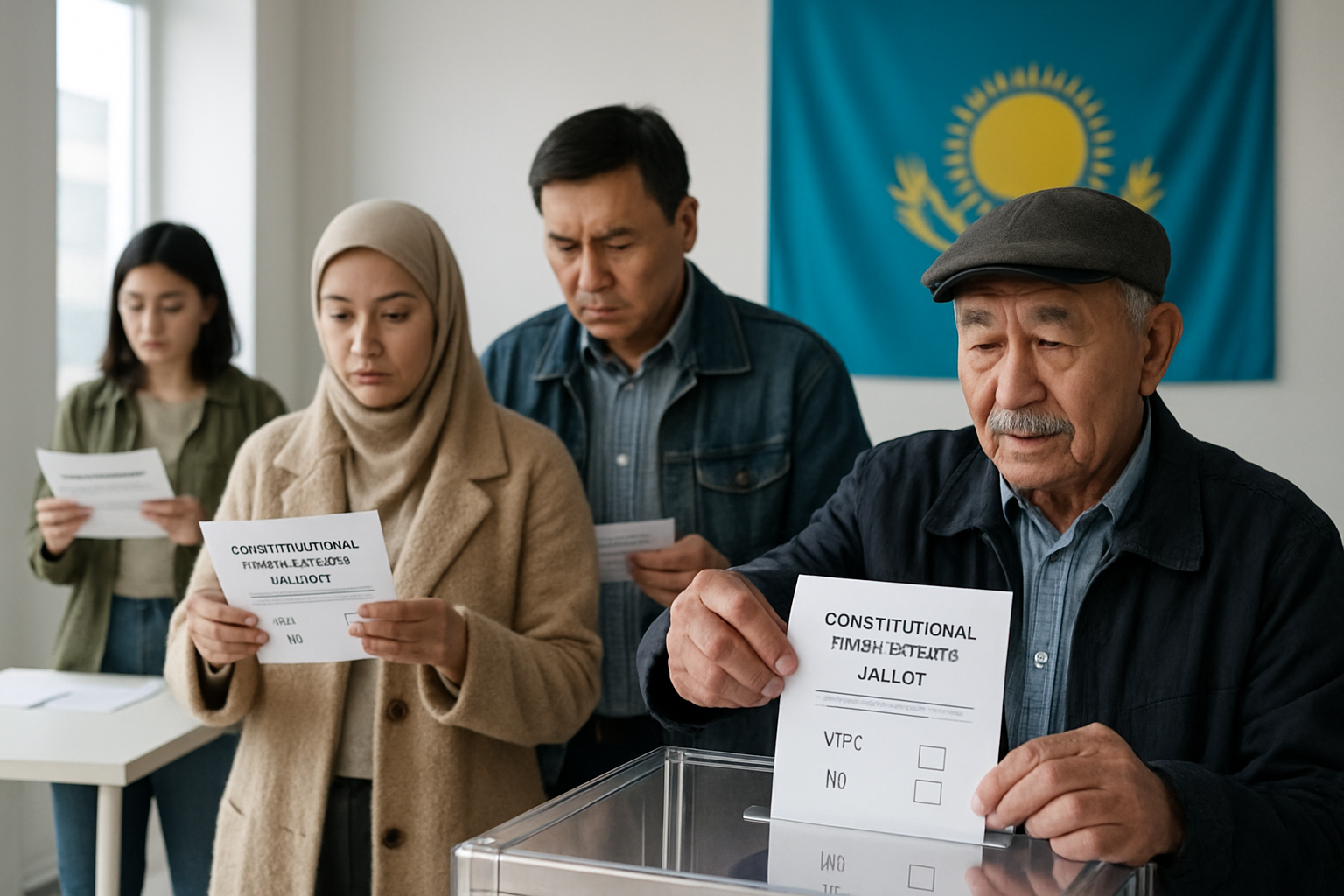
Kazakh voters decisively approved sweeping constitutional amendments in a national referendum on March 15, 2026, with exit polls showing overwhelming 87% support for changes that significantly strengthen presidential powers and could reshape the country's political landscape for decades.
According to survey results from the Eurasian Institute for Integration research company, which polled 30,000 voters across 200 polling stations, 86.7% of participating citizens backed the proposed constitutional reforms. Voter turnout reached an impressive 75.3%, demonstrating strong civic engagement in this historic democratic exercise.
The constitutional amendments grant President Kassym-Jomart Tokayev extensive new powers to appoint all government officials, including the ability to name a vice president who could potentially become his successor. Most significantly, the reforms may enable Tokayev to remain in power beyond his current mandate's expiration in 2029, fundamentally altering Kazakhstan's executive framework.
Historic Democratic Participation
The referendum represents the culmination of months of preparation, with Kazakhstan establishing 10,388 polling stations nationwide to serve 12,461,796 eligible citizens. The logistical achievement of coordinating voting across multiple time zones and vast geographical distances demonstrated the country's administrative capacity and commitment to inclusive democratic participation.
Central Referendum Commission officials confirmed that polling began at 7:00 AM local time across most locations, with 92 stations opening an hour earlier to accommodate different time zones. The Prosecutor General's office verified that voting proceeded "within the legal field," ensuring democratic transparency and constitutional compliance throughout the process.
International participation was robust, with Kazakhstan citizens abroad voting at diplomatic missions globally. Locations spanning from Japan and South Korea to European capitals allowed the diaspora to participate in shaping their homeland's constitutional future, reflecting the government's commitment to inclusive democracy.
Constitutional Changes and Presidential Authority
The approved amendments represent the most significant constitutional overhaul since Kazakhstan's independence. Beyond expanding appointment powers, the reforms establish new mechanisms for succession planning and government formation that centralize authority within the presidential office.
The creation of a vice presidential position marks a particular innovation in Central Asian governance, potentially providing stability during transitions while ensuring continuity of executive authority. This institutional change addresses long-standing questions about succession planning in the region's presidential systems.
Legal experts note that while the amendments strengthen executive power, they maintain Kazakhstan's commitment to constitutional governance through direct citizen approval rather than legislative imposition. This approach distinguishes the reforms from similar changes in other regions where constitutional modifications occurred without popular consultation.
Regional and International Context
The referendum's success positions Kazakhstan as a Central Asian model for constitutional reform through transparent, inclusive processes. The achievement builds on President Tokayev's recent diplomatic initiatives, including strategic partnerships with Pakistan and international cooperation on energy and technology projects.
International observers praised the democratic process, noting the absence of significant violations and the peaceful conduct across all polling stations. The referendum joins a 2026 pattern of direct democratic participation that includes constitutional processes in Switzerland, Thailand, and Bangladesh, demonstrating global trends toward citizen involvement in fundamental governance decisions.
The timing proves particularly significant given Kazakhstan's growing regional leadership role. Recent achievements include scientific research rankings improvements, quantum technology initiatives with Singapore, and major energy investments that position the country as a Central Asian hub for innovation and economic development.
Democratic Legitimacy and Future Implications
The overwhelming approval provides President Tokayev with a robust popular mandate for governance reforms that extend well beyond typical referendum thresholds. This democratic legitimacy strengthens Kazakhstan's position in regional and international affairs while establishing precedents for constitutional development through popular sovereignty.
The referendum's success amid a global context of democratic challenges demonstrates institutional resilience and citizen engagement that strengthens Kazakhstan's democratic credentials. The transparent process, international monitoring, and peaceful conduct provide templates for other nations considering constitutional reforms.
"This represents a significant milestone in Central Asian democratic development, showing how constitutional changes can be achieved through direct citizen participation rather than purely legislative approaches."
— Constitutional Law Expert
Looking ahead, the constitutional framework established through this referendum will determine governance structures for decades to come. The expanded presidential powers, combined with democratic legitimacy from popular approval, create new possibilities for policy implementation while maintaining institutional continuity.
The referendum's success reinforces Kazakhstan's position as a regional leader in democratic governance, providing a model for constitutional reform that respects both legal continuity and popular sovereignty. As the country continues its institutional modernization, the March 15 vote will be remembered as a defining moment in Kazakhstan's democratic evolution.