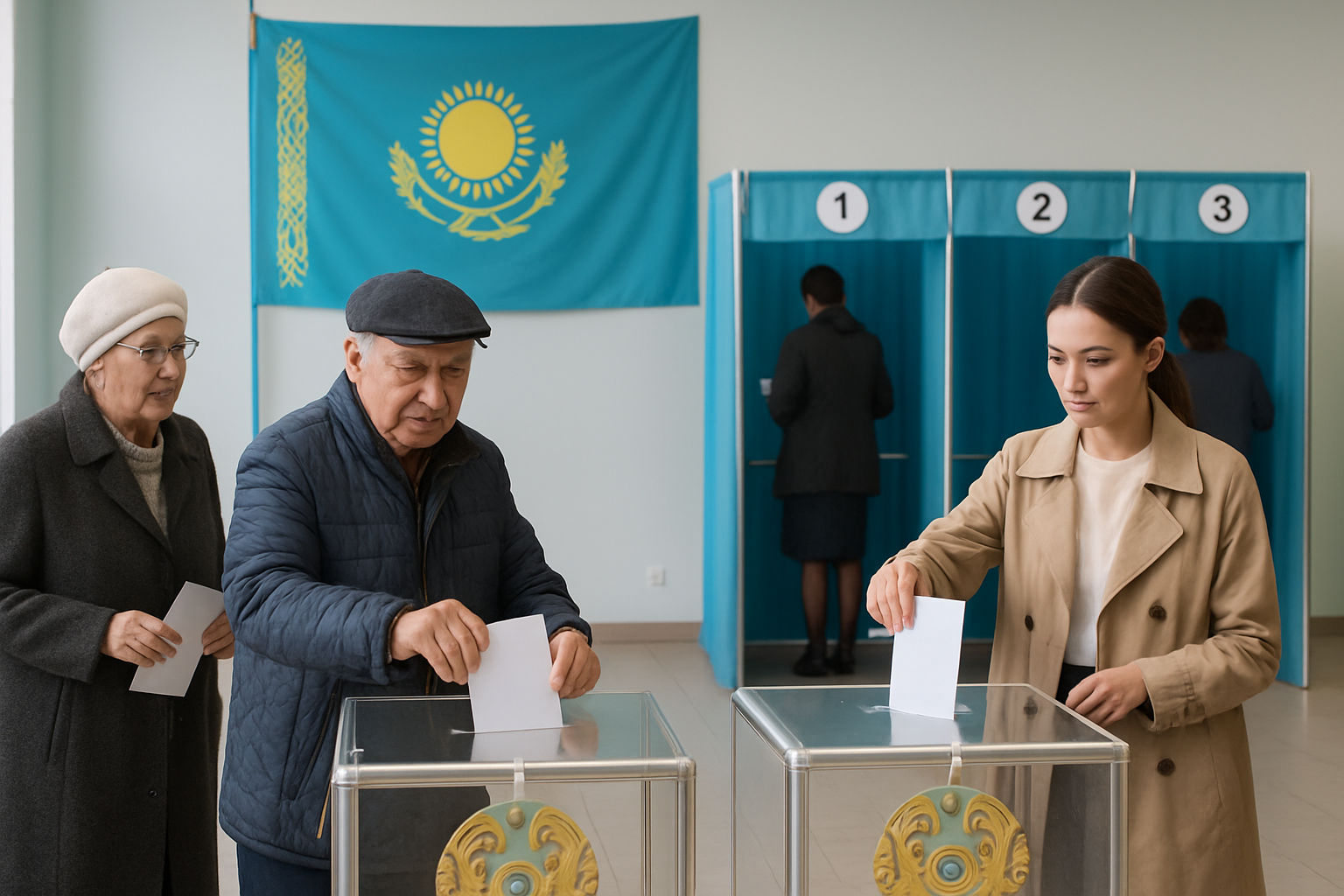
Kazakhstan successfully completed a historic constitutional referendum on March 15, 2026, with overwhelming public support exceeding 87% according to multiple exit polls, marking the most significant constitutional development since the nation's independence.
President Kassym-Jomart Tokayev announced that March 15 will be celebrated annually as Constitution Day following the referendum's decisive outcome. Speaking at the Kazmedia Center after reviewing exit poll results, Tokayev declared the referendum a testament to Kazakhstan's democratic maturity and institutional strength.
Record-Breaking Participation and Results
Exit polls from multiple institutes demonstrated remarkable consistency in support levels. The Eurasian Institute for Integration reported 86.7% approval among participants, while the Institute of Complex Social Research (Astana "Socis-A") recorded 87.4% support. The Institute of Public Policy showed even higher backing at 88.6%, reflecting unprecedented national consensus.
The referendum achieved record turnout levels, with citizens participating across 10,388 polling stations nationwide. The Central Referendum Commission confirmed the voting process proceeded "within the legal field," ensuring democratic transparency and constitutional compliance throughout the day-long exercise.
"This represents the most significant constitutional exercise in our nation's history, providing a robust popular mandate for governance reforms."
— Central Referendum Commission Official
Constitutional Amendments Approved
The approved amendments grant President Tokayev extensive new powers to appoint government officials and create mechanisms for potential mandate extension beyond the current 2029 expiration. The constitutional changes also establish a vice presidential position, providing unprecedented succession planning in Kazakhstan's governance structure.
These modifications represent the most significant constitutional overhaul since independence, centralizing executive authority while maintaining constitutional governance through direct citizen approval rather than legislative imposition. The reforms create new succession planning mechanisms unprecedented in Central Asian governance systems.
Democratic Process and International Recognition
The referendum demonstrated Kazakhstan's capacity for sophisticated democratic processes across its vast territory, spanning multiple time zones. International observers praised the peaceful democratic conduct, noting the absence of significant violations affecting the outcome.
Overseas voting added an international dimension, with 9,050 citizens participating at 71 polling stations across 54 countries through diplomatic missions. The voting process spanned global time differences, beginning at 3:00 AM Astana time and concluding at San Francisco's Consulate on March 16 at 8:00 AM Astana time.
Deputy Foreign Minister Arman Issetov coordinated the international participation, ensuring Kazakhstan citizens abroad could exercise their constitutional rights. This global engagement reflected the referendum's significance beyond national borders.
Regional and International Implications
The referendum's success positions Kazakhstan as a Central Asian model for transparent constitutional reform through democratic processes. The country joins a global 2026 pattern of direct democratic participation, including constitutional processes in Thailand, Switzerland, and Bangladesh.
International observers noted Kazakhstan's institutional capacity in conducting democratic processes across vast geographical challenges while maintaining international standards. The referendum demonstrates the nation's commitment to internationally recognized democratic principles and transparent governance.
"Kazakhstan has established itself as a regional leader in democratic constitutional development through inclusive, transparent processes."
— International Observer Mission
Administrative Achievement
The referendum represented a significant administrative accomplishment, with over 10,000 polling stations ensuring accessibility for citizens regardless of geographical location. The Central Referendum Commission's coordination across multiple time zones demonstrated institutional sophistication and democratic commitment.
Prosecutor General's office confirmation that voting proceeded "within the legal field" provided additional legitimacy to the process, ensuring constitutional compliance and democratic transparency. This legal framework adherence reinforced public confidence in the referendum's validity.
Future Constitutional Framework
The constitutional framework established through this referendum will determine Kazakhstan's governance structures for decades. The expanded presidential powers, combined with democratic legitimacy exceeding typical referendum approval thresholds, create substantial policy implementation possibilities.
The reform establishes a template for constitutional modernization that balances authority expansion with accountability mechanisms through transparent popular participation. This approach provides a model for other nations considering constitutional reforms while maintaining democratic legitimacy.
Historical Significance
The March 15, 2026 referendum represents a critical moment in Kazakhstan's democratic evolution, demonstrating the nation's capacity for constitutional development through direct citizen participation. The overwhelming approval rates reflect genuine popular support rather than mere procedural compliance.
This democratic exercise strengthens Kazakhstan's position as a regional anchor for democratic governance and institutional modernization. The successful referendum process, combining high participation with transparent procedures, establishes precedents for democratic renewal in the broader Central Asian context.
The referendum's success reinforces Kazakhstan's democratic credentials during a period of global democratic challenges, providing a positive example of constitutional reform through inclusive, transparent processes that respect both legal continuity and popular sovereignty.