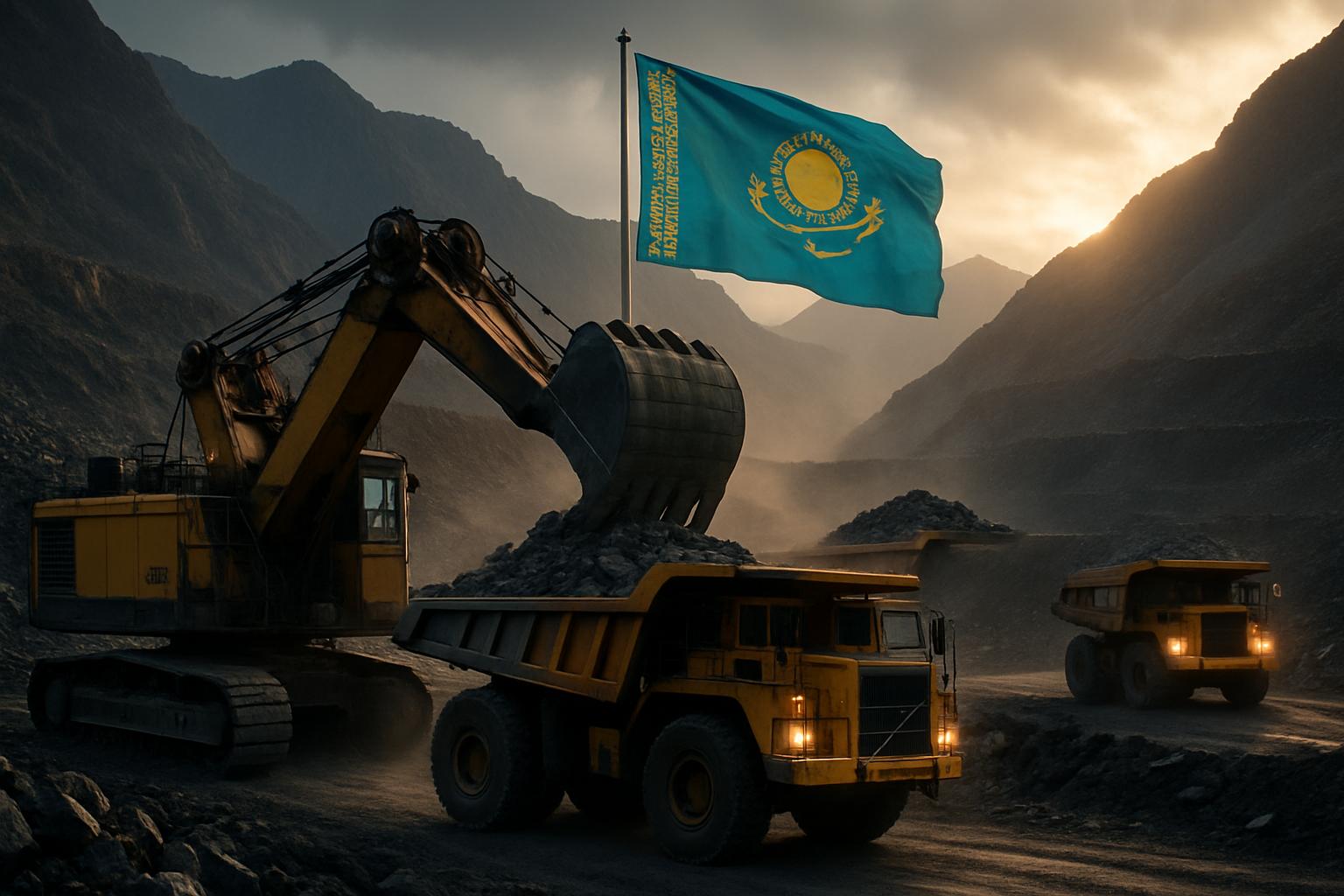
Kazakhstan is actively pursuing ambitious rare metals mining opportunities in Afghanistan and Rwanda, marking a significant strategic expansion of its global resource development portfolio through comprehensive geological assessments and regulatory framework evaluations conducted by its national mining company, Tau-Ken Samruk.
The announcement was made by Iran Sharkhan, Kazakhstan's Vice Minister of Industry and Construction, during the prestigious Geoscience & Exploration Central Asia 2026 event. Sharkhan emphasized the substantial mineral resource potential identified in both Afghanistan and Rwanda, noting that current efforts are systematically directed towards comprehensive evaluation of the legal and regulatory frameworks in these countries while simultaneously verifying geological prospects before proceeding with potential large-scale mining operations.
Laboratory Analysis and Technical Assessment
According to reports from Kazinform, laboratory testing of mineral samples obtained from both countries is currently taking place at Tau-Ken Samruk's advanced facilities. The testing regime represents a critical phase in Kazakhstan's methodical approach to international mining investment, involving detailed mineralogical analysis, resource estimation, and feasibility assessments that will inform future operational decisions.
The laboratory studies are examining the composition, quality, and commercial viability of rare metal deposits in both target countries. This scientific approach reflects Kazakhstan's sophisticated understanding of global mining operations, building on decades of domestic experience in extracting and processing various minerals within its own territory.
Strategic Context and Global Mining Landscape
Kazakhstan's international mining expansion comes amid unprecedented global competition for critical minerals. Historical context reveals that China currently maintains dominance with 60% of global critical minerals production and 90% of refining capacity, creating strategic vulnerabilities for many nations. The US-EU-Japan Critical Minerals Partnership, involving 55 countries including seven African suppliers, represents a coordinated Western response to challenge this concentration.
This geopolitical backdrop makes Kazakhstan's independent mining strategy particularly significant. Rather than simply aligning with existing blocs, Kazakhstan appears to be pursuing a pragmatic approach that leverages its technical expertise and financial resources to secure direct access to critical materials through bilateral partnerships.
Afghanistan's Mineral Wealth and Investment Environment
Afghanistan possesses substantial untapped mineral wealth estimated at over one trillion dollars, including significant deposits of lithium, copper, rare earth elements, and other materials crucial for renewable energy technologies. Despite ongoing political and security challenges, international interest in Afghanistan's mineral resources continues to grow, with several companies expressing preliminary interest in mining operations.
German company Green International has also expressed interest in Afghanistan's mineral resources through meetings with the Ministry of Mines, demonstrating broader international confidence in the country's geological potential. However, practical extraction requires substantial infrastructure development, security arrangements, and regulatory clarity that may take years to establish.
"The laboratory testing, which is taking place at Tau-Ken Samruk's facilities, represents a crucial evaluation phase for verifying the geological prospects before proceeding with potential mining operations."
— Iran Sharkhan, Vice Minister of Industry and Construction, Kazakhstan
Rwanda's Strategic Position in African Mining
Rwanda has emerged as an increasingly attractive destination for international mining investment due to its political stability, improving regulatory framework, and strategic location within East Africa. The country has been working to position itself as a regional hub for mineral processing and has demonstrated commitment to transparent governance in the extractives sector.
The broader African mining landscape provides important context for Kazakhstan's Rwanda interests. Recent developments include the African Finance Corporation reporting $29.5 trillion in continental mineral reserves, with $8.6 trillion remaining untapped despite growing global demand for critical materials. Major recent investments across Africa include Ivory Coast's $1.2 billion gold projects, South Africa's R325 million Zandkopsdrift rare earth commitment, and substantial infrastructure developments supporting mining operations.
Kazakhstan's Mining Expertise and International Strategy
Kazakhstan brings substantial mining expertise to these international ventures. The country has a long history of successful mineral extraction, particularly in uranium (where it leads global production), copper, zinc, and other metals. This domestic experience provides a strong foundation for international operations, including understanding of technical challenges, regulatory compliance, and environmental management.
The timing of Kazakhstan's international mining expansion aligns with President Kassym-Jomart Tokayev's broader strategy of pragmatic international cooperation and economic diversification. Recent developments include strengthening partnerships with Pakistan covering mining sectors, grain exports to Afghanistan that doubled to 5.8 million tons between September 2025 and January 2026, and positioning Kazakhstan as a regional leader in scientific research and digital innovation.
Regulatory and Risk Considerations
Sharkhan's emphasis on evaluating legal and regulatory frameworks reflects Kazakhstan's sophisticated approach to international mining investment. Both Afghanistan and Rwanda present distinct regulatory environments that require careful assessment before committing significant resources to extraction operations.
In Afghanistan, the regulatory environment remains complex due to ongoing political transitions and international sanctions considerations. Mining operations would need to navigate both domestic regulations and international legal frameworks, requiring careful legal structuring to ensure compliance with all applicable laws.
Rwanda, by contrast, has been working to establish clearer and more investor-friendly mining regulations as part of its broader economic development strategy. The country has been implementing reforms aimed at attracting international investment while ensuring appropriate revenue sharing and environmental protection.
Technology and Environmental Standards
Contemporary mining operations increasingly incorporate advanced environmental management, renewable energy systems, and community engagement protocols as standard requirements rather than optional additions. Kazakhstan's approach to these international ventures likely reflects these evolving industry standards, building on lessons learned from global mining experiences.
The integration of technology in modern mining includes digital monitoring systems, smart logistics, advanced waste management, and real-time environmental tracking. These technologies enable more efficient and environmentally responsible mining operations while providing better transparency for regulatory oversight and community engagement.
Economic Implications and Market Impact
If successful, Kazakhstan's mining ventures in Afghanistan and Rwanda could significantly impact global rare metals markets while providing substantial economic benefits to all parties involved. For Kazakhstan, successful international mining operations would diversify revenue sources, enhance technical capabilities through international experience, and strengthen diplomatic relationships with partner countries.
For Afghanistan and Rwanda, successful partnerships with Kazakhstan could provide crucial foreign investment, technology transfer, employment opportunities, and revenue generation. However, realizing these benefits depends on successful navigation of complex technical, regulatory, and political challenges.
Regional Integration and Future Prospects
Kazakhstan's mining investments align with broader trends toward regional economic integration and South-South cooperation. The African Continental Free Trade Area (AfCFTA) enables cross-border mining ventures and regional value chains, while Central Asian integration creates opportunities for coordinated resource development and shared infrastructure.
The success of these ventures could establish templates for future international mining partnerships involving developing and middle-income countries, moving beyond traditional North-South investment patterns toward more diverse and potentially equitable international economic relationships.
As laboratory analysis continues and regulatory assessments progress, the international mining community will be watching closely to see whether Kazakhstan's methodical approach to international expansion yields successful outcomes. The results could influence future strategies for critical minerals access and international mining investment in an increasingly competitive global environment.