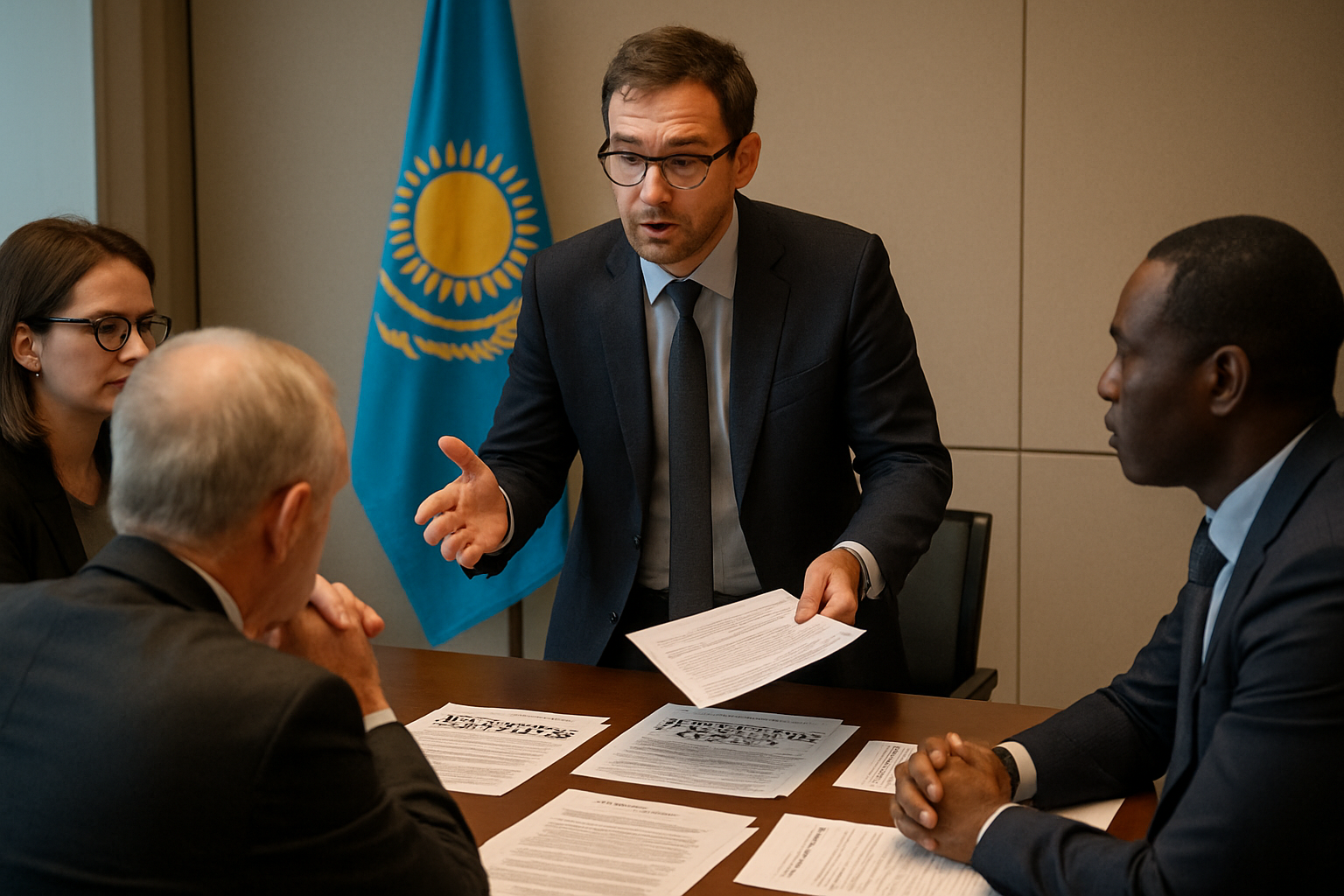
Kazakhstan stands at a pivotal moment in its democratic evolution as political analysts outline the profound institutional changes expected following the adoption of the country's new Constitution, while international observers from the Philippines have praised the nation's commitment to transparent electoral processes.
The constitutional reforms represent the most significant overhaul of Kazakhstan's governance framework since independence, with experts predicting substantial shifts in the balance of power and institutional structures. These developments come as the Central Asian nation continues to strengthen its democratic credentials on the international stage.
Constitutional Transformation: A New Era
Political analysts describe the new Constitution as a watershed moment that will fundamentally reshape Kazakhstan's political landscape. The reforms introduce enhanced checks and balances, strengthen parliamentary oversight mechanisms, and establish clearer separation of powers between executive, legislative, and judicial branches.
According to constitutional experts, the changes are expected to create more robust institutional frameworks for democratic governance while maintaining political stability. The amendments address long-standing concerns about power concentration and introduce mechanisms for greater citizen participation in the political process.
"These constitutional changes represent a decisive step toward institutional modernization that will serve Kazakhstan for generations to come."
— Senior Political Analyst
The constitutional overhaul includes provisions for enhanced electoral transparency, strengthened civil society participation, and improved protection of fundamental rights and freedoms. These modifications reflect Kazakhstan's commitment to aligning its governance structures with international democratic standards.
International Recognition of Democratic Progress
International observers, particularly from the Philippines, have expressed admiration for Kazakhstan's electoral processes and commitment to democratic development. The Philippines observer mission highlighted the transparency, professionalism, and inclusiveness of Kazakhstan's electoral administration as exemplary for emerging democracies.
The international praise comes at a crucial time as Kazakhstan seeks to strengthen its position as a regional leader in democratic governance and institutional reform. The country's approach to constitutional transformation has attracted attention from democracy advocates worldwide.
Philippine observers noted the sophisticated voter education programs, comprehensive media access provisions, and robust oversight mechanisms that characterize Kazakhstan's electoral framework. These elements demonstrate the country's dedication to ensuring free, fair, and credible democratic processes.
Expected Institutional Changes
Political scientists anticipate several key transformations in Kazakhstan's institutional architecture following constitutional implementation. These changes are expected to enhance government accountability, improve policy coordination, and strengthen the rule of law.
The new constitutional framework establishes clearer boundaries between different branches of government while creating mechanisms for effective collaboration on national priorities. Parliamentary powers are expected to expand, with enhanced oversight capabilities and greater influence in policy formulation.
Judicial independence receives particular attention in the constitutional reforms, with new provisions designed to insulate courts from political pressure while ensuring accountability through transparent appointment processes and performance evaluation mechanisms.
Regional and Global Implications
Kazakhstan's constitutional evolution has significant implications for regional stability and democratic development across Central Asia. The country's approach to institutional reform provides a model for other nations seeking to strengthen democratic governance while maintaining social cohesion and economic progress.
The international community has taken note of Kazakhstan's balanced approach to constitutional reform, which emphasizes gradual institutional change rather than revolutionary transformation. This methodology has attracted praise from international development organizations and democracy promotion groups.
Regional analysts suggest that Kazakhstan's success in managing constitutional transition could influence similar processes in neighboring countries, potentially contributing to broader democratic consolidation across Central Asia.
Challenges and Opportunities Ahead
Despite the positive international reception, political analysts acknowledge that successful implementation of constitutional reforms will require sustained commitment from all stakeholders. The transition period presents both opportunities for democratic advancement and challenges that must be carefully managed.
Key implementation challenges include ensuring effective coordination between different levels of government, training civil servants on new procedures, and maintaining public confidence throughout the transition process. Success will depend on the government's ability to demonstrate concrete improvements in service delivery and democratic responsiveness.
However, the opportunities created by constitutional reform are substantial. Enhanced institutional capacity, improved rule of law, and strengthened democratic participation could accelerate Kazakhstan's development as a modern, prosperous democracy.
Building Democratic Institutions
The constitutional reforms represent more than procedural changes; they embody Kazakhstan's vision for its democratic future. The new framework emphasizes participatory governance, transparent decision-making, and accountable public administration.
Civil society organizations have welcomed the constitutional provisions that enhance their role in governance processes, including expanded consultation mechanisms and improved access to government information. These changes are expected to strengthen social capital and civic engagement.
Educational institutions and media organizations also benefit from constitutional protections that guarantee academic freedom and press independence while establishing clear boundaries for responsible journalism and scholarly inquiry.
International Cooperation and Support
Kazakhstan's constitutional transformation has attracted support from international partners committed to democratic development. Technical assistance programs, capacity-building initiatives, and knowledge-sharing arrangements are helping ensure successful implementation of the reforms.
The Philippines observer mission represents just one example of growing international engagement with Kazakhstan's democratic development. Similar missions from other countries have provided valuable feedback and recommendations for strengthening electoral processes and governance institutions.
This international cooperation reinforces Kazakhstan's commitment to meeting global standards for democratic governance while respecting the country's unique cultural and historical context.
Looking Forward: Sustainable Democracy
As Kazakhstan moves forward with constitutional implementation, political analysts emphasize the importance of maintaining momentum for democratic reform while ensuring institutional stability. The country's experience demonstrates that constitutional change can be achieved through peaceful, inclusive processes that respect legal continuity.
The success of Kazakhstan's constitutional reforms will be measured not only by institutional changes but by tangible improvements in citizens' lives and expanded opportunities for political participation. Early indicators suggest strong public support for the reform process and optimism about the country's democratic trajectory.
International observers continue to monitor Kazakhstan's progress, with many expressing confidence that the country will successfully navigate the transition period and emerge with stronger, more responsive democratic institutions. The constitutional reforms position Kazakhstan as a regional leader in democratic governance and institutional modernization.