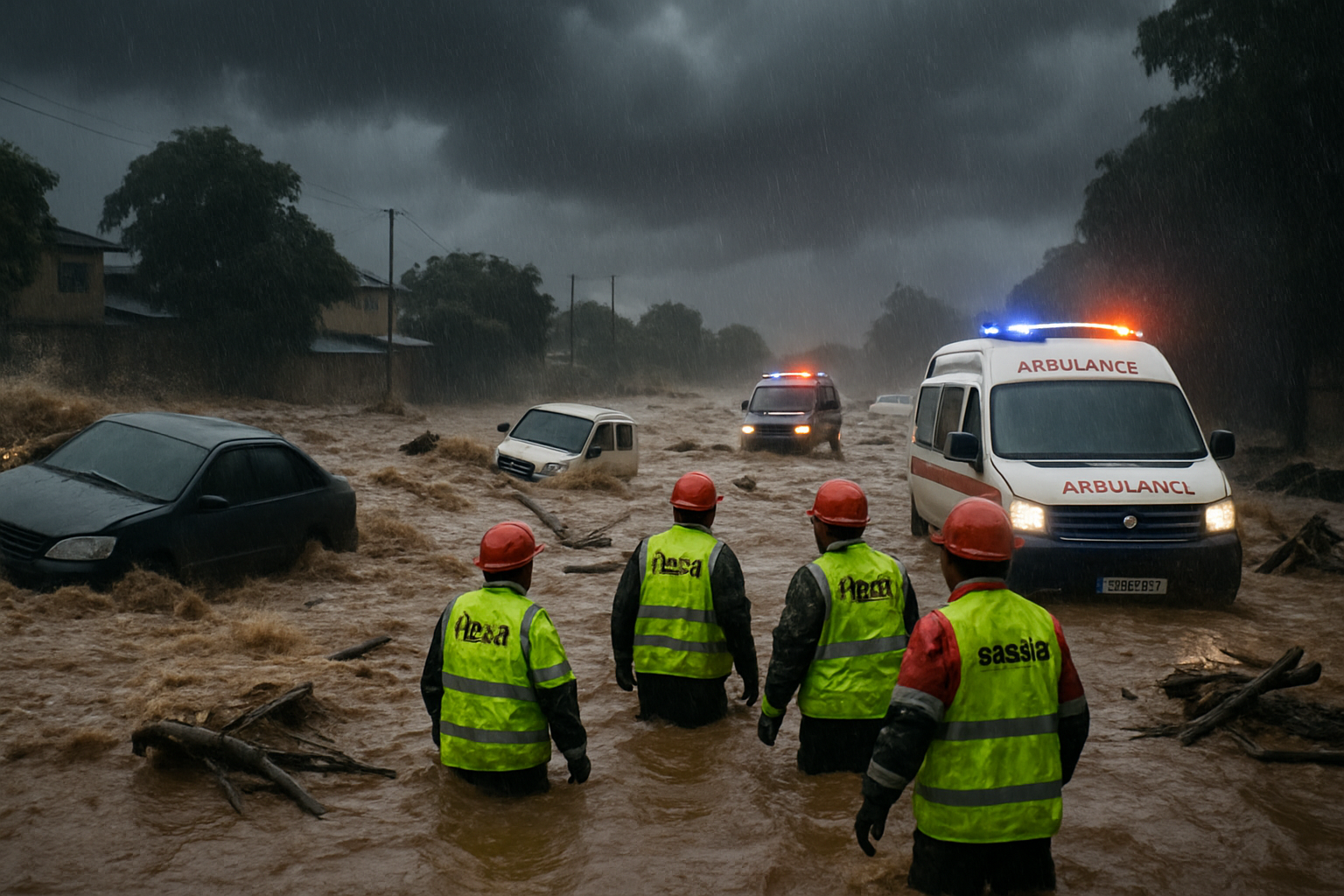
At least 81 people have been confirmed dead following devastating flash floods that swept across Kenya in March 2026, marking one of the deadliest flooding disasters in the country's recent history. The catastrophic flooding has overwhelmed urban infrastructure, destroyed thousands of homes, and exposed critical vulnerabilities in the nation's emergency response systems.
The death toll represents a tragic escalation from earlier reports that confirmed 42 fatalities, with western regions bearing the brunt of the destruction. Torrential rains triggered flash flooding that turned major streets into raging rivers, completely overwhelming drainage systems designed for historical rather than current climate conditions.
Nairobi Bears the Brunt of Devastation
Kenya's capital city of Nairobi has been worst affected by the flooding disaster, with Police Commander George Seda confirming at least 28 deaths within the metropolitan area alone. The sprawling city of over 4 million residents experienced unprecedented scenes as the central business district (CBD) and major highways became completely submerged under muddy floodwaters.
At least 71 vehicles were swept away by the powerful currents, leaving many motorists stranded for hours as emergency services struggled to reach them. The scale of the disaster prompted President William Ruto to deploy the Kenya Defence Forces (KDF) and Red Cross in what authorities described as the largest recent urban flood response operation.
"The drainage systems were completely overwhelmed by the sudden precipitation intensity. We've never seen anything like this level of flooding in the capital,"
— Cabinet Secretary Ruku, Emergency Response Coordinator
Jomo Kenyatta International Airport, East Africa's busiest aviation hub, experienced significant operational disruptions, affecting regional connectivity across the continent. Power grids and communication systems suffered cascading failures as the flooding exceeded all infrastructure parameters.
Climate Crisis Context
The devastating floods occur during a period of unprecedented global climate volatility, marking the 22nd consecutive month that global temperatures have exceeded 1.5°C above pre-industrial levels – the longest sustained warming streak in recorded human history. The Kenya Meteorological Department had issued warnings for 20mm+ rainfall within 24 hours affecting the Lake Victoria Basin and Highlands West Rift Valley, but the actual precipitation far exceeded these projections.
Climate scientists emphasize that the current flooding represents part of an increasingly dangerous pattern of extreme weather events that are overwhelming traditional infrastructure systems across East Africa. The "climate volatility paradox" – where sustained global warming enables both unprecedented heat records and devastating regional weather extremes – is becoming a defining characteristic of the current climate crisis.
Emergency Response and International Support
The coordinated emergency response under Cabinet Secretary Ruku's orders has mobilized thousands of personnel across multiple agencies. Emergency shelters have been established throughout the affected areas, while medical teams work to treat the injured and provide assistance to displaced families.
The Kenya Defence Forces deployment represents the most significant domestic disaster response operation in recent years, with military personnel working alongside Red Cross volunteers and civilian emergency services to conduct rescue operations in the most dangerous flood zones.
Recovery timelines are expected to extend from weeks to months depending on the extent of structural damage to critical infrastructure. The flooding has exposed fundamental weaknesses in Nairobi's urban planning, particularly the inadequacy of drainage systems that were designed for historical climate patterns rather than the extreme precipitation events that are becoming increasingly common.
Infrastructure Vulnerabilities Exposed
The crisis has laid bare critical vulnerabilities in Kenya's infrastructure systems, with transportation networks paralyzed across affected regions. The complete failure of drainage systems in Nairobi demonstrates the urgent need for climate-adaptive urban planning and infrastructure investment.
Traditional seasonal patterns that have guided infrastructure design and agricultural planning for centuries are proving increasingly unreliable as climate change accelerates. The flooding represents a stark example of how extreme weather events are exceeding the operational parameters of infrastructure designed for historical climate conditions.
Economic and Social Impact
The economic toll from the flooding is expected to reach billions of shillings, with agricultural sectors, tourism, and urban businesses all severely affected. Many families have lost their homes and possessions, while small businesses face potential closure from flood damage during what should have been a critical revenue period.
Mental health services are reporting increased demand for support as communities cope with repeated climate trauma. The psychological impact of losing homes and livelihoods to extreme weather events is becoming a significant public health challenge across Kenya.
Broader Regional Implications
The Kenya flooding disaster is part of a broader pattern of extreme weather events affecting East Africa and the global community. Emergency management experts note the shift from sequential regional disasters to concurrent global emergencies that challenge traditional mutual aid mechanisms.
The crisis demonstrates the urgent need for enhanced international cooperation frameworks designed for the "permanent climate volatility era" rather than isolated emergency responses. Traditional emergency response systems assumed that stable regions could assist others during isolated disasters, but the simultaneity of extreme weather events globally is testing these assumptions.
Path Forward: Building Climate Resilience
The devastating floods represent a watershed moment for Kenya's climate preparedness, forcing a choice between reactive crisis management and transformative infrastructure adaptation. Climate experts emphasize that "building back better" with climate-resilient infrastructure has evolved from an optional enhancement to an essential survival strategy.
Current conditions provide a preview of what could become routine circumstances in the 2030s without significant climate adaptation investment. The window for effective climate action is narrowing, and the costs of both adaptation and inaction are escalating rapidly as extreme weather events increase in frequency and intensity.
International cooperation will be essential as environmental challenges transcend national boundaries. The atmospheric systems and ocean currents that drive climate effects operate regardless of political borders, making coordinated regional and global responses critical for protecting human societies during this decisive climate decade.
As Kenya begins the long process of recovery and reconstruction, the lessons learned from this disaster will be crucial for developing the climate adaptation strategies needed to protect millions of people from future extreme weather events in an era of permanent climate volatility.