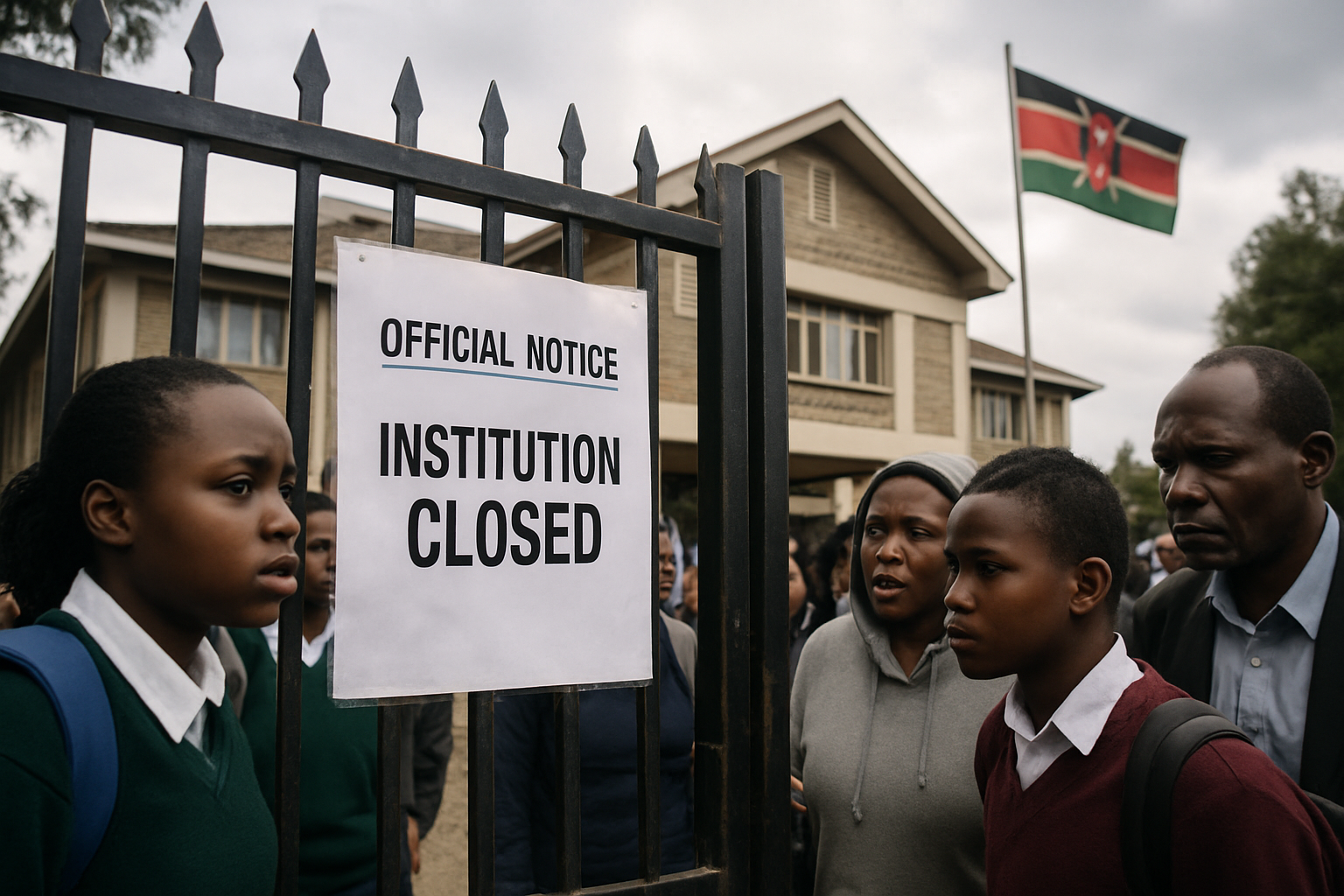
The Kenyan government has ordered the immediate closure of several major educational institutions, including Northlands International Medical College and multiple Kenya Institute of Management (KIM) campuses, in a sweeping regulatory action that affects thousands of students and exposes critical failures in educational oversight.
The closure of these institutions represents one of the most significant educational crises in Kenya's recent history, with the Nursing Council and the Technical and Vocational Education and Training Authority (TVETA) acting decisively against institutions that allegedly failed to meet mandatory regulatory standards.
Northlands International Medical College Shutdown
The Nursing Council of Kenya ordered the immediate closure of Northlands International Medical College after discovering the institution was operating without proper approval for its medical programs. The college had been offering medical courses to students without meeting the regulatory requirements set by professional medical bodies.
"Students planning to pursue nursing careers have been encouraged to remain vigilant and ensure that the institutions they choose meet the regulatory standards," stated the Nursing Council in their closure notice. The warning comes as a wake-up call to prospective students about the importance of verifying institutional accreditation before enrollment.
The closure has left hundreds of medical students in limbo, with many having already paid substantial fees and completed portions of their coursework. The Nursing Council is working to establish pathways for affected students to transfer to properly accredited institutions, though this process may result in significant delays and additional costs.
KIM Campuses Face Immediate Closure
Simultaneously, TVETA ordered the immediate closure of multiple Kenya Institute of Management campuses after conducting comprehensive audits that revealed serious non-compliance issues. The authority cited "numerous unauthenticated learner records, including missing or invalid Unique Personal Identifiers (UPIs)" as evidence of systematic violations in student data management and verification processes.
The investigation uncovered a pattern of administrative failures that potentially affects thousands of students' academic credentials. Officials discovered irregularities in record-keeping systems that could compromise the validity of certificates and diplomas issued by these institutions.
"The revocation of licenses of this institution not only comes as a shocker but also as a wake-up call to the country's education sector on matters of standards and quality that align with the global tenets."
— Education Ministry Official
Systematic Failures in Educational Oversight
The simultaneous closure of these major institutions reveals systematic weaknesses in Kenya's educational regulatory framework. Industry analysts point to inadequate monitoring mechanisms, insufficient resources for regulatory bodies, and gaps in quality assurance processes that have allowed substandard institutions to operate for extended periods.
The crisis has exposed how some educational institutions have been operating in regulatory gray areas, exploiting weaknesses in oversight systems to continue operations without proper accreditation. This has particularly affected the medical and technical education sectors, where professional standards are critical for graduate competency and public safety.
Impact on Students and Families
The closures have created immediate hardship for thousands of students and their families who invested significant resources in what they believed were legitimate educational opportunities. Many students face the prospect of lost academic credits, additional tuition costs for transfer programs, and delays in completing their education.
Parents and students have expressed frustration with the lack of advance warning, with many discovering the closures through social media or news reports rather than official institutional communications. The absence of clear transition pathways has added to the anxiety of affected families.
Educational advocacy groups are calling for emergency support measures to assist displaced students, including tuition relief programs and expedited transfer processes to accredited institutions. The government has indicated it is developing response measures, though specific details remain unclear.
Regulatory Reform Imperative
The crisis has prompted calls for comprehensive reform of Kenya's educational regulatory system. Education policy experts emphasize the need for enhanced oversight mechanisms, regular auditing processes, and stricter enforcement of accreditation standards.
Key reform areas identified include:
- Strengthened pre-approval processes for new educational institutions
- Regular compliance audits with transparent reporting mechanisms
- Enhanced coordination between regulatory bodies
- Improved student protection measures and grievance mechanisms
- Stricter penalties for institutions operating without proper authorization
Global Context and Standards Alignment
The closures occur within the broader context of the global "2026 Educational Technology Renaissance," where nations worldwide are implementing more rigorous standards for educational institutions. Kenya's actions reflect growing international emphasis on quality assurance and regulatory compliance in higher education.
International education experts note that Kenya's decisive regulatory action, while disruptive in the short term, demonstrates commitment to maintaining educational standards that align with global best practices. This approach is essential for preserving the international credibility of Kenyan educational qualifications.
Economic and Social Implications
The institutional closures have broader implications for Kenya's education sector and economic development goals. The country's Vision 2030 development plan emphasizes human capital development through quality education, making the integrity of educational institutions crucial for national competitiveness.
The crisis also highlights the vulnerability of families who have invested heavily in private education, particularly in the medical and technical fields where training costs are substantial. This underscores the need for stronger consumer protection mechanisms in the education sector.
Path Forward
The government has announced plans for a comprehensive review of all educational institutions to identify and address similar compliance issues before they reach crisis levels. This proactive approach aims to restore confidence in the educational system while protecting current and future students from substandard institutions.
Education stakeholders emphasize that while the immediate disruption is significant, the regulatory action represents a necessary step toward building a more robust and trustworthy educational system. The focus now shifts to implementing effective student transition support and strengthening regulatory frameworks to prevent similar crises.
The Kenyan case serves as a template for other developing nations grappling with educational quality assurance challenges, demonstrating both the costs of regulatory failure and the importance of decisive action to protect educational integrity.