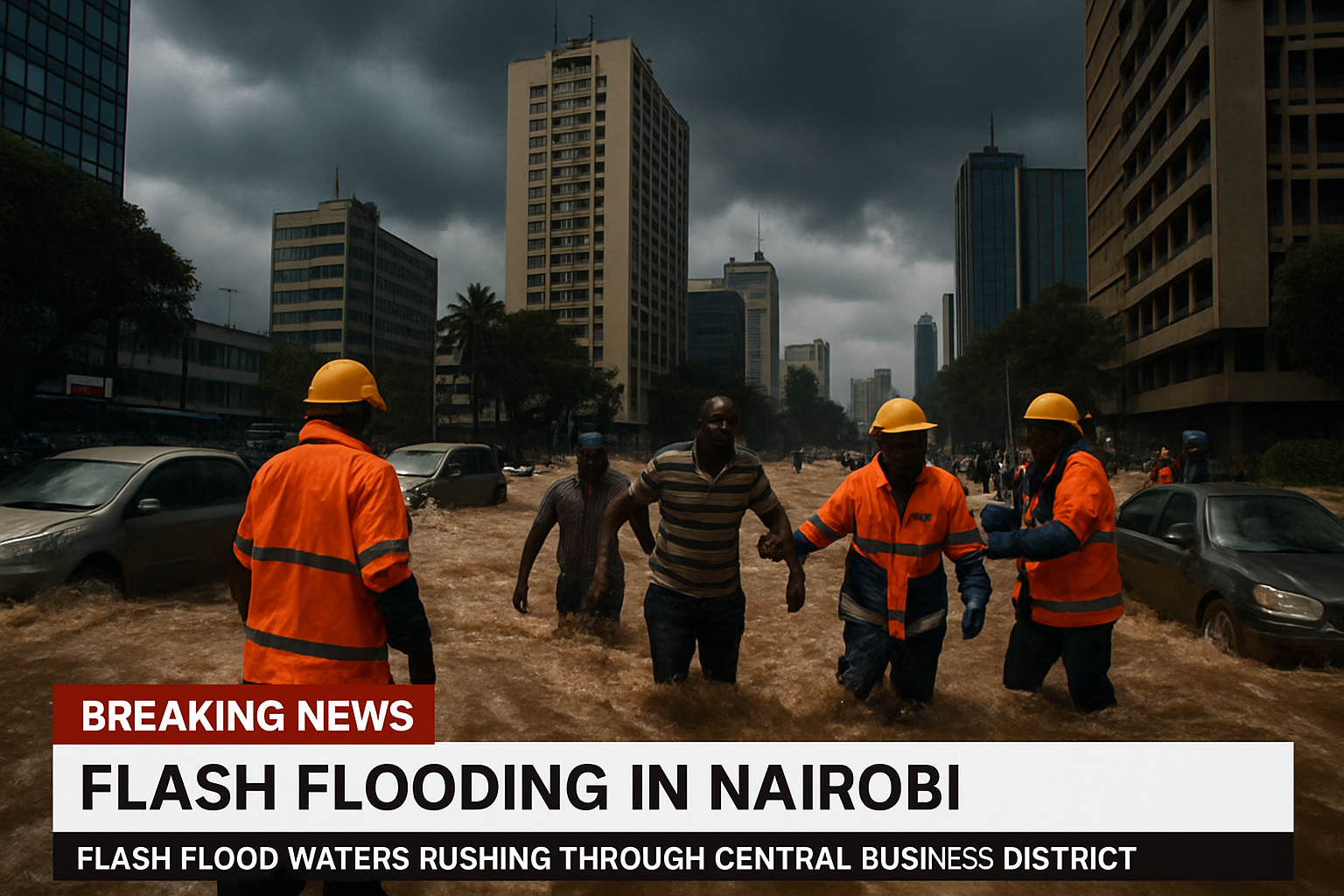
Flash floods triggered by heavy overnight rainfall have killed at least 42 people across Kenya, with the capital Nairobi bearing the brunt of the devastation as torrential downpours turned major streets into rivers and disrupted operations at East Africa's busiest airport.
The death toll has steadily climbed from initial reports of 23 fatalities, with authorities warning the number could rise further as rescue operations continue across multiple affected regions. Nairobi County Police Commander George Seda confirmed that five additional bodies were recovered Saturday evening from separate locations after floodwaters submerged vehicles and forced motorists to flee to higher ground.
"More bodies could still be found as search operations continue, with some parking areas and flooded locations remaining inaccessible," Seda told reporters, highlighting the scale of the ongoing emergency response.
Nairobi Infrastructure Overwhelmed
The Kenyan capital's drainage systems, designed for far less intense precipitation, were completely overwhelmed by the sudden deluge. Major highways including those serving the Central Business District became impassable rivers, stranding motorists for hours and prompting the largest recent urban flood response operation.
At least 71 vehicles were swept away across low-lying areas of the metropolis, which is home to more than 4 million residents. The flooding forced the closure of numerous roads and severely disrupted public transportation networks that millions depend on for daily commerce and movement.
Jomo Kenyatta International Airport, East Africa's largest aviation hub, experienced significant operational disruptions as floodwaters affected ground operations and access routes. The airport serves as a crucial regional gateway, making the disruptions felt across multiple countries dependent on Kenyan air connectivity.
Emergency Response Mobilized
President William Ruto deployed a comprehensive emergency response team including soldiers to coordinate rescue efforts across the affected regions. The Kenya Defence Forces (KDF), working alongside the Red Cross and other coordinated government agencies, launched what officials described as the most extensive recent urban flood response operation under Cabinet Secretary Ruku's emergency orders.
Emergency teams worked through the weekend pulling bodies from floodwaters and conducting rescue operations for trapped residents. The coordinated response involved multiple agencies working around the clock to reach isolated communities and provide immediate assistance to flood victims.
Temporary emergency shelters have been established across affected areas, with medical teams deployed to provide healthcare services to displaced residents. The government emphasized its commitment to providing comprehensive support during the recovery phase.
Climate Pattern Context
The devastating floods occur during what meteorologists describe as an increasingly volatile climate period. The Kenya Meteorological Department had issued warnings for rainfall exceeding 20mm within the Lake Victoria Basin and Highlands West of Rift Valley, affecting millions of residents across the region.
This latest crisis continues a pattern of extreme weather events that have repeatedly tested Kenya's emergency response capabilities. The flooding represents the culmination of broader climate volatility that has affected the region during what experts characterize as the 20th consecutive month of global temperatures exceeding 1.5°C above pre-industrial levels.
Climate scientists emphasize that such extreme precipitation events are becoming more frequent and intense, requiring fundamental adaptations to urban infrastructure and emergency preparedness systems designed for historical rather than current climate conditions.
Infrastructure Vulnerabilities Exposed
The flooding has exposed critical vulnerabilities in Nairobi's urban infrastructure, particularly drainage systems that were inadequate for the intensity of rainfall experienced. The rapid transformation of streets into rivers demonstrated the urgent need for climate-adaptive infrastructure investment.
Power grids, communication systems, and transportation networks all experienced significant disruptions, creating cascading effects across the metropolitan area. The emergency highlighted how climate-related disasters can quickly overwhelm systems not designed for extreme weather scenarios.
Urban planning experts note that Nairobi's rapid growth has often occurred without adequate consideration of flood management, leaving large populations vulnerable to extreme weather events. The crisis underscores the importance of integrating climate resilience into urban development strategies.
Economic and Social Impact
The floods have created massive disruption to commercial activity throughout the capital, affecting businesses, markets, and the broader economic ecosystem. Educational institutions have been converted to temporary shelters, while many families face displacement and property loss.
The psychological impact on communities repeatedly affected by extreme weather events has increased demand for mental health services. Vulnerable populations, including elderly residents and those in informal settlements, have been disproportionately affected by the flooding.
Recovery efforts are expected to require weeks to months depending on the extent of structural damage assessment. The government has emphasized a "building back better" approach that incorporates climate-resilient infrastructure for long-term recovery.
Regional and International Context
Kenya's flooding crisis occurs within a broader pattern of extreme weather events affecting multiple continents simultaneously. International organizations including the Red Cross have indicated readiness to provide additional support if requested by Kenyan authorities.
The simultaneity of global extreme weather events has strained traditional international mutual aid mechanisms, as multiple countries face emergencies concurrently rather than sequentially. This has highlighted the need for enhanced international cooperation frameworks designed for climate volatility.
Emergency management experts note that the shift from isolated regional disasters to concurrent global emergencies requires fundamental changes in how countries prepare for and respond to climate-related emergencies.
Looking Forward: Adaptation Imperatives
The Kenya floods represent what climate scientists describe as a preview of conditions that may become routine in the 2030s without significant climate adaptation investment. The crisis has demonstrated the urgent need for transformative approaches to urban planning and emergency preparedness.
Government officials have emphasized the importance of moving beyond reactive emergency response to proactive climate-resilient infrastructure development. This includes enhanced early warning systems, improved urban drainage, and comprehensive emergency coordination capabilities.
Community resilience has been demonstrated through neighbor assistance, volunteer mobilization, and the integration of local knowledge with modern emergency response systems. These community-level responses provide important templates for building broader societal resilience to climate volatility.
The window for effective climate adaptation is narrowing as extreme weather events increase in frequency and intensity. Kenya's experience provides crucial lessons for other nations preparing for similar challenges as climate change continues to accelerate globally.