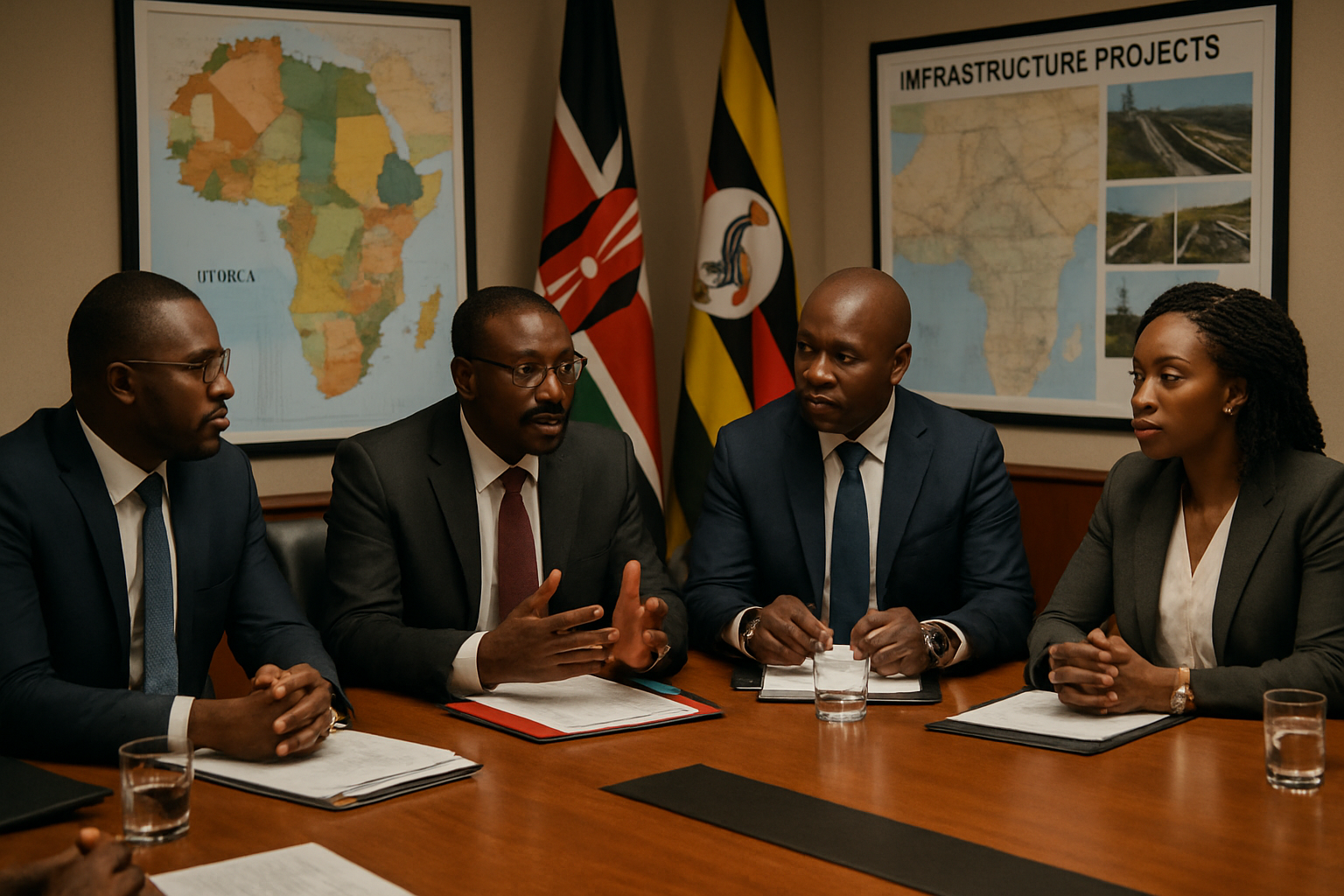
Africa is experiencing an unprecedented economic and strategic renaissance as Kenya's National Assembly ratifies a landmark defense agreement with France while Uganda secures $2.1 trillion shillings in World Bank financing for urban infrastructure development, signaling a decisive shift in continental development patterns and international partnerships.
These developments, announced within hours of each other on April 10, 2026, underscore Africa's evolution from aid recipient to strategic global partner capable of sophisticated international investment management while maintaining development control. The convergence of strategic partnerships, massive infrastructure financing, and continental integration initiatives positions April 2026 as a potential inflection point establishing African development patterns for decades ahead.
Kenya's Strategic Pivot: France Partnership Signals New African Diplomacy
Kenya's parliament has unanimously ratified a bilateral defense agreement with France, marking Paris's strategic shift away from its traditional West African sphere of influence toward anglophone Africa. The agreement, which comes as France faces declining influence in Mali, Burkina Faso, and Niger, represents a sophisticated approach to diversified partnerships that characterizes modern African diplomacy.
"This agreement demonstrates Kenya's capacity to balance multiple strategic relationships while maintaining sovereignty over its development priorities," said a senior Kenyan defense analyst speaking on condition of anonymity. The partnership provides Kenya with enhanced security capabilities while offering France a foothold in strategically important East Africa.
The timing is particularly significant as it follows the successful completion of Kenya's Nairobi-Nakuru highway projects and ongoing preparations for the revival of the Standard Gauge Railway (SGR) expansion. These infrastructure developments, combined with strategic defense partnerships, position Kenya as a crucial hub for regional economic integration and security cooperation.
Uganda's Infrastructure Revolution: $2.1 Trillion Investment in Urban Transformation
Simultaneously, Uganda has secured historic financing worth 2.1 trillion shillings (approximately $540 million) from the World Bank for the Urban, Cities and Municipalities Infrastructure Development (UCMID) Programme. This five-year initiative, running from 2026/2027 to 2030/2031, represents the largest East African urban development financing package in recent history.
"This programme will transform Uganda's urban landscape and create thousands of employment opportunities while supporting our Ten-Fold Growth Strategy to achieve a USD 500 billion economy by 2040"
— Judith Nabakooba, Minister of ICT and National Guidance
The UCMID programme builds on the success of previous initiatives and focuses on comprehensive urban modernization including transportation infrastructure, digital connectivity, water systems, and sustainable energy solutions. Minister Nabakooba emphasized that the programme incorporates climate adaptation measures and smart city technologies as standard features rather than premium additions.
The financing represents sophisticated partnership models that respect Ugandan development priorities while leveraging international expertise. Unlike traditional aid frameworks, the programme includes substantial local capacity building components and technology transfer initiatives that ensure long-term sustainability beyond the project timeline.
Continental Context: African Infrastructure Renaissance
These developments occur within a broader African infrastructure renaissance that has gained unprecedented momentum throughout 2026. The African Finance Corporation reports that the continent holds $29.5 trillion in mineral reserves representing 20% of the global total, with $8.6 trillion remaining untapped despite growing international demand for critical materials.
Major infrastructure projects advancing across the continent include Algeria's Gara Djebilet railway accessing the world's third-largest iron ore reserves, Angola's Lobito Corridor revival connecting Atlantic ports to DRC mineral regions, and Tanzania's completed feasibility studies for a 1,000-kilometer railway expansion. These projects demonstrate coordinated regional approaches that maximize investment impact through shared infrastructure and cross-border integration.
The African Continental Free Trade Agreement (AfCFTA) framework enables these cross-border ventures, regional value chains, and coordinated development strategies. Kenya and Uganda's recent developments align perfectly with AfCFTA objectives by creating the physical and institutional foundations for enhanced intra-African trade flows potentially worth trillions of dollars annually.
Strategic Partnerships Evolution: Balancing Global Relationships
The Kenya-France defense agreement exemplifies Africa's sophisticated approach to international partnerships. Seven African countries—Angola, Democratic Republic of Congo, Guinea, Kenya, Morocco, Sierra Leone, and Zambia—participate in the US-EU-Japan Critical Minerals Partnership, challenging China's 60% production and 90% refining dominance in critical materials.
Simultaneously, China announced zero-tariff access for 53 African countries beginning May 1, 2026, representing the most comprehensive China-Africa trade expansion in modern history. This creates a complex but manageable environment where African nations successfully balance competing partnerships while maintaining strategic autonomy.
Uganda's World Bank financing demonstrates similar sophistication in leveraging international partnerships for domestic development priorities. The UCMID programme includes provisions for South-South cooperation and technology sharing with other developing nations, creating networks of mutual support that transcend traditional North-South aid relationships.
Technology Integration and Innovation
Both Kenya and Uganda's initiatives incorporate cutting-edge technology as standard operational requirements rather than optional additions. Modern African infrastructure projects now include digital monitoring systems, renewable energy integration, smart logistics management, and real-time analytics enabling adaptive management and optimal resource utilization.
Uganda's programme specifically emphasizes digital connectivity and smart city technologies that leapfrog traditional development constraints. The initiative includes provisions for 5G infrastructure, digital government services, and technology education programs that prepare Ugandan youth for participation in the global digital economy.
Kenya's defense partnership with France includes technology transfer components and cybersecurity cooperation that enhance both military and civilian digital capabilities. This reflects the modern reality that security, economic development, and technological advancement are inseparable aspects of comprehensive national development strategies.
Climate Adaptation and Environmental Integration
Both initiatives incorporate climate adaptation as fundamental requirements rather than afterthoughts. January 2026 marked the 18th consecutive month exceeding 1.5°C above pre-industrial levels, making climate resilience essential for any long-term development strategy.
Uganda's urban infrastructure programme includes enhanced drainage systems, weather-resistant materials, renewable energy integration, and backup power systems designed for future climate conditions rather than historical patterns. This forward-looking approach positions Ugandan cities as models for climate-resilient urban development across Africa.
Kenya's strategic partnerships enable access to French expertise in renewable energy, sustainable agriculture, and environmental monitoring technologies. The defense agreement includes provisions for joint responses to climate-related security challenges, recognizing that environmental degradation and security threats are interconnected issues requiring coordinated responses.
Economic Multiplier Effects and Regional Impact
The economic implications of these developments extend far beyond immediate project benefits. Infrastructure investments create substantial multiplier effects through reduced logistics costs, enhanced market access, improved business productivity, and increased competitiveness in global markets.
Uganda's urban infrastructure programme alone is expected to create thousands of direct construction jobs and tens of thousands of indirect opportunities in logistics, manufacturing, and services. More importantly, the improved infrastructure will reduce operational costs for businesses while expanding market access for agricultural producers and small enterprises.
Kenya's enhanced security capabilities through the France partnership will improve investor confidence while enabling more ambitious economic development projects. Regional security cooperation also facilitates cross-border trade and investment flows essential for AfCFTA implementation.
Combined with ongoing developments across the continent, these projects contribute to a transformation that positions Africa as an essential contributor to global prosperity, supply chain security, and climate adaptation rather than primarily as a beneficiary of international assistance.
Implementation Challenges and Success Factors
Despite the promising developments, implementation faces significant challenges including funding sustainability, technical capacity building, climate disruption affecting project timelines, and the need for unprecedented coordination across multiple sectors and stakeholders.
Success factors identified from previous African development initiatives include sustained political commitment beyond electoral cycles, comprehensive stakeholder engagement including communities and civil society, transparent governance frameworks, and adaptive management capabilities that respond to changing circumstances.
Both Uganda and Kenya have demonstrated these success factors through consistent policy implementation, community engagement processes, and transparent reporting on development outcomes. Their recent achievements build on years of careful institutional development and governance improvements that created foundations for large-scale international partnerships.
Global Significance and Future Implications
The convergence of strategic partnerships, massive infrastructure financing, and continental integration initiatives in April 2026 represents more than routine development activity. It signals Africa's emergence as a sophisticated manager of international relationships capable of leveraging global expertise and financing while maintaining sovereignty over development priorities.
This evolution challenges traditional development paradigms that positioned African nations primarily as aid recipients. Instead, it demonstrates African capacity for strategic partnership management that balances multiple relationships, leverages competitive advantages, and maintains focus on long-term continental development objectives.
The success or failure of these initiatives will influence global approaches to development cooperation, trade facilitation, and regional integration for years to come. More immediately, they provide templates for other developing nations seeking to balance global integration with local ownership and cultural preservation.
As the global economy faces supply chain vulnerabilities, climate adaptation requirements, and technological transformation challenges, Africa's demonstrated capacity for sophisticated development management positions the continent as an essential partner for addressing 21st-century global challenges through enhanced cooperation, innovation, and shared prosperity.