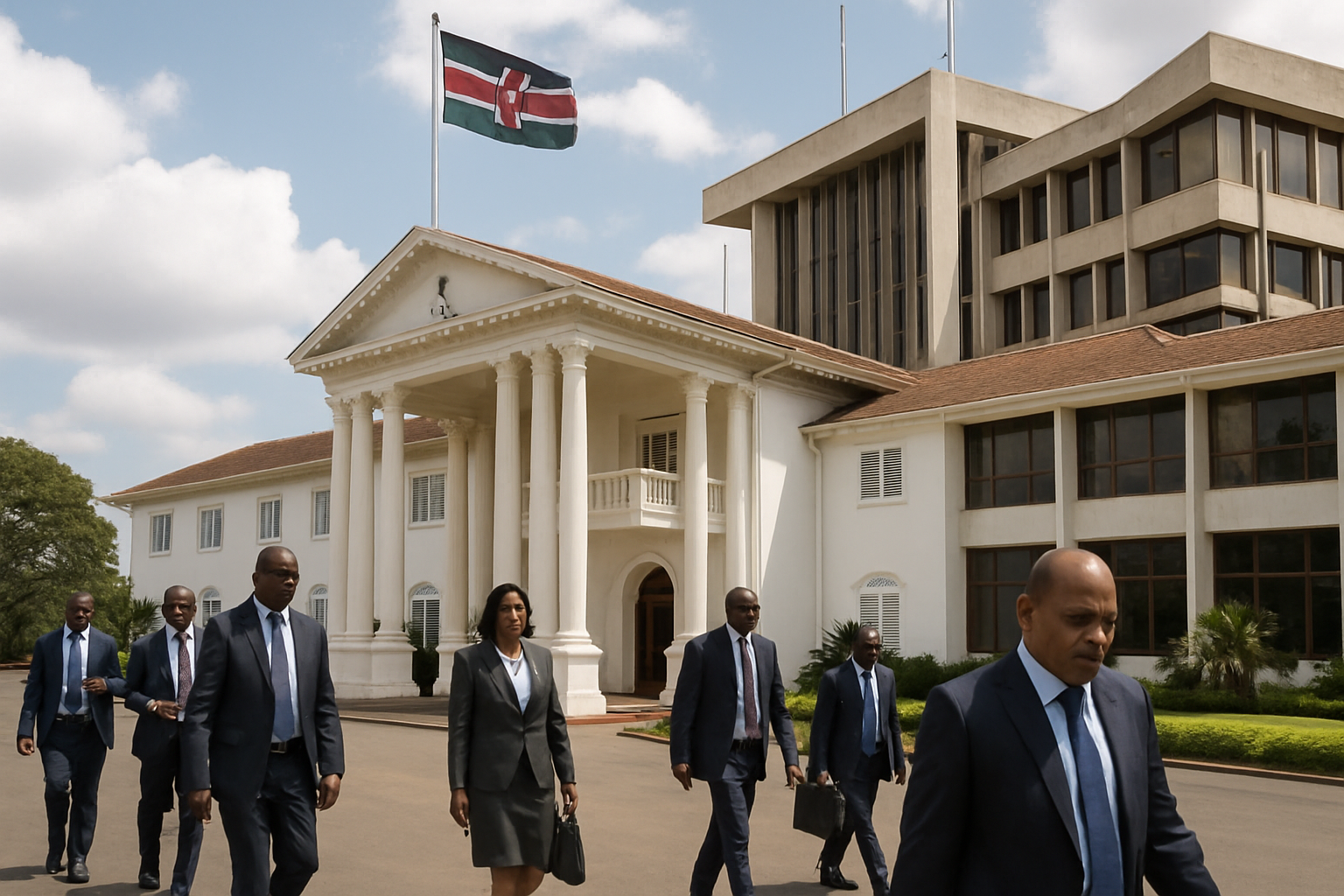
Kenya's government faces mounting pressure on multiple fronts as State House defends President William Ruto's controversial intervention in the Nairobi Hospital crisis while Governor Anyang' Nyong'o works to address deadly border clashes between Kisumu and Kericho counties that have persisted for years.
The dual challenges underscore the complex governance issues confronting Kenya as it navigates healthcare management disputes, territorial conflicts, and questions of executive authority in addressing local crises.
State House Defends Presidential Hospital Intervention
The Presidency has mounted a vigorous defense of President Ruto's decision to intervene in the ongoing Nairobi Hospital leadership crisis, emphasizing that the action was taken in response to persistent stakeholder petitions rather than arbitrary executive overreach.
According to State House officials, the President's involvement came after receiving multiple formal requests from hospital stakeholders who cited "unresolved disputes" within the institution's management structure that had begun affecting patient care and operational efficiency.
"The President acted on stakeholders' petitions citing unresolved disputes that were hampering effective hospital operations."
— State House Official
The controversy centers around recent changes to the hospital's board composition, which coincided with the arrest of several board members. Critics have questioned whether such executive intervention in healthcare institution governance sets concerning precedents for presidential involvement in private sector operations.
The government's defense comes amid broader questions about the appropriate balance between state oversight and institutional autonomy in Kenya's healthcare sector, particularly regarding prestigious private facilities that serve both local and regional patients.
Nairobi Hospital at the Center of Takeover Allegations
The Nairobi Hospital, one of East Africa's premier healthcare facilities, has been under intense scrutiny over allegations of potential government takeover attempts. The institution has faced what sources describe as "board and operational disputes" that have created uncertainty about its future governance structure.
Government officials have emphasized their commitment to "clearing the air" over these disputes, though the intervention has raised additional questions among healthcare stakeholders about the motivations and methods employed in addressing institutional challenges.
The hospital crisis reflects broader tensions within Kenya's healthcare system, where public-private partnerships and regulatory oversight continue to evolve. The facility's regional importance as a medical destination makes governance stability particularly crucial for maintaining service quality and international reputation.
Governor Nyong'o Confronts Persistent Border Violence
Meanwhile, in western Kenya, Kisumu Governor Anyang' Nyong'o has taken decisive action to address escalating violence along the border with Kericho County, formally writing to the Ministry of Lands following deadly clashes that have claimed multiple lives.
The conflict on the Kisumu-Kericho border represents a longstanding challenge that has persisted for years, with disputes centered on land ownership rights, competition for natural resources, and what authorities describe as "commercialized cattle rustling involving armed gangs."
Recent clashes have been particularly deadly, with armed groups taking center stage in what was once primarily a dispute between communities over grazing rights and territorial boundaries. The evolution from traditional resource competition to organized criminal activity has complicated resolution efforts.
"The conflict has persisted for years, with disputes over land ownership, competition for resources, and commercialized cattle rustling taking center stage."
— Regional Security Assessment
Governor Nyong'o's intervention through formal channels to the Ministry of Lands represents an attempt to address the underlying land tenure issues that fuel much of the violence. The governor's approach emphasizes the need for comprehensive policy solutions rather than purely security-focused responses.
Infrastructure and Governance Challenges
These concurrent crises highlight broader challenges facing Kenya's governance and infrastructure systems. The country has been pursuing ambitious development programs, including significant healthcare infrastructure investments and regional connectivity projects.
Kenya has been part of major continental infrastructure initiatives, including participation in various African development partnerships and modernization programs. The government has been working to position itself as a regional leader in both healthcare delivery and conflict resolution mechanisms.
However, the current challenges demonstrate the complexity of managing diverse stakeholder interests while maintaining institutional stability and public confidence in government decision-making processes.
Regional Context and Historical Patterns
The Kisumu-Kericho border conflicts reflect broader patterns of resource-based disputes that have affected various regions across Kenya and East Africa. These conflicts often involve complex interactions between traditional land use patterns, modern administrative boundaries, and economic pressures.
Similar disputes have been documented in other parts of Kenya, where rapid population growth, climate variability, and changing economic opportunities have intensified competition for land and water resources. The involvement of organized criminal groups in cattle rustling has added a new dimension to traditionally community-based conflicts.
The government's response to these challenges will likely influence how similar disputes are addressed elsewhere in the country, making the current interventions particularly significant for Kenya's overall stability and development trajectory.
Healthcare Sector Implications
The Nairobi Hospital crisis occurs within the context of Kenya's broader healthcare transformation efforts. The country has been investing heavily in healthcare infrastructure, including mammography deployment to 84 hospitals and various public-private partnership initiatives.
Kenya's healthcare system has been part of what experts describe as a continental "therapeutic revolution" emphasizing prevention-first approaches and regional cooperation. The stability of flagship institutions like Nairobi Hospital is crucial for maintaining the country's position as a regional medical destination.
The resolution of the current governance disputes will likely set important precedents for how similar challenges are addressed in Kenya's evolving healthcare landscape, where traditional regulatory frameworks are adapting to new realities of regional integration and international partnerships.
Looking Forward
As Kenya addresses these dual challenges, the government's responses will be closely watched by both domestic stakeholders and regional partners. The success or failure of interventions in both the healthcare and security sectors could significantly influence public confidence in the administration's problem-solving capabilities.
The Nairobi Hospital situation requires careful balance between necessary oversight and institutional autonomy, while the border violence demands coordinated approaches that address both immediate security concerns and underlying structural issues related to land tenure and resource access.
Both situations test Kenya's governance systems at a time when the country is pursuing ambitious development goals and seeking to enhance its regional leadership role. The outcomes will likely influence approaches to similar challenges in other parts of the country and potentially across the East African region.