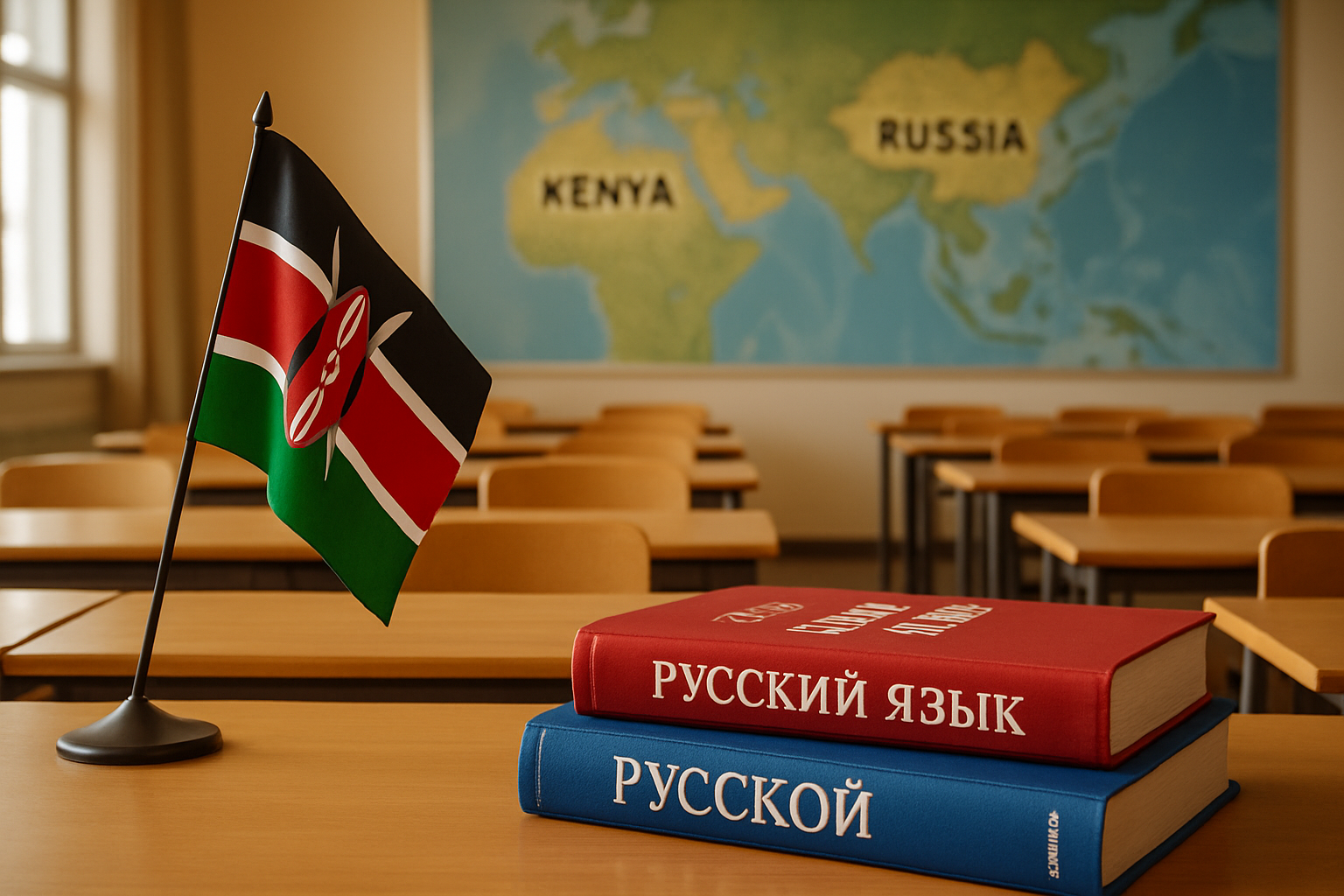
The Kenyan government has launched a new Russian studies center at the University of Nairobi, marking a significant expansion of educational cooperation with Russia despite ongoing tensions stemming from reported Kenyan casualties in the Ukraine-Russia conflict.
The initiative represents a complex diplomatic balancing act, as Kenya seeks to maintain educational and cultural ties with Russia while navigating the challenging geopolitical landscape created by the ongoing war in Ukraine. More than 10 Kenyans have reportedly died fighting on the Russian-Ukrainian war frontlines, adding a sobering backdrop to this educational partnership announcement.
Educational Diplomacy in Complex Times
The establishment of the Russian language studies center comes at a time when Kenya-Russia relations face unprecedented strain. The reported deaths of Kenyan nationals in the conflict zone have raised questions about recruitment practices and the involvement of Kenyan citizens in foreign military operations.
Despite these challenges, the Kenyan government appears committed to maintaining educational and cultural exchanges with Russia, viewing language education as separate from political tensions. The new center is expected to offer comprehensive Russian language courses, cultural programs, and potentially serve as a bridge for academic exchanges between the two nations.
Strategic Educational Partnership
Kenya's decision to proceed with the Russian studies center reflects the country's broader strategy of maintaining diverse international partnerships while navigating complex global politics. The initiative aligns with Kenya's educational policy of expanding foreign language offerings and international cultural understanding among its student population.
The University of Nairobi, Kenya's premier higher education institution, will host the new center, providing Russian language instruction alongside cultural studies programs. This educational cooperation builds on decades of historical ties between Kenya and Russia, dating back to the Soviet era when many African students pursued higher education in Moscow and other Soviet cities.
Historical Context and Contemporary Challenges
Kenya-Russia educational cooperation has deep historical roots, with many prominent Kenyan leaders and professionals having received education in the former Soviet Union during the Cold War era. This legacy of educational exchange has continued into the post-Soviet period, though at reduced levels compared to the 1960s and 1970s.
The current initiative represents an attempt to revitalize these educational ties while acknowledging the changed global context. However, the reported involvement of Kenyan nationals in the Ukraine conflict adds complexity to bilateral relations that extends beyond educational cooperation.
Balancing Act in Foreign Relations
Kenya's approach reflects the challenges faced by many African nations in maintaining relationships with multiple global powers while avoiding entanglement in conflicts beyond the continent. The government has consistently advocated for peaceful resolution of international disputes while maintaining that educational and cultural exchanges should continue regardless of political tensions.
The timing of the Russian studies center launch suggests that Kenya views educational cooperation as a stabilizing element in bilateral relations, potentially serving as a foundation for broader diplomatic engagement in the future.
Regional and Continental Implications
Kenya's initiative occurs within the broader context of Africa's complex relationship with Russia and the ongoing Ukraine conflict. Many African nations have sought to maintain neutrality while continuing beneficial partnerships, particularly in education, technology, and energy sectors.
The establishment of the Russian language center may influence other East African countries' approaches to educational cooperation with Russia, potentially serving as a model for maintaining academic ties while navigating political tensions.
Future Prospects and Challenges
The success of Kenya's Russian studies center will likely depend on several factors, including the evolution of the Ukraine conflict, domestic Kenyan reactions to the reported casualties, and the broader trajectory of Kenya-Russia relations. The initiative represents a test case for whether educational cooperation can provide stability amid broader political turbulence.
As the center begins operations, its ability to attract students and maintain academic quality while addressing sensitive political issues will determine whether this model of educational diplomacy can thrive in the current global environment.
The launch of this Russian studies center underscores Kenya's commitment to maintaining diverse international educational partnerships while highlighting the complex realities facing nations attempting to balance multiple global relationships in an increasingly polarized world.