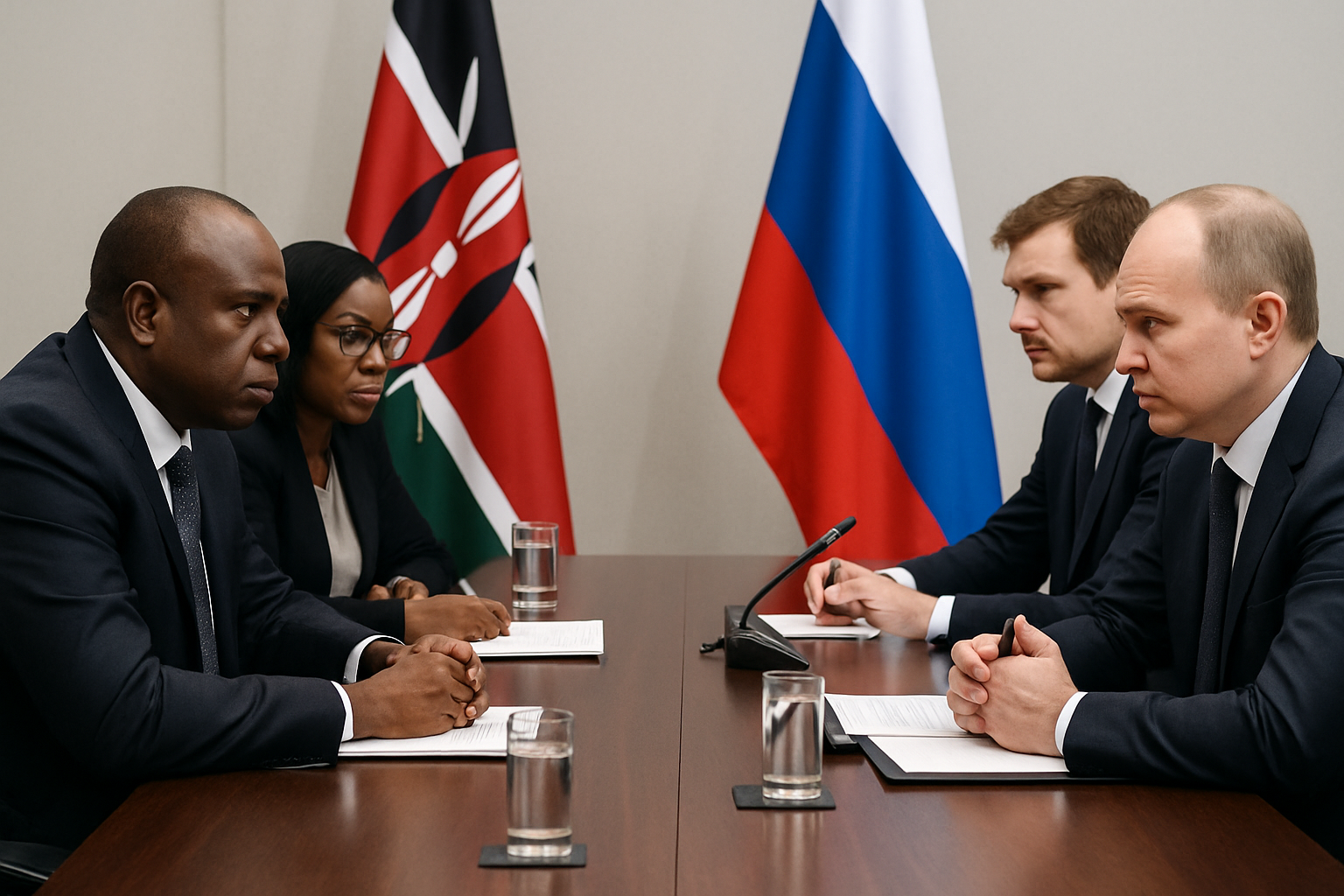
Kenya and Russia have reached a diplomatic agreement to halt the recruitment of Kenyan citizens for military service in the Ukraine conflict, marking a significant development in international efforts to address the use of foreign nationals in the ongoing war.
The announcement comes after mounting concerns from Kenyan authorities about the scale of recruitment, with intelligence services estimating that over 1,000 Kenyan nationals have been sent to fight with Russian forces in Ukraine. The agreement represents a crucial step in addressing what has become a complex humanitarian and diplomatic crisis involving vulnerable populations from across Africa.
Scale of the Problem
According to multiple intelligence assessments, Kenya's intelligence services have identified more than 1,000 Kenyan citizens who have been recruited to fight alongside Russian forces in the Ukraine conflict. This figure represents a significant escalation from earlier government estimates of approximately 200 nationals involved in the conflict.
The recruitment operations appeared to involve sophisticated networks that allegedly deceived Kenyan citizens about the nature of employment opportunities abroad. Instead of legitimate work, these individuals found themselves conscripted into active military service in one of Europe's most dangerous conflict zones.
Previous investigations revealed that at least 89 Kenyans were confirmed on the front lines as of early 2026, with at least one confirmed death and several others returning home with injuries and trauma. The true scale of casualties may be significantly higher, as many recruits remain in active combat zones where communication and extraction efforts are extremely challenging.
Diplomatic Breakthrough
The agreement between Kenya and Russia follows intensive diplomatic negotiations aimed at addressing the recruitment issue. Kenyan Foreign Minister Musalia Mudavadi met with his Russian counterpart in discussions that focused specifically on preventing further recruitment of Kenyan nationals for the Ukraine conflict.
Russia has now committed to stopping the acceptance of Kenyan nationals into its military forces, addressing a key concern raised by the Kenyan government about the exploitation of its citizens. The agreement represents a significant diplomatic achievement for Kenya, which had been seeking Moscow's cooperation to halt what it characterized as unauthorized foreign military recruitment.
Human Trafficking Concerns
The recruitment of Kenyan citizens for the Ukraine conflict has raised serious questions about human trafficking and exploitation. Investigations have revealed that many recruits were allegedly deceived about employment opportunities and found themselves in combat situations they had not anticipated or agreed to.
The recruitment networks appeared to involve insider knowledge and official facilitation, suggesting potential corruption at multiple levels of government oversight. This has prompted calls for comprehensive reforms to prevent similar trafficking operations and protect vulnerable populations from exploitation.
Families of affected Kenyans have been demanding government action for the return of their relatives, with 35 families specifically rallying for assistance. The psychological and physical trauma experienced by those who have returned highlights the human cost of these recruitment practices.
Regional and International Implications
The Kenya-Russia agreement is part of a broader pattern of foreign fighter recruitment that has emerged during the Ukraine conflict, affecting vulnerable populations across multiple continents. Nigerian nationals have also been discovered fighting for Russian forces, indicating the global reach of these recruitment networks.
The case raises important questions under international law regarding unauthorized foreign military service and the responsibilities of both sending and receiving nations. It also highlights vulnerabilities in governance systems that can be exploited by international actors seeking to recruit foreign nationals for military purposes.
The agreement comes at a time when the Ukraine conflict continues to have far-reaching implications beyond Europe, affecting security, economic, and diplomatic relationships across Africa and other regions.
Ongoing Challenges
While the agreement represents a significant diplomatic success, several challenges remain. Many Kenyan recruits are still believed to be in active combat zones, complicating communication and potential extraction efforts. The complex legal status of foreign fighters and international sanctions on Russia limit diplomatic channels for securing returns.
The case has also exposed systematic failures in Kenya's oversight systems and raised questions about how to prevent similar operations in the future. Reform advocates are calling for comprehensive responses that go beyond just securing returns to include accountability measures and systemic reforms.
Broader Context
The Kenya-Russia military recruitment issue highlights the global impact of regional conflicts on populations far from traditional battlefields. It demonstrates how modern conflicts can exploit economic vulnerabilities and governance gaps to recruit individuals from distant countries.
The agreement also reflects the complex diplomatic challenges faced by countries seeking to protect their citizens while navigating relationships with major powers involved in international conflicts. Kenya's success in securing Russian cooperation provides a potential model for other nations facing similar challenges.
Looking Forward
The implementation of the Kenya-Russia agreement will be closely monitored by international observers and other African nations that may be facing similar recruitment pressures. Success in preventing further recruitment and securing the return of existing recruits could establish important precedents for addressing foreign fighter recruitment globally.
The case serves as a stark reminder of the human costs borne by vulnerable populations in conflicts far from their homes and the importance of international cooperation in protecting citizens from exploitation. It also underscores the need for robust governance systems to prevent similar trafficking operations in the future.
As the Ukraine conflict continues to evolve, the Kenya-Russia agreement represents a significant step toward addressing one of its more troubling humanitarian dimensions – the exploitation of vulnerable populations for military purposes thousands of miles from their homes.