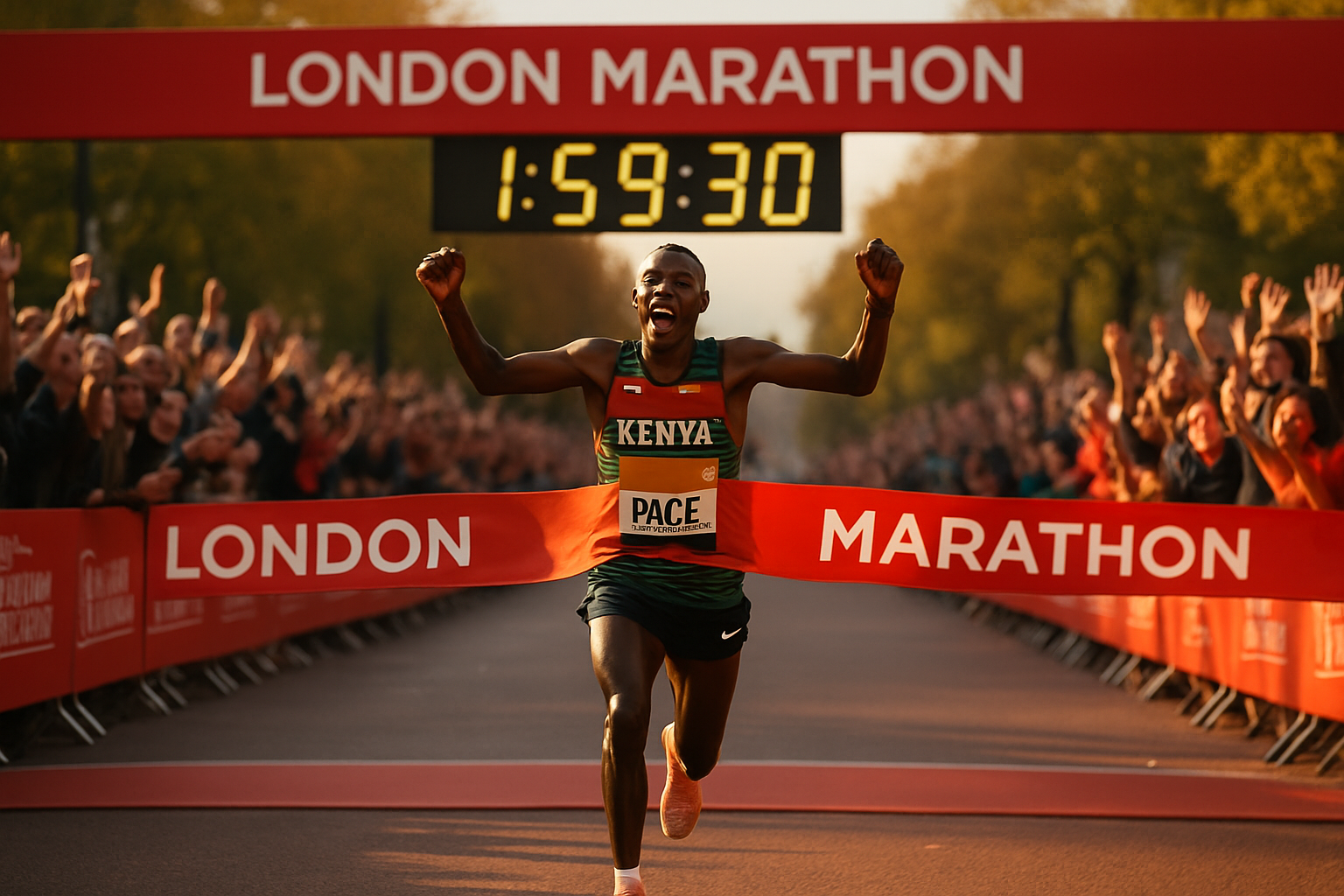
Sebastian Sawe of Kenya made history at the London Marathon on Sunday, becoming the first person to officially break the two-hour barrier in marathon running with a stunning time of 1 hour, 59 minutes, and 30 seconds.
The 30-year-old Kenyan achieved what many thought impossible, completing the 26.2-mile distance in ideal conditions at London's prestigious marathon event. Sawe's groundbreaking performance not only shattered Eliud Kipchoge's unofficial sub-2-hour achievement from 2019 but did so in an officially sanctioned race that will stand as the world record.
Breaking the Ultimate Barrier
Sawe crossed the finish line with a time that was previously achieved only in controlled, pace-assisted conditions. His 1:59:30 performance came just years after fellow Kenyan Eliud Kipchoge ran 1:59:40 in Vienna during the INEOS 1:59 Challenge, though that time was not recognized by World Athletics due to the controlled conditions and rotating pacers.
The French media described the achievement as historic, with Le Monde noting that "the athlete beat the world record for the distance by winning the London marathon on Sunday." The significance of this achievement cannot be overstated - it represents one of sport's most elusive barriers finally being broken in official competition.
Weather conditions were perfect for the attempt, with temperatures around 18°C, bright sunshine, and virtually no wind. These ideal circumstances, combined with London's fast course and enthusiastic crowd support, created the perfect storm for this historic breakthrough.
The Road to History
Sawe's journey to this moment has been marked by consistent excellence and strategic preparation. Unlike previous attempts at the sub-2-hour barrier that relied heavily on technological assistance and pace management, Sawe achieved this time through pure athletic ability and tactical racing intelligence.
The race unfolded with Sawe maintaining steady splits throughout, never appearing to struggle as he navigated London's challenging course. His consistent pacing strategy proved crucial, avoiding the dramatic surges that have derailed other record attempts.
"This is a historic moment for the entire marathon world and for distance running."
— World Athletics Official
Breaking New Ground
International coverage emphasized the significance of this achievement across multiple languages and cultures. German media highlighted how Sawe accomplished this feat "with high-tech shoes and tailwind," acknowledging both the athlete's extraordinary ability and the optimal conditions that contributed to success.
The Irish Times noted that the 30-year-old Kenyan became "the first athlete to shatter the two-hour barrier in an official race," distinguishing this achievement from previous controlled attempts. This official recognition by World Athletics makes Sawe's performance the new gold standard for marathon excellence.
What makes this achievement even more remarkable is that Sawe broke the record by a substantial margin. The previous official world record of 2:00:35, set by Kelvin Kiptum, was demolished by over a minute - an enormous gap in marathon terms that suggests the potential for even faster times in the future.
Global Impact and Recognition
The achievement has resonated far beyond Kenya's borders. Multiple international media outlets covered the historic run, with particular attention paid to the fact that this represents the first official sub-2-hour marathon in history. The distinction between official and unofficial times has been crucial in marathon running circles, making Sawe's achievement the definitive breakthrough moment.
Ethiopia's Tigst Assefa also made headlines on the same day, improving her own women's marathon record in a separate women's race. This double breakthrough day highlighted the extraordinary depth of East African distance running talent and the continuing evolution of marathon performance.
Portugal's coverage emphasized that Sawe won the London Marathon with a time that had never been achieved in official competition, while Qatar's Al Jazeera noted that he "breaks Kelvin Kiptum's previous world record of 2:00:35," emphasizing both the margin of improvement and the official recognition of the achievement.
Technical and Strategic Elements
Sawe's success came through a combination of factors that marathon experts have long identified as necessary for sub-2-hour running. Advanced footwear technology, optimal pacing strategies, ideal weather conditions, and course selection all played roles in enabling this historic performance.
The London Marathon's fast course, with its relatively flat profile and enthusiastic crowd support, provided the perfect stage for this attempt. Unlike controlled time trials, Sawe had to navigate the complexities of competitive racing while maintaining the precise pace required for sub-2-hour running.
Norwegian media coverage highlighted the technological aspects, noting the role of "high-tech shoes" in the achievement while emphasizing that the primary factor remained Sawe's exceptional athletic ability and preparation.
Looking Forward
Sawe's breakthrough opens new possibilities for marathon running. Having shattered the 2-hour barrier by 30 seconds in official competition, the achievement suggests that even faster times may be possible as training methods, technology, and race tactics continue to evolve.
The performance also reinforces Kenya's dominance in distance running, building on a legacy that includes numerous Olympic and world championship titles. Sawe joins a pantheon of Kenyan marathon legends while establishing himself as the pioneer who first broke sport's most famous barrier in official competition.
For the sport of marathon running, April 26, 2026, will be remembered as the day the impossible became reality. Sebastian Sawe's 1:59:30 performance at the London Marathon represents not just a new world record, but the dawn of a new era in distance running where the sub-2-hour marathon is no longer a dream but an achieved reality.