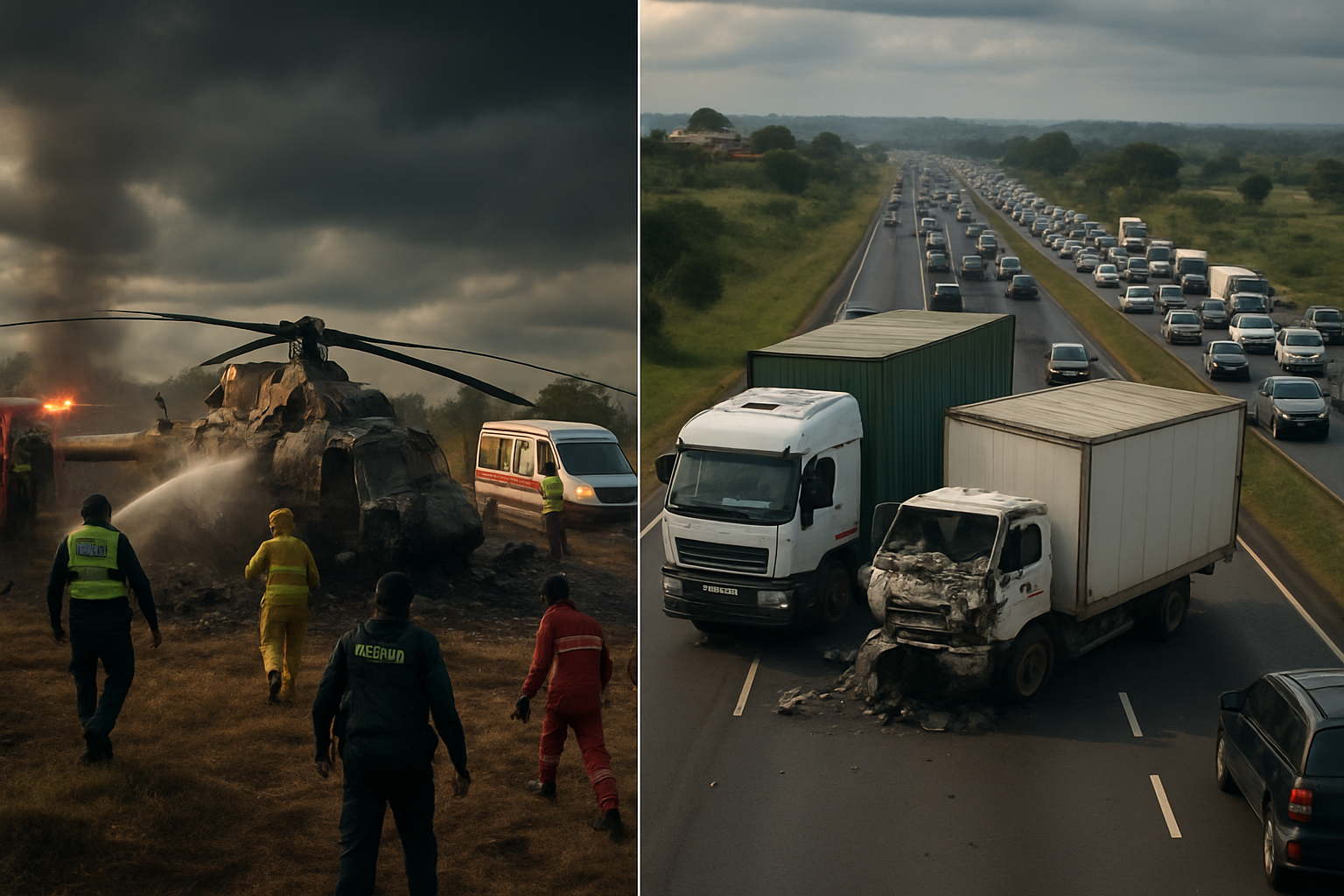
Kenya faces a transportation crisis as new details emerge about the helicopter crash that killed Emurua Dikirr MP Johana Ng'eno and five others, while a separate major truck collision has created a massive traffic disruption spanning over 5 kilometers on the critical Mombasa Road.
Helicopter Crash Investigation Reveals New Details
Preliminary investigations into the helicopter crash that claimed the life of MP Johana Ng'eno have revealed that the aircraft flew at low altitude before hitting trees and ultimately crashing, according to sources close to the investigation. The helicopter, with registration number 5Y-DSB, was carrying six people when it crashed and burst into flames on Saturday evening.
The incident represents a tragic loss for Kenya's political landscape, with Ng'eno being remembered as an outspoken legislator who maintained a complex relationship with President William Ruto dating back to 2007 when he first entered elective politics in Narok. The late Emurua Dikirr MP was known for his defiant stance and turbulent political relationships throughout his career.
Massive Truck Collision Paralyzes Mombasa Road
In a separate but equally significant transportation incident, a collision between multiple trucks has created unprecedented traffic chaos on Mombasa Road, Kenya's most critical commercial artery. The crash resulted in the vehicles bursting into flames, creating a spectacular and dangerous scene that has drawn emergency responders from across the region.
Witnesses report that the traffic snarl-up extends over 5 kilometers, effectively bringing one of East Africa's most important trade routes to a complete standstill. The incident has had cascading effects on Kenya's economy, with goods movement between the Port of Mombasa and inland destinations severely disrupted.
"The situation is unprecedented. We haven't seen traffic backing up this far in recent memory," said a witness at the scene.
— Local Traffic Observer
Emergency Response and Recovery Efforts
Emergency services have been stretched thin responding to both incidents simultaneously. The helicopter crash site required specialized rescue operations and investigation teams, while the truck collision demanded immediate fire suppression efforts and traffic management coordination.
The Kenya National Highways Authority (KeNHA) has mobilized additional resources to manage the Mombasa Road situation, recognizing the critical importance of this corridor for Kenya's trade and economic activities. Alternative routes have been suggested, but the sheer volume of diverted traffic has created secondary bottlenecks throughout Nairobi's road network.
Impact on Kenya's Transportation Network
These incidents highlight the vulnerability of Kenya's transportation infrastructure and the cascading effects that major accidents can have on the country's economic activities. Mombasa Road serves as the primary link between Kenya's main port and its inland markets, making any disruption a matter of national economic concern.
The helicopter crash also raises questions about aviation safety protocols, particularly for smaller aircraft operations in Kenya's challenging terrain and weather conditions. The preliminary findings suggesting low-altitude flight and tree strikes point to potential navigation or mechanical issues that investigators will need to examine thoroughly.
Political Ramifications and Remembrance
The loss of MP Ng'eno represents more than just a transportation tragedy; it marks the end of a controversial but significant political career. Known for his outspoken nature and willingness to challenge authority, Ng'eno's death removes a distinctive voice from Kenya's political discourse.
His turbulent relationship with President Ruto, spanning nearly two decades of Kenyan politics, included periods of both alliance and opposition. This complex political legacy adds another dimension to the tragedy, as colleagues and opponents alike grapple with the sudden loss of such a prominent figure.
Broader Transportation Safety Concerns
These twin incidents occur against the backdrop of ongoing transportation infrastructure challenges across Kenya. Recent memory from our archives shows that Kenya has been dealing with various transportation-related issues, from road safety concerns to aviation incidents, highlighting the need for comprehensive safety protocols and infrastructure improvements.
The simultaneous nature of these events puts additional strain on emergency response capabilities and underscores the importance of having robust, redundant systems in place to handle multiple crises. The ability to manage such incidents effectively reflects on the country's overall preparedness for transportation emergencies.
Economic Impact and Recovery Timeline
The economic implications of the Mombasa Road blockage cannot be overstated. This corridor handles a significant portion of goods movement between the coast and Kenya's interior, as well as transit cargo destined for neighboring countries including Uganda, Rwanda, and eastern Democratic Republic of Congo.
Businesses dependent on just-in-time delivery systems are likely to face immediate disruptions, while the longer-term effects could impact Kenya's reputation as a reliable transit hub for East African trade. The recovery timeline remains uncertain, with authorities working around the clock to clear the wreckage and restore normal traffic flow.
Lessons and Future Preparedness
These incidents serve as a stark reminder of the interconnected nature of modern transportation systems and the potential for single-point failures to have widespread consequences. The helicopter crash demonstrates the ongoing risks associated with aviation in challenging environments, while the truck collision shows how quickly critical infrastructure can become vulnerable to major disruptions.
Moving forward, these events will likely prompt reviews of safety protocols, emergency response procedures, and the resilience of Kenya's transportation network. The lessons learned from managing these simultaneous crises will be valuable for improving the country's preparedness for future transportation emergencies.
As investigations continue into both incidents, Kenya's transportation sector faces questions about safety standards, emergency preparedness, and the adequacy of current infrastructure to handle the country's growing economic demands. The responses to these challenges will shape the future of transportation safety and reliability in East Africa's largest economy.