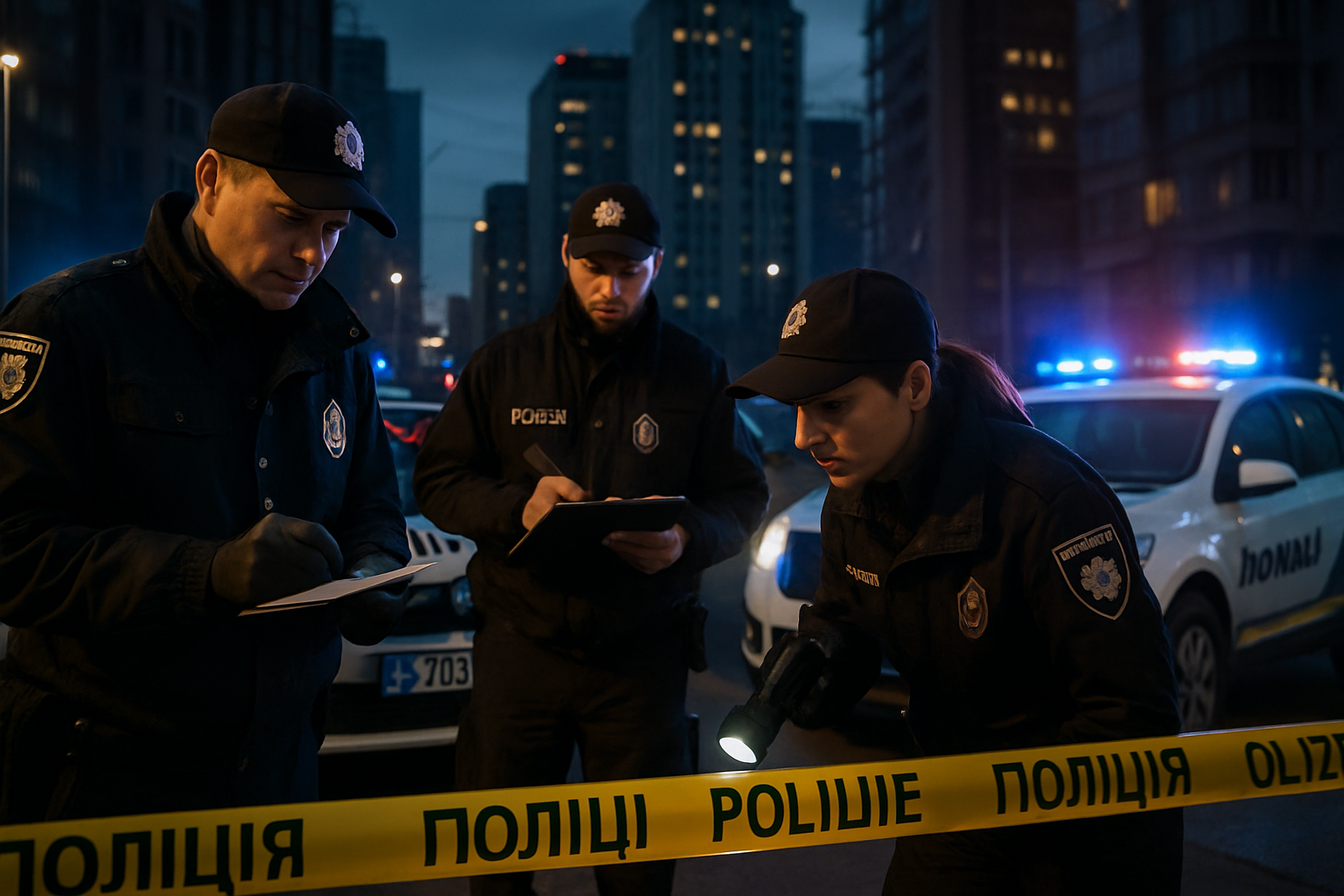
Ukraine's top police patrol commander resigned on Sunday amid mounting criticism over officers' response to a deadly mass shooting in Kyiv, as new details emerged about the 58-year-old gunman who killed six people before being shot dead by special forces.
Police patrol chief Yevhen Zhukov announced his resignation at a press conference in Kyiv following widespread outrage over two patrol officers who were witnessed fleeing the scene when gunfire erupted in the Holosiivskyi district on Saturday afternoon.
"As an officer with combat experience, I have decided to tender my resignation from my current post. I believe this is the right thing to do," said Zhukov, acknowledging what he described as the "shameful" response that violated fundamental law enforcement principles.
The Attack Sequence
The shooting began when the unidentified gunman opened fire on civilians on a street in Kyiv's Holosiivskyi district, killing four people before barricading himself inside a supermarket where he took hostages and killed one additional person. A sixth victim later died in hospital from their injuries.
According to preliminary reports from Ukraine's Attorney General Ruslan Kravchenko, the attack is being treated as an act of terrorism. The shooter was identified as a 58-year-old man born in Moscow, though investigators are still working to establish his motives and the circumstances surrounding the crime.
Mass shootings are extremely rare in Ukraine, making Saturday's attack particularly shocking for a nation already dealing with the ongoing war with Russia.
Police Response Under Scrutiny
The incident has exposed serious flaws in Ukraine's domestic law enforcement response capabilities. Video footage reportedly showed two patrol officers—a male and female officer—abandoning their posts and fleeing when they heard gunshots, leaving civilians, including children, unprotected during the active shooter situation.
While the patrol officers fled, it was Ukraine's specialized KORD police units who ultimately responded professionally, conducting a successful tactical assault that killed the attacker and rescued four hostages from the supermarket.
Interior Minister Ihor Klymenko condemned the patrol officers' behavior as "shameful," stating it violated the most basic principles of law enforcement duty to protect civilians during emergencies.
New Details About the Shooter
Investigators have revealed that the gunman was a former serviceman who had served in the Ukrainian Armed Forces since 1992, primarily working in logistics units in the Odesa region before retiring in 2005. Swedish media reports identified him as Dmitrij Vasilchenkov, noting that he had a weapons license and had crossed the Russian border multiple times in recent years.
Despite his Moscow birth and border crossings, authorities have not established any connection between the attack and the ongoing Ukraine-Russia conflict. The sophisticated nature of the attack—transitioning from street shooting to a hostage situation—suggests advanced operational planning that required surveillance and preparation.
"Authorities are working to establish the circumstances of the crime, as well as the motives behind it"
— Attorney General Ruslan Kravchenko
Calls for Police Reform
The incident has prompted Ukrainian President Volodymyr Zelensky to call for a comprehensive overhaul of police response protocols, recruitment procedures, and training programs. The contrast between the fleeing patrol officers and the successful KORD response highlights significant gaps in standard police preparedness for crisis situations.
Social media footage showing uniformed officers abandoning civilians during an active shooter event generated widespread public outrage and calls for systemic police reform. Critics are demanding enhanced training protocols, better emergency response procedures, and stronger accountability mechanisms to prevent similar failures.
The attack also raises broader questions about domestic security challenges in Ukraine, where law enforcement must maintain effective civilian policing while military resources remain focused on the ongoing conflict with Russia.
International Implications
The shooting has drawn international attention as one of the deadliest civilian attacks in Kyiv outside of military operations during the current wartime period. The incident has been reported across global media, highlighting civilian security vulnerabilities that extend beyond conventional conflict zones.
European intelligence sources are reportedly monitoring the incident as part of broader security assessments, given the sophisticated attack methodology that required advanced planning and knowledge of police response protocols.
The Council of Europe's Secretary General Alain Berset responded to the attack, urging an end to violence and expressing solidarity with the victims and their families.
Investigation Continues
The Security Service of Ukraine (SBU) has classified the incident as a terrorist attack, with investigators examining the shooter's background, recent activities, communications, and movements to determine whether he acted alone or was part of a larger network.
Key focus areas include understanding how the attacker acquired advance knowledge of police protocols, the source and construction of his weapons, and any potential connections to intelligence services given his Moscow origins—though no concrete evidence of such links has been presented.
The investigation will be critical for assessing whether this was an isolated incident or represents the beginning of a broader domestic terrorism campaign that could require enhanced counter-terrorism measures to protect Ukraine's civilian population.
Broader Security Challenges
The Kyiv shooting demonstrates the complex security challenges facing Ukraine as it manages conventional military threats along with emerging domestic terrorism risks. The successful resolution by KORD units shows Ukrainian law enforcement's tactical capabilities under extreme circumstances, but the patrol unit failures expose vulnerabilities in standard response protocols.
The incident underscores the importance of maintaining robust domestic security infrastructure while military resources remain focused on external threats. It also highlights the need for comprehensive threat assessment and enhanced intelligence gathering to identify and prevent potential domestic terrorist activities.
As Ukraine continues to face unprecedented security challenges on multiple fronts, Saturday's shooting serves as a stark reminder that protecting civilian populations requires both military strength abroad and effective law enforcement capabilities at home.