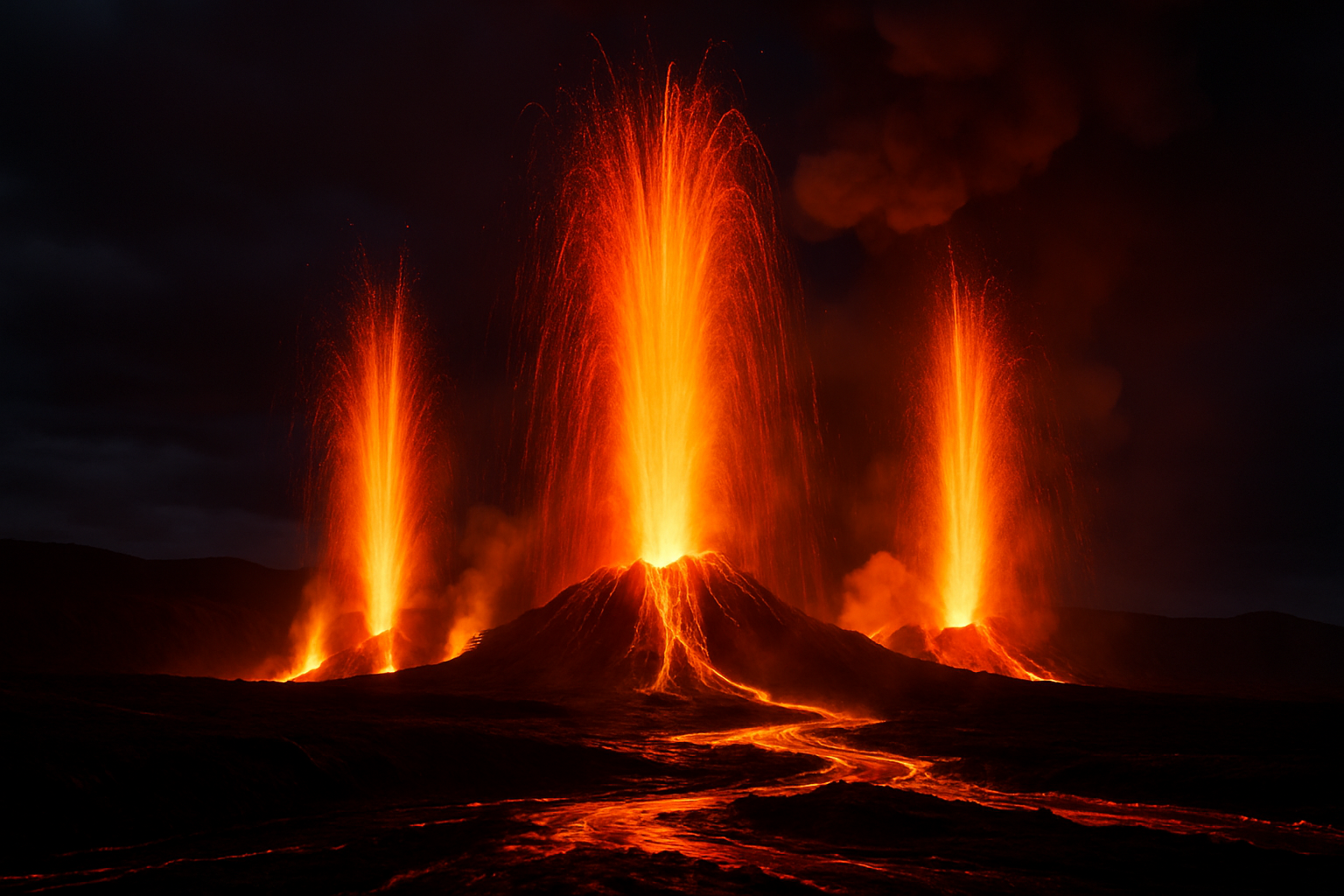
Hawaii's Kilauea volcano erupted Tuesday with spectacular lava fountains reaching heights of 400 meters, forcing temporary closures at Hawaii Volcanoes National Park and a major highway as volcanic fragments and ash threatened public safety.
The latest lava fountaining episode from one of the world's most active volcanoes created a dramatic display of nature's power, with United States Geological Survey footage capturing towering columns of molten rock shooting skyward from the volcanic crater. The eruption prompted immediate safety protocols as falling volcanic fragments posed risks to visitors and infrastructure in the surrounding area.
Emergency Response and Closures
Hawaii Volcanoes National Park officials implemented temporary closures of affected areas as volcanic debris, including ash and larger fragments, began falling in the vicinity of the eruption. The spectacular display, while captivating for volcano enthusiasts, created dangerous conditions that necessitated swift action to protect public safety.
Highway authorities also announced partial closures of an important transportation route due to the fallout from the eruption. The volcanic activity generated sufficient debris to warrant precautionary measures for motorists and emergency response teams operating in the region.
Kilauea's Ongoing Volcanic Activity
Kilauea, located on Hawaii's Big Island, stands as one of the planet's most continuously active volcanoes, with a history of eruptions stretching back centuries. The volcano's location within Hawaii Volcanoes National Park makes it one of the most closely monitored and studied volcanic systems in the world.
Tuesday's eruption represents the latest chapter in Kilauea's ongoing volcanic activity, which has provided scientists with invaluable data about volcanic processes while creating both spectacular natural displays and occasional safety challenges for the surrounding communities.
The United States Geological Survey maintains constant monitoring of Kilauea's activity through a network of sensors and observation points, enabling rapid response to changes in volcanic behavior. This surveillance system proved crucial in Tuesday's eruption, providing early warning that allowed park officials to implement safety measures before the most intense volcanic activity occurred.
Scientific and Safety Implications
The 400-meter height of Tuesday's lava fountains places this eruption among the more significant recent episodes of Kilauea's volcanic activity. Such heights indicate substantial pressure within the volcanic system and the presence of highly fluid, gas-rich magma that can produce spectacular eruptions.
Volcanic debris from such eruptions can travel considerable distances, particularly when carried by trade winds that frequently affect the Hawaiian Islands. The falling fragments can range from fine ash that poses respiratory concerns to larger volcanic rocks capable of causing property damage or injury.
Emergency management officials have emphasized the importance of heeding closure notices and evacuation orders during volcanic events. The unpredictable nature of volcanic eruptions means that conditions can change rapidly, making adherence to safety protocols essential for both residents and visitors.
Tourism and Economic Impact
Hawaii Volcanoes National Park typically attracts thousands of visitors eager to witness active volcanic processes in a relatively safe environment. However, eruptions of Tuesday's magnitude require careful balance between public safety and maintaining access to one of Hawaii's premier natural attractions.
Park officials work closely with volcanologists to determine when areas can safely reopen to the public. The temporary closures, while necessary for safety, can impact tourism revenue and disappoint visitors who have traveled great distances to experience Hawaii's volcanic wonders.
The highway closures also create economic ripple effects, potentially disrupting transportation of goods and services across affected areas of the Big Island. Local businesses and residents must often adjust their operations during significant volcanic events.
Historical Context and Monitoring
Kilauea's eruption history includes numerous episodes of lava fountaining, with some reaching even greater heights than Tuesday's 400-meter display. The volcano's behavior patterns have been extensively documented, providing scientists with baseline data to assess the significance of new eruptions.
Modern monitoring technology allows for unprecedented real-time observation of volcanic processes. Scientists can track changes in ground deformation, gas emissions, and seismic activity that often precede major eruptions, enabling better preparation and public safety measures.
The volcano's location in Hawaii Volcanoes National Park, established in 1916, has facilitated decades of continuous research that has advanced global understanding of volcanic processes. This research benefits not only Hawaii but volcanic monitoring efforts worldwide.
Looking Forward
Volcanic activity at Kilauea is expected to continue in various forms, as is typical for such an active system. Scientists will continue monitoring the volcano's behavior to assess whether Tuesday's eruption represents an isolated event or the beginning of a more extended period of increased activity.
Park officials and emergency management teams remain on heightened alert as they evaluate when it will be safe to reopen affected areas. The decision-making process involves careful assessment of ongoing volcanic activity, weather conditions that could affect ash dispersal, and the structural integrity of park infrastructure.
For residents and visitors to Hawaii's Big Island, Tuesday's eruption serves as a reminder of the dynamic geological processes that continue to shape the Hawaiian Islands. While spectacular to witness, these volcanic events require respect for the immense natural forces at work and adherence to safety guidelines established by geological and emergency management experts.