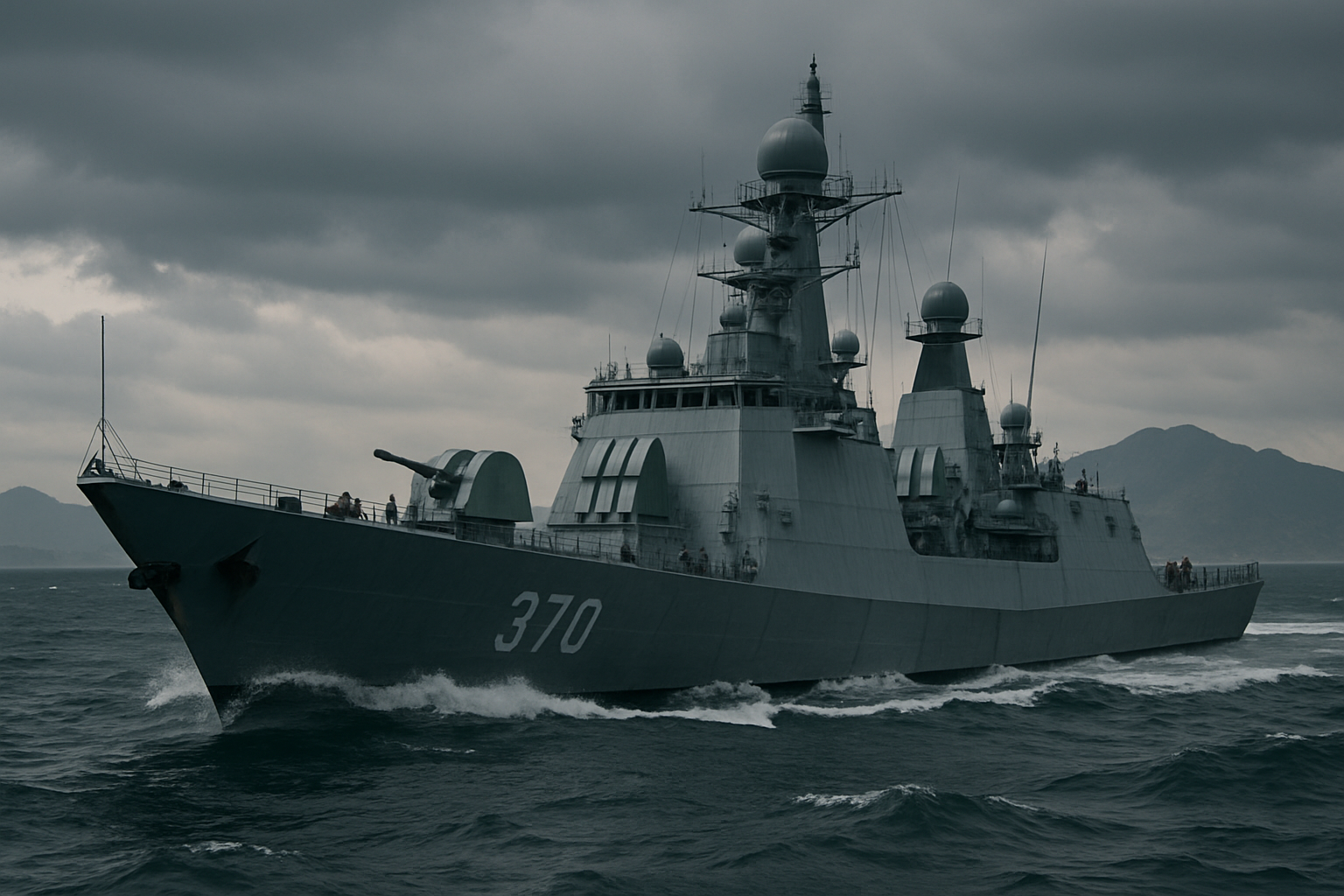
North Korean leader Kim Jong Un personally oversaw strategic cruise missile launches from the newly commissioned Choe Hyon destroyer on Wednesday, according to state media reports, as the regime continues expanding its military capabilities amid unprecedented succession planning and regional diplomatic tensions.
The weapons test, conducted from North Korea's west coast, represents a significant milestone in the country's naval modernization program and comes as Kim Jong Un's daughter, Kim Ju Ae, continues her systematic preparation for leadership succession in what would be an historic first for a female heir in the 78-year Kim dynasty.
Advanced Naval Capabilities on Display
State media outlet Rodong Sinmun reported Thursday that the cruise missile tests were part of final evaluations before the Choe Hyon destroyer's official commissioning into North Korea's naval fleet. The demonstration underscores the regime's continued investment in advanced military technology despite international sanctions and economic constraints.
The timing of the tests is particularly significant, coming just days after Kim Jong Un attended sniper training exercises, demonstrating his hands-on approach to military oversight during a critical period of political transition. Intelligence assessments indicate these developments are part of a broader pattern of military modernization that has accelerated significantly since early 2026.
"The systematic military demonstrations serve multiple purposes - showcasing regime capabilities, providing legitimacy during succession planning, and maintaining deterrent credibility despite international pressure."
— Regional Security Analyst
Context of Unprecedented Succession Planning
The military exercises occur against the backdrop of the most significant succession developments in North Korean history. South Korean intelligence confirmed in February 2026 that Kim Jong Un has formally designated his teenage daughter Kim Ju Ae as his successor, marking an unprecedented transition to female leadership within the traditionally masculine Juche ideology system.
Since her public debut in November 2022, Kim Ju Ae has undergone systematic elevation that now includes providing "input on policy matters" beyond ceremonial appearances. Her preparation has encompassed weapons demonstrations, military parades, state functions, and notably a diplomatic visit to Beijing in September 2025 - her first international travel as part of comprehensive leadership preparation.
The February 2026 revelation of her formal heir designation by South Korean intelligence represents a definitive upgrade from previous speculation to concrete confirmation, indicating sustained observation of internal North Korean political processes. Expert analysis suggests the choice is "unique for a patriarchal society," potentially requiring early announcement to build legitimacy over time.
Military Expansion Amid Diplomatic Tensions
The Choe Hyon destroyer tests come during a period of heightened regional tensions, particularly with ongoing nuclear negotiations between the United States and Iran that have implications for broader Middle Eastern and East Asian security dynamics. North Korea's continued military development demonstrates its determination to maintain strategic relevance regardless of global diplomatic developments.
Recent months have seen significant military milestones, including the February 2026 unveiling of massive 600mm nuclear-capable multiple rocket launcher systems described by state media as "unique in the world" and "suitable for special attack missions." These tactical nuclear weapons represent a shift from intercontinental deterrence to regional conflict capabilities, fundamentally altering Korean Peninsula strategic calculations.
The regime's dual development strategy - advancing military capabilities while showcasing domestic achievements like the completed 50,000-unit Hwasong Area housing project in Pyongyang - demonstrates sophisticated resource allocation designed to maintain both deterrent credibility and domestic legitimacy during the succession transition.
Regional Security Implications
The naval exercises have significant implications for regional allies, particularly South Korea, Japan, and the United States, who face renewed challenges in addressing North Korea's advancing weapons programs through diplomatic channels. The integration of advanced cruise missile capabilities with naval platforms expands North Korea's tactical options and complicates defensive planning for potential regional conflicts.
Intelligence assessments indicate that North Korean military activity increased by approximately 23% in 2025, suggesting an acceleration of weapons development and testing programs. The systematic nature of these developments, from nuclear-capable rockets to advanced naval systems, indicates long-term strategic planning rather than isolated technological achievements.
The timing also coincides with broader global nuclear governance challenges, including the February 2026 expiration of the New START treaty between the United States and Russia - the first time in over 50 years without superpower nuclear constraints. This creates a more permissive environment for regional nuclear powers to advance their capabilities without traditional arms control frameworks.
Succession Dynamics and Military Legitimacy
Kim Jong Un's personal supervision of the destroyer tests serves multiple strategic purposes during this critical succession period. His visible role in military operations helps establish continued leadership credibility while potentially preparing the groundwork for Kim Ju Ae's future military authority - a crucial component of legitimacy in North Korea's military-first political system.
The systematic exposure of Kim Ju Ae to military demonstrations, including weapons tests and military parades, represents unprecedented preparation for female leadership within North Korea's traditionally male-dominated hierarchy. Success in this political transformation requires sustained legitimacy building among the political elite and military leadership who would need to accept this historic departure from dynastic norms.
Recent images released by state media showing Kim Ju Ae participating in rifle training at military shooting ranges provide concrete evidence of her systematic military preparation - the most significant display yet of succession planning in action.
International Monitoring and Response
The international community continues to monitor these developments closely, as they represent both military advancement and unprecedented political transformation. The combination of continued weapons development despite comprehensive international sanctions demonstrates the limitations of current non-proliferation approaches while highlighting North Korea's sophisticated survival strategy.
Regional partners including China, which congratulated Kim Jong Un following the February 2026 Workers' Party Congress, must navigate the complexities of engaging with a nuclear-armed state undergoing historic political transition. The success or failure of North Korea's female succession attempt could influence authoritarian regime adaptation models globally.
For the Korean Peninsula specifically, these developments create new dynamics that will shape regional security considerations for decades. The combination of advanced military capabilities, succession planning, and continued diplomatic isolation requires innovative international approaches to conflict prevention and engagement.
Looking Forward: Military and Political Integration
The Choe Hyon destroyer tests represent more than isolated military advancement - they demonstrate the regime's ability to maintain sophisticated weapons development programs while managing unprecedented political transformation. This dual approach of military modernization and succession preparation suggests careful long-term strategic planning designed to ensure regime survival through generational transition.
As Kim Ju Ae continues her systematic elevation within North Korea's political and military structures, the international community faces the prospect of engaging with a nuclear-armed state led by female authority for the first time in Northeast Asian history. The success of this transition will depend on sustained legitimacy building, military acceptance, and the regime's ability to maintain both domestic support and international strategic relevance.
The template being established in North Korea for combining military advancement with unprecedented political change may influence authoritarian regime adaptation strategies worldwide, making these developments significant beyond their immediate regional implications for Korean Peninsula security and stability.