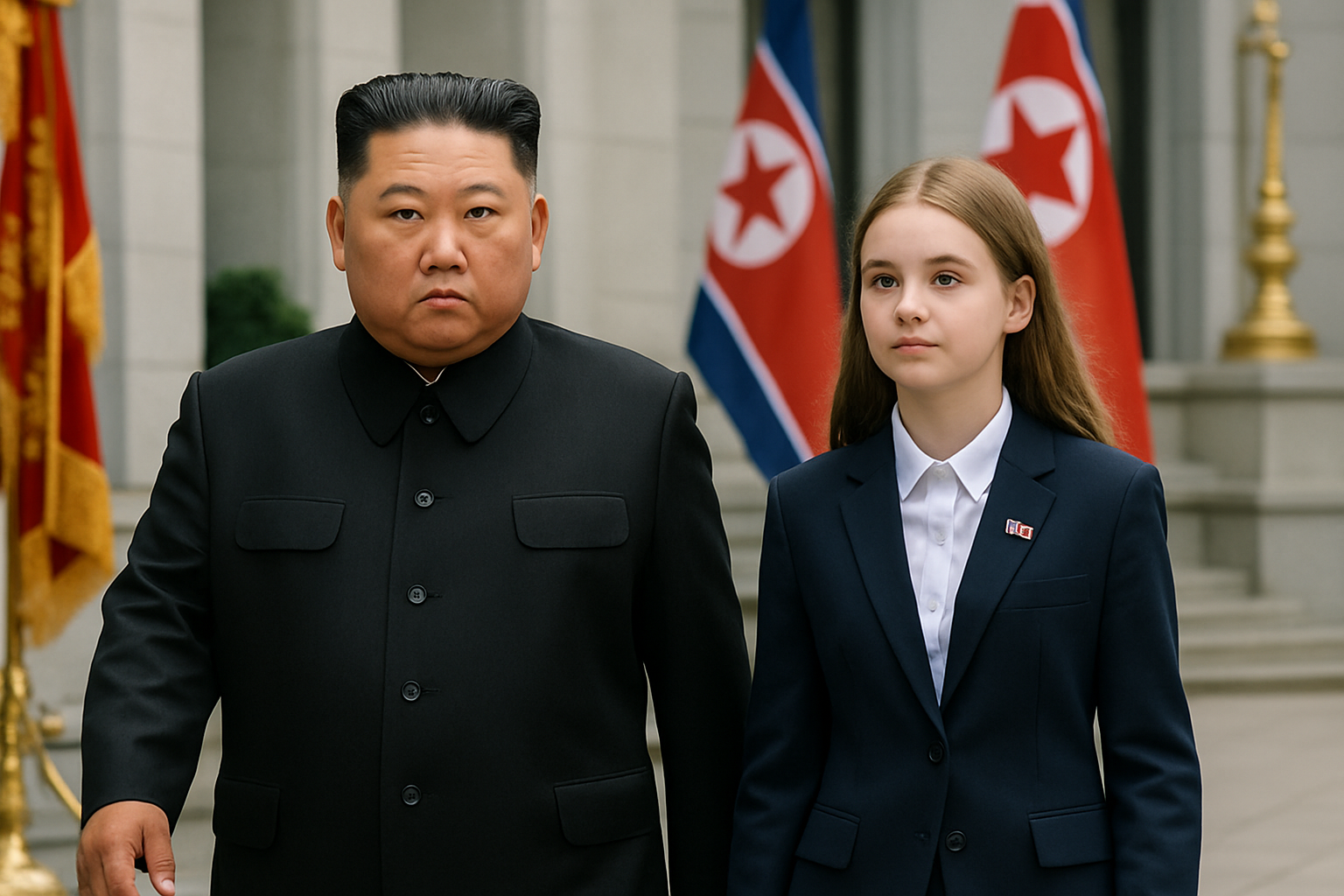
North Korean leader Kim Jong Un has chosen his teenage daughter Kim Ju Ae as his successor, South Korea's National Intelligence Service revealed to lawmakers on Thursday, potentially marking the first female leader in the Kim dynasty's 76-year history.
The assessment represents a significant shift in intelligence analysis, with the NIS confirming that North Korea has "entered the stage of designating the leader's daughter Ju-ae as successor." The announcement comes as the ruling Workers' Party prepares for its crucial party congress later this month, where major policy directions for the next five years will be outlined.
Intelligence Assessment Changes
South Korean lawmakers briefed by the NIS reported that the spy agency took "a range of circumstances into account," including Kim Ju Ae's increasingly prominent public presence at official events. The intelligence service indicated it would closely monitor whether she attends the upcoming Workers' Party congress and what official title, if any, she might receive.
Kim Ju Ae, believed to be in her early teens, first appeared publicly at a long-range missile test in November 2022. Since then, she has accompanied her father to an increasing number of high-profile events, including weapons tests, military parades, factory openings, and international visits. Most notably, she made her first known trip abroad in September 2025, accompanying Kim Jong Un to Beijing.
"The North Korean leader appears to be taking steps to consolidate his daughter's position, and there are signs she is providing input on policy matters."
— South Korean Lawmakers, citing NIS briefing
Breaking Precedent in the Kim Dynasty
If confirmed, Kim Ju Ae's designation would represent a revolutionary change for North Korea's patriarchal political system. The Kim dynasty has ruled North Korea since its founding in 1948, with leadership passing from Kim Il Sung (1948-1994) to his son Kim Jong Il (1994-2011), and then to Kim Jong Un (2011-present). Never in the country's history has a woman held the supreme leadership position.
The potential succession would make Kim Ju Ae the fourth-generation leader of the Kim dynasty, continuing the world's only communist hereditary succession system. However, her young age suggests any transition would likely be years away, requiring extensive preparation and possibly a regency period if circumstances demanded earlier implementation.
Growing Public Profile
North Korean state media has gradually elevated Kim Ju Ae's status in official coverage, using increasingly respectful titles and ceremonial language typically reserved for senior leadership figures. Her appearances at weapons demonstrations and state functions have been carefully choreographed to suggest her growing role in policy discussions.
The timing of this intelligence disclosure is particularly significant, coming just weeks before the Workers' Party congress, North Korea's most important political gathering held every five years. The congress serves as the platform for major policy announcements and leadership appointments, making Kim Ju Ae's potential attendance a crucial indicator of her formal elevation.
Strategic Implications
The succession planning occurs during a critical period for North Korea, with the country facing ongoing international sanctions, nuclear program development challenges, and complex regional security dynamics. Kim Jong Un, now in his early 40s and reportedly in good health, appears to be preparing for long-term dynastic continuity while the regime remains stable.
Regional analysts are closely monitoring the implications for China relations, international negotiations, and Korean Peninsula stability. The success of any eventual transition would depend heavily on the political elite and military accepting female leadership in a traditionally male-dominated hierarchical system.
International Context
The intelligence assessment coincides with broader regional tensions, including ongoing sanctions pressure and diplomatic efforts to address North Korea's nuclear ambitions. The potential for a female successor adds another layer of complexity to international engagement strategies with Pyongyang.
Previous intelligence assessments had been more cautious about succession planning, but the NIS briefing suggests concrete steps are being taken to position Kim Ju Ae for future leadership responsibilities. The intelligence disclosure also demonstrates the importance South Korean officials place on understanding North Korean leadership dynamics for strategic planning purposes.
Historical Precedent and Challenges
While North Korea's political system theoretically allows for female leadership, the practical implementation would require navigating entrenched cultural and political structures designed around male authority. The country's Juche ideology and military-first politics have traditionally emphasized masculine leadership traits, making Kim Ju Ae's potential succession a significant cultural shift.
The intelligence assessment reflects the most comprehensive evaluation of North Korean succession planning disclosed in recent years, suggesting sustained monitoring of leadership dynamics within the secretive regime. South Korean intelligence agencies maintain extensive networks focused on understanding political developments in Pyongyang, making their assessments particularly significant for regional security planning.
As the Workers' Party congress approaches, international observers will be watching closely for any official recognition of Kim Ju Ae's elevated status, which would provide the clearest indication yet of North Korea's long-term leadership trajectory and the potential for historic change in the world's most isolated nation.